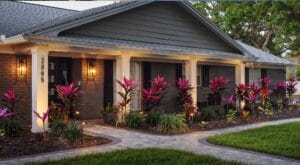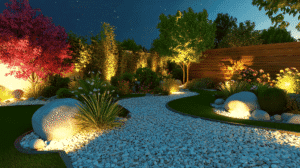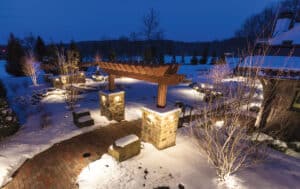
Your outdoor spaces don’t have to disappear when the sun sets. The right lighting strategy transforms ordinary yards into enchanting evening retreats while boosting safety and property value. Whether you’re looking to highlight architectural features, create inviting pathways, or showcase your garden’s best assets, thoughtful outdoor landscape lighting ideas can completely reimagine how you experience your property after dark.
This guide explores 15 proven lighting concepts that balance beauty with function, from dramatic tree uplighting to subtle pathway illumination. You’ll discover practical installation tips, design principles used by professionals, and how to select fixtures that deliver lasting performance.
Key Takeaways
- Outdoor landscape lighting ideas combine aesthetics with functionality to create stunning nighttime curb appeal
- Low voltage landscape lighting kits offer energy efficiency and easy DIY installation for most homeowners
- Professional landscape lighting design considers layers, focal points, and proper light placement for balanced illumination
- LED landscape lights provide long-lasting performance with minimal maintenance and reduced energy costs
- Strategic tree uplighting techniques and pathway lighting creates depth, safety, and visual interest after dark
Understanding Landscape Lighting Fundamentals
The Three Essential Lighting Layers
Effective landscape lighting design incorporates three distinct layers that work together. Ambient lighting provides overall illumination for large areas like patios or lawns. Task lighting focuses on specific functional needs such as illuminating steps, walkways, or outdoor cooking areas. Accent lighting highlights focal points like specimen trees, water features, or architectural details.
Each layer serves a purpose, and the magic happens when they’re balanced properly. Too much ambient light washes out the dramatic effects of accent lighting. Insufficient task lighting creates safety hazards despite beautiful aesthetics.
Choosing Between Low Voltage and Line Voltage Systems
Low voltage landscape lighting kits operate at 12 volts, making them safer to install and more energy-efficient than traditional 120-volt systems. They require a landscape lighting transformer to step down your home’s voltage, but this component also gives you centralized control and often includes timing features.
Line voltage systems deliver more power and can illuminate larger areas from greater distances. However, they require professional installation due to electrical code requirements and present greater safety risks during installation and maintenance.
| Feature | Low Voltage (12V) | Line Voltage (120V) |
|---|---|---|
| Installation | DIY-friendly, safer to handle | Requires licensed electrician |
| Energy Cost | Lower operating costs | Higher monthly expenses |
| Light Output | Adequate for most residential needs | Brighter, longer throw distance |
| Flexibility | Easy to modify and expand | Permanent, harder to relocate |
| Safety | Minimal shock risk | Standard electrical hazards |
For most residential applications, low voltage systems offer the best combination of safety, efficiency, and flexibility.
15 Outdoor Landscape Lighting Ideas
1. Moonlighting Through Tree Canopies
Install fixtures high in mature trees, angling them downward to mimic natural moonlight filtering through branches. This technique creates gentle, dappled patterns on the ground below and adds mysterious depth to your landscape. Position lights 20–30 feet up for the most convincing effect, ensuring the fixture itself remains hidden among branches. Learn more about creating a moonlighting effect for a truly natural look.
2. Dramatic Tree Uplighting
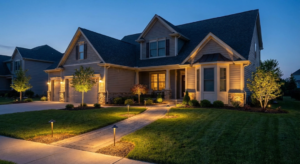
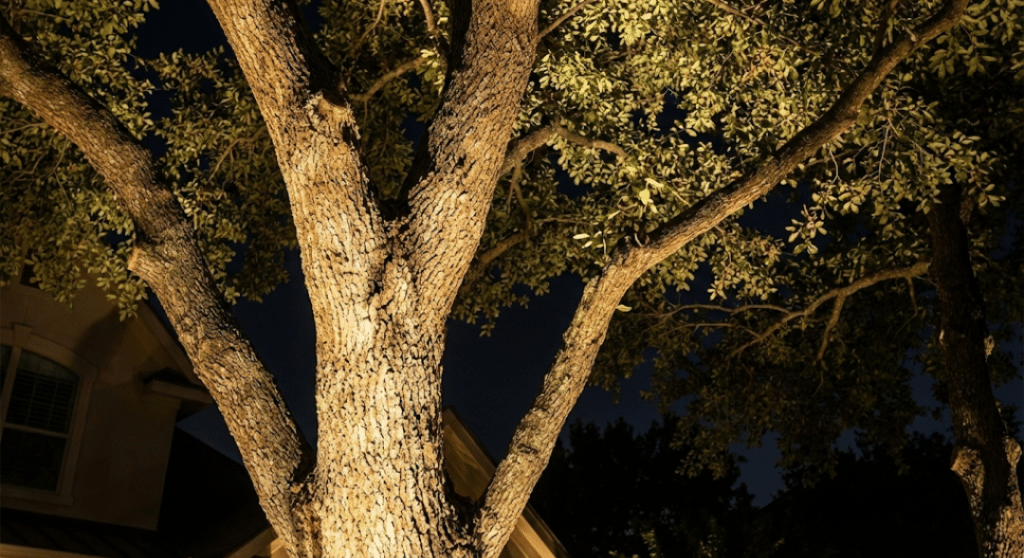
Uplighting for trees remains one of the most impactful outdoor landscape lighting ideas. Place fixtures 2–3 feet from the trunk, angling upward to illuminate the bark texture and branch structure. For multi-trunk specimens, use multiple fixtures to reveal the tree’s full architecture. This technique works exceptionally well with trees that have interesting bark patterns or sculptural branching.
3. Pathway Lighting for Safety and Beauty
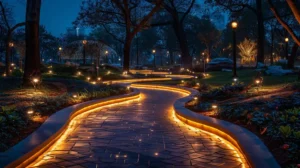
Pathway landscape lights serve dual purposes—guiding foot traffic safely while adding visual interest. Space fixtures 8–10 feet apart along walkways, alternating sides for a more natural look. Choose bollard-style fixtures for contemporary spaces or low-profile path lights for traditional landscapes. LED landscape lights in this application typically last 50,000 hours with minimal maintenance.
4. Silhouette Lighting for Distinctive Features
Position lights behind objects with interesting shapes—ornamental grasses, sculptures, or architectural elements—to create dramatic silhouettes against walls or fences. This technique requires precise placement; the light source should be close to the object and pointed at a backdrop 4–6 feet away.
5. Water Feature Illumination
Submersible fixtures transform fountains, ponds, and waterfalls into nighttime focal points. Position lights beneath moving water to create shimmer and movement. For still water features, angle lights from the edges to avoid glare while highlighting surrounding plantings. Always use fixtures rated for wet locations with appropriate IP65 or IP68 ratings.
6. Architectural Wall Washing
Install fixtures 12–18 inches from exterior walls, angling them to graze surfaces and reveal texture in stone, brick, or stucco. This technique, called wall washing, adds dimension to flat facades and draws attention to architectural details. Space fixtures 3–4 feet apart for even coverage without dark spots.
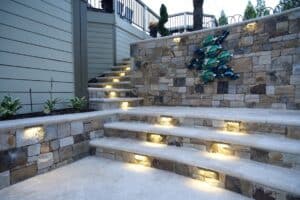
7. Step and Hardscape Lighting
Built-in step lights eliminate trip hazards while adding sophisticated ambiance to stairs, retaining walls, and raised patios. Recessed fixtures install flush with vertical surfaces, casting light downward to define edges without creating glare. For existing hardscapes, consider surface-mount options that attach to risers.
8. Garden Bed Illumination
Do:
- Layer different fixture types to create depth in planting beds
- Use garden lighting fixtures on adjustable stakes for seasonal flexibility
- Highlight plants with distinctive foliage or flowering periods
- Combine uplighting and downlighting for dimensional interest
Don’t:
- Overlight every plant—selective highlighting creates more drama
- Position lights where they’ll be blocked by plant growth
- Use the same color temperature throughout—vary between 2700K–3000K
- Forget to account for seasonal changes in plant size and density
9. Pergola and Overhead Structure Lighting
String lights, recessed cans, or decorative pendants transform pergolas into outdoor rooms. If you need romantic ambiance, choose warm Edison-style bulbs. If you need task lighting for dining or conversation areas, opt for focused downlights with dimming capability.
10. Driveway and Entry Accent Lighting
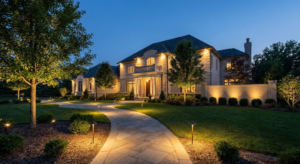
Mark driveway edges with low-profile bollards or recessed fixtures that define the path without creating glare for drivers. At the entry, use a combination of overhead lighting for security and accent lights on flanking pillars, planters, or landscape features for a welcoming glow.
11. Deck and Patio Perimeter Lighting
Rail-mount fixtures, recessed deck lights, or strip lighting under cap rails create usable evening spaces while defining boundaries. This approach works particularly well for elevated decks where the lighting also illuminates the area below. Professional landscape lighting designers often combine perimeter lighting with strategic accent lights on nearby garden features.
12. Focal Point Spotlighting
Use adjustable spot lights to highlight specimen plants, sculptures, or architectural elements. Position fixtures at varying distances and angles—closer placement (3–4 feet) creates dramatic contrast, while distant placement (8–10 feet) provides softer illumination. Narrow beam spreads (15–30 degrees) work best for precise highlighting.
13. Security Lighting Integration
Motion-activated fixtures near entries, garage doors, and dark corners provide security without constant illumination. Modern sensors can be adjusted for sensitivity and duration, integrating seamlessly with ambient landscape lighting. If you need enhanced security without harsh floodlights, choose fixtures with warm color temperatures and adjustable brightness levels.
14. Seasonal and Holiday Lighting Infrastructure
Plan permanent mounting points and hidden outlets that accommodate seasonal displays. Discreet receptacles near trees, along rooflines, and in planting beds allow you to add temporary lighting without extension cords or visible infrastructure. Some landscape lighting transformers include separate circuits specifically for seasonal additions.
15. Smart Control and Color-Changing Systems
Modern LED landscape lights can include Wi-Fi connectivity, app control, and color-changing capabilities. These systems let you adjust brightness, create schedules, and even change colors for events or seasons—all from your smartphone. While more expensive initially, smart systems offer unmatched flexibility and can reduce energy consumption through precise scheduling.
Professional Installation vs. DIY: Making the Right Choice
When DIY Makes Sense
Low voltage landscape lighting kits are designed for homeowner installation. If you’re comfortable with basic tools, following instructions, and have a clear plan, you can successfully install pathway lights, uplights, and garden fixtures yourself. Most manufacturers provide detailed guides and online support.
Start with a small project—perhaps pathway lighting from your driveway to the front door—to build confidence before tackling more complex designs.
When to Hire a Professional
Complex installations benefit from professional landscape lighting expertise. Situations that warrant professional help include:
Pros of Professional Installation:
- Access to commercial-grade fixtures with longer warranties
- Proper transformer sizing and electrical load calculations
- Knowledge of local electrical codes and permit requirements
- Design expertise that balances aesthetics with functionality
- Warranty coverage on both labor and materials
Cons of Professional Installation:
- Higher upfront investment (typically 2–3x DIY costs)
- Less flexibility for future modifications without additional service calls
- Dependency on contractor availability for repairs or adjustments
A hypothetical case study illustrates the value: A homeowner in suburban Atlanta attempted to light a large property with DIY fixtures, spending $1,200 over two years on equipment and replacements. After hiring a professional who redesigned the system with better fixture placement and commercial-grade components, total cost reached $3,500—but maintenance dropped to nearly zero and the results dramatically improved.
Essential Components of a Quality Lighting System
The Landscape Lighting Transformer
This device converts standard household current to the safer 12-volt power used by low voltage systems. Choose a transformer rated for at least 20% more wattage than your total fixture load to ensure reliable performance and allow for future expansion. Quality units include photocells for automatic dusk-to-dawn operation and timers for customized scheduling.
According to the National Electrical Manufacturers Association, properly specified transformers should operate at 80% capacity maximum for optimal longevity.
LED vs. Halogen: The Clear Winner
LED landscape lights have revolutionized outdoor illumination. They consume 75% less energy than halogen equivalents, generate minimal heat, and last 15–20 years under typical use. Color rendering has improved dramatically—modern LEDs accurately reveal plant colors and architectural details without the harsh blue cast of early generations.
If you need warm, inviting ambiance, choose LEDs with color temperatures between 2700K–3000K. For crisp, modern aesthetics, 3500K–4000K provides cooler tones.
Wire Gauge and Voltage Drop
Proper wire sizing prevents voltage drop that dims fixtures farthest from the transformer. Use 12-gauge wire for runs up to 100 feet, upgrading to 10-gauge for longer distances. Industry experts recommend keeping total run length under 150 feet per transformer terminal to maintain consistent brightness.
The Illuminating Engineering Society provides technical guidance indicating that voltage drop should not exceed 3 volts in residential landscape lighting installations. For a deep dive into solving this common issue, see our guide to fixing landscape lighting voltage drop.
Design Principles That Create Professional Results
Balance and Proportion
Avoid the temptation to light everything. Professional designers illuminate 60–70% of visible landscape features, leaving dark spaces that create contrast and mystery. This restraint makes illuminated elements more dramatic and prevents the “airport runway” effect of overlighting.
Color Temperature Consistency
Within each zone of your property, maintain consistent color temperature. Mixing 2700K warm white fixtures with 4000K cool white creates visual discord. However, you can use different temperatures in separate areas—warm tones for intimate seating areas, cooler tones for modern architectural features. For help choosing the right tone, consult our landscape lighting color temperature guide.
Fixture Concealment
The light effect should be visible, not the fixture itself. Tuck uplights behind shrubs, bury path lights in groundcover, and position spotlights where they’re screened by foliage or hardscape elements. Well-designed outdoor landscape lighting ideas prioritize the illuminated subject over the light source.
Conditional Lighting Strategies
If you have a contemporary home with clean lines, choose minimalist fixtures with geometric forms. If you have a traditional property with classical architecture, opt for fixtures with decorative elements that complement the style.
If you need to highlight vertical elements like columns or tall shrubs, use narrow beam spreads (15–25 degrees). If you need to illuminate wide areas like patios or lawns, choose fixtures with flood beam patterns (60–90 degrees).
Quick Answers – FAQ Section
How many lumens do I need for landscape lighting?
Pathway lights typically require 50–100 lumens, accent lights need 100–200 lumens, and spotlights for large trees may need 200–400 lumens depending on distance and desired effect.
What’s the average lifespan of LED landscape lights?
Quality LED landscape lights last 50,000–100,000 hours, translating to 15–25 years of typical evening use with minimal brightness degradation.
Do I need a permit for landscape lighting installation?
Low voltage systems (12V) typically don’t require permits, but line voltage (120V) installations usually do—check local building codes before starting any project.
How much does professional landscape lighting cost?
Professional installation averages $2,500–$7,500 for typical residential properties, depending on property size, fixture quality, and design complexity. For more on whether to go pro or DIY, see our comparison of professional vs. DIY landscape lighting.
Can landscape lighting increase property value?
Studies by the National Association of Home Builders indicate that quality landscape lighting can increase property value by 5–10% while improving curb appeal and perceived security.
How far apart should pathway lights be placed?
Space pathway landscape lights 8–10 feet apart for adequate coverage, adjusting based on fixture brightness and path width—wider paths may need closer spacing.
What maintenance do landscape lights require?
LED systems need minimal maintenance—annual cleaning of lenses, checking wire connections, and trimming vegetation that blocks fixtures usually suffices.
Should landscape lights be left on all night?
Use timers or photocells with automatic shutoff 4–6 hours after dusk to balance security needs with energy efficiency and fixture longevity.
What color temperature is best for outdoor lighting?
Warm white (2700K–3000K) works best for most residential landscapes, creating inviting ambiance that complements natural surroundings and skin tones. Learn more in our color temperature guide.
Can I mix different brands of landscape lighting?
Yes, as long as voltage requirements match, but mixing brands may create inconsistent color temperature and brightness—using a single manufacturer typically yields better visual cohesion.
Glossary of Terms
Uplighting: A lighting technique where fixtures are positioned at ground level and angled upward to illuminate trees, walls, or architectural features, creating dramatic shadows and revealing texture.
Lumens: The measurement of total visible light output from a fixture—higher lumen values indicate brighter light, with landscape applications typically ranging from 50–400 lumens per fixture.
Color Temperature: Measured in Kelvin (K), this describes the warmth or coolness of light—lower numbers (2700K) appear warm and yellow, while higher numbers (4000K+) appear cool and blue.
Beam Spread: The angle of light distribution from a fixture, categorized as narrow spot (15–25 degrees), flood (30–60 degrees), or wide flood (60+ degrees), determining coverage area and intensity.
Conclusion
Strategic outdoor landscape lighting ideas transform properties from ordinary to extraordinary, extending the usability of outdoor spaces while enhancing safety and curb appeal. Whether you choose DIY-friendly low voltage landscape lighting kits or invest in professional landscape lighting design, the principles remain constant—layer your lighting, conceal fixtures, and illuminate selectively for maximum drama.
The combination of energy-efficient LED landscape lights, smart transformers, and thoughtful placement creates systems that deliver beauty and function for decades with minimal maintenance. Start with a clear plan, prioritize quality components over quantity of fixtures, and remember that restraint often creates more stunning results than overlighting every feature.
Ready to transform your property’s nighttime appeal? Begin by identifying your most important features—the architectural elements, mature trees, and gathering spaces that deserve highlighting. Then apply these proven techniques to create a landscape that’s equally captivating day or night.