Key Takeaways
- Landscape lighting consistently ranks among the top ROI home improvement projects.
- LED landscape lights use significantly less energy than traditional bulbs, lowering utility bills.
- Professional landscape lighting design can highlight architectural and natural features year-round.
- Pathway landscape lights and uplighting for trees are among the highest-impact, lowest-cost additions.
- Low voltage landscape lighting kits make DIY installations accessible for most homeowners.
- A well-lit exterior deters intruders, adds safety, and improves perceived home value.
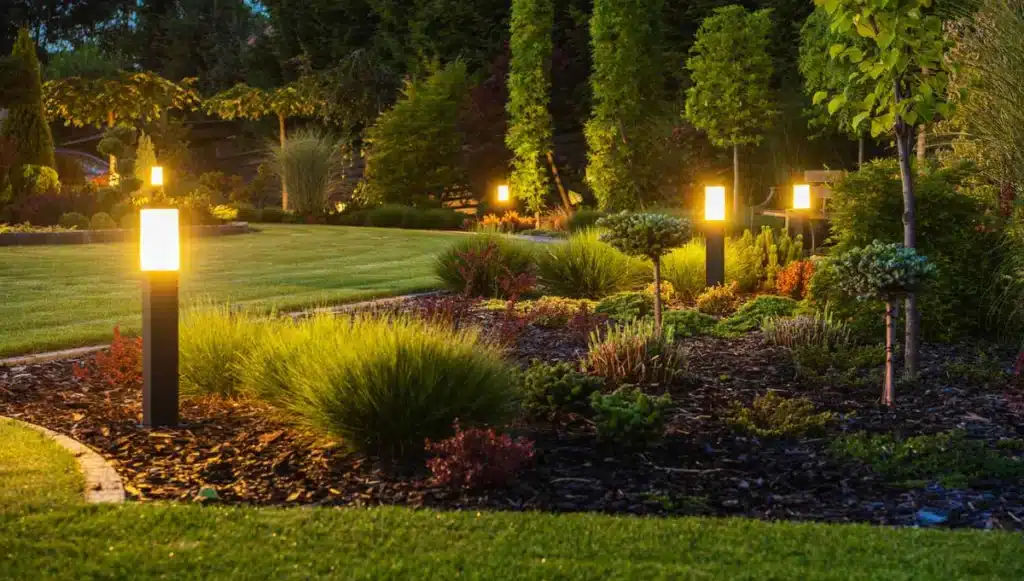
Why Outdoor Landscape Lighting Is One of the Smartest Investments You Can Make
When buyers pull up to a home after dark, the first thing they see is how it’s lit. Landscape lighting transforms an ordinary yard into something that looks professionally designed and thoughtfully maintained. It sets the tone before a single door is opened, and that first impression carries real monetary weight.
Curb appeal is not just a real estate buzzword. According to research from the National Association of Realtors, outdoor lighting projects consistently deliver strong returns on investment — often exceeding what homeowners spend. Whether you’re planning to sell in the near future or simply want to enjoy your property more fully, upgrading your outdoor lighting is a move that pays in multiple ways.
In this article, you’ll learn the seven key ways that outdoor landscape lighting adds measurable value to your home, what types of fixtures and systems work best, and how to approach a design that looks intentional rather than improvised.
1. Stronger Curb Appeal That Attracts Buyers and Neighbors Alike
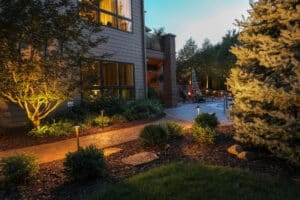
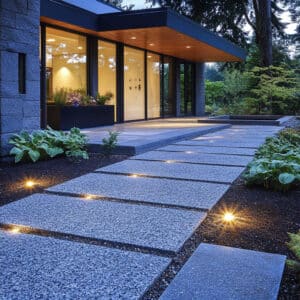
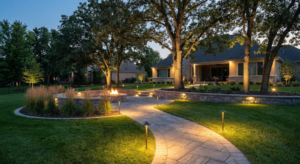
First impressions happen fast, and landscape lighting is one of the quickest ways to elevate how your home looks from the street. Fixtures installed along walkways, near the entryway, or at the base of trees give your property a polished, intentional look that stands out in any neighborhood.
Real estate professionals often describe well-lit exteriors as move-in ready — a phrase that meaningfully shortens listing times. Homes with thoughtful exterior lighting tend to attract more showings and stronger initial offers because buyers can see and appreciate the property even during evening viewings.
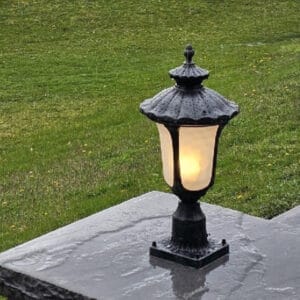
The types of fixtures that contribute most to curb appeal include post lights near driveways, accent lights along garden lighting fixtures best suited for flower beds, and soft uplighting that highlights the architectural lines of the home’s facade. Even modest improvements in this area can shift how a property is perceived from the road.
2. Improved Safety and Security That Buyers Pay a Premium For
Security and safety are two of the most consistently cited factors in homebuying decisions. A well-lit property reduces the risk of trips and falls along pathways, makes entry points clearly visible, and acts as a deterrent to trespassing and break-ins.
Motion-activated lighting near garages, side gates, and back entrances adds an automatic layer of protection. Research from the University of Chicago Crime Lab and similar institutions has found that improved outdoor lighting correlates with reductions in property crime, especially in residential neighborhoods.
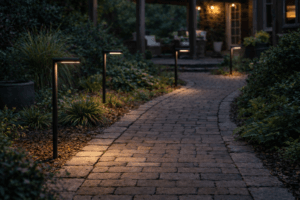
For families with children, elderly residents, or anyone navigating steps and uneven terrain at night, pathway landscape lights are a practical safety upgrade that adds genuine quality of life — and buyers recognize that.
3. Extended Outdoor Living That Adds Usable Square Footage
One of the most underappreciated benefits of outdoor landscape lighting is that it effectively extends the hours you can use your outdoor spaces. A patio, deck, or garden that becomes unusable after sunset is a wasted investment. Lighting reclaims that space.
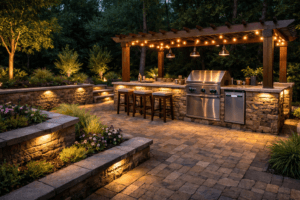
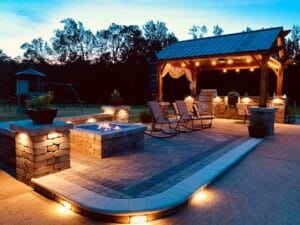
For prospective buyers, a lit outdoor living area reads as additional functional square footage — and that’s exactly how many appraisers and agents frame it. A well-lit pergola, fire pit area, or outdoor kitchen signals that the home’s livable space doesn’t end at the back door.
Industry professionals often note that outdoor entertaining areas with integrated lighting can add thousands of dollars to an appraised value, particularly in warmer climates where outdoor living is a year-round possibility.
4. Highlighted Landscaping and Architectural Features
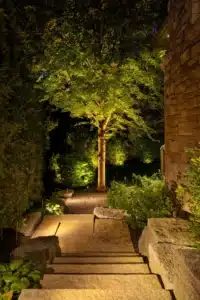
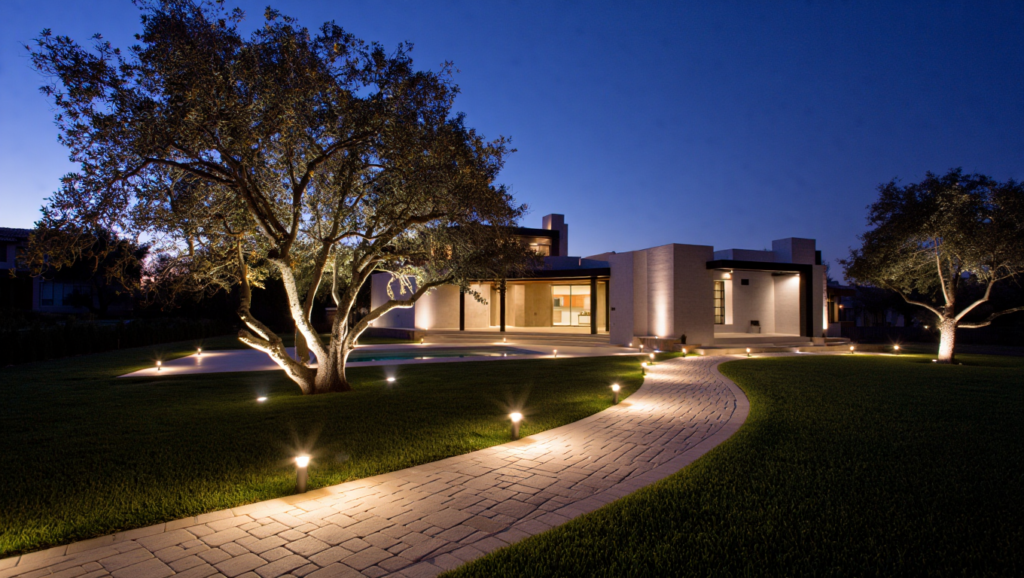
Uplighting for trees and directional accent lighting are design tools that professional installers use to draw attention to what makes a property unique. A mature oak, a stone facade, or a water feature that goes unnoticed in daylight can become a dramatic focal point after dark.
This technique — sometimes called feature lighting or accent lighting — is standard practice in professional landscape lighting design. It creates depth, visual interest, and a sense of intentional design that elevates the perceived value of both the landscaping and the home itself.
Garden lighting fixtures placed near flower beds or specimen plants also keep the landscape looking intentional and maintained. This is particularly valuable for homeowners who’ve invested significantly in mature plantings, hardscaping, or specialty garden design.
5. Energy Efficiency With LED Landscape Lights
Modern LED landscape lights have transformed the economics of outdoor lighting. Earlier generations of landscape systems consumed significant electricity; today’s LED fixtures use a fraction of that energy while delivering equal or better light quality. According to the U.S. Department of Energy, many LED landscape lights carry ratings of 50,000 hours or more, meaning they rarely need replacement.
From a buyer’s perspective, energy efficiency is a tangible selling point. A landscape lighting system that runs on LED technology, combined with a programmable landscape lighting transformer, can be framed as a smart home feature — one that adds comfort without inflating utility bills.
For homeowners considering a low voltage landscape lighting kit, the LED option is the clear choice: lower operating costs, longer lifespan, and compatibility with most smart home and timer controls.
6. Smart Technology Integration That Appeals to Modern Buyers
Today’s smart landscape lighting systems can be paired with smart timers, app-based controls, and even voice-activated platforms. This kind of integration appeals strongly to buyers in the millennial and Gen X demographics, who expect smart functionality as a baseline in desirable homes.
A landscape lighting transformer with Wi-Fi or Bluetooth connectivity allows homeowners to schedule lighting zones, adjust brightness remotely, and set automatic dusk-to-dawn cycles — all from a smartphone. These features add a layer of convenience and sophistication that resonates with buyers.
Homes marketed with smart outdoor systems consistently receive more interest from tech-savvy buyers. As smart home features become more normalized in the market, properties that already have them built in gain a competitive edge over those that don’t.
7. Professional-Grade Design That Sets Your Property Apart
There is a noticeable difference between a home with fixtures screwed into the ground and one with a cohesive landscape lighting design. Professional systems consider layering (ambient, task, and accent lighting), color temperature, fixture placement, and beam angles to create a unified look that feels intentional rather than improvised.
When buyers compare homes in a similar price range, the one with a professionally designed lighting system tends to read as better maintained and more valuable. It signals that the homeowner cared about details — and buyers extrapolate that care to the rest of the property.
If hiring a professional landscape lighting installer is outside your budget, a well-chosen low voltage landscape lighting kit with quality garden lighting fixtures can achieve similar results at a fraction of the cost — especially when installed with a clear design plan.
How to Plan Your Landscape Lighting Upgrade: A Step-by-Step Guide
If you’re ready to upgrade your outdoor lighting, follow these steps to get the best results:
- Step 1: Walk your property at night and identify the areas that feel dark, unsafe, or visually unappealing.
- Step 2: Decide on your priority zones: entryway, driveway, pathways, garden beds, trees, or patio.
- Step 3: Choose a system type: low voltage landscape lighting kits for DIY, or hire a professional landscape lighting contractor for complex layouts.
- Step 4: Select fixtures with appropriate beam angles — narrow beams for uplighting trees, wide beams for pathway and area lighting.
- Step 5: Install a programmable landscape lighting transformer with enough wattage to handle all fixtures plus room to expand.
- Step 6: Use LED landscape lights throughout for energy efficiency and long lifespan.
- Step 7: Test the system at night before finalizing fixture positions. Adjust beam angles and spacing as needed.
- Step 8: Set timers or connect to a smart home platform for automated control.
DIY vs. Professional Landscape Lighting: A Comparison
| Feature | Low Voltage DIY Kit | Professional Installation |
|---|---|---|
| Cost | Lower upfront ($100–$500) | Higher upfront ($1,000–$5,000+) |
| Installation Time | Few hours to a weekend | Usually 1–2 days |
| Design Quality | Good with planning | Typically superior |
| Customization | Limited by kit components | Fully customizable |
| Energy Efficiency | LED options available | LED standard |
| Warranty/Support | Manufacturer warranty only | Installer guarantee often included |
| Smart Integration | Many kits are compatible | Custom smart systems available |
| ROI Impact | Moderate | Higher, especially for luxury homes |
Pros and Cons of Outdoor Landscape Lighting
Pros:
- Meaningfully boosts curb appeal and perceived home value
- Deters intruders and improves safety along pathways
- Extends usable hours for patios, decks, and outdoor entertaining areas
- Modern LED fixtures offer long lifespan and low energy costs
- Smart-enabled systems appeal to tech-oriented buyers
- Can highlight mature trees, water features, and architectural details
Cons:
- Upfront installation costs can be significant for professional systems
- Improper installation can lead to light pollution or glare on neighbors
- Low-quality fixtures may require more frequent replacement
- Poorly designed systems can look cluttered or draw attention to unattractive areas
- Requires occasional maintenance, especially in areas with harsh winters
Landscape Lighting: Do’s and Don’ts
Do:
- Use warm white LEDs (2700K–3000K) for a welcoming, inviting glow
- Layer your lighting with a mix of pathway, accent, and uplighting
- Install a transformer with 20–25% more capacity than your current wattage needs
- Keep fixtures low-profile and unobtrusive during daylight hours
- Test placement at night before permanently setting fixtures in the ground
Don’t:
- Overlight — too many bright fixtures creates glare, not atmosphere
- Point lights directly at neighbors’ windows or the street
- Mix wildly different color temperatures (warm and cool white look unplanned)
- Neglect timer or smart controls — lights left on all day drain energy and shorten bulb life
- Skip a landscape lighting transformer with weather protection in regions with heavy rain or snow
How Lighting Transformed a Suburban Listing
A homeowner in the suburbs of Atlanta listed a three-bedroom home in a competitive market. Despite a well-maintained interior, the property sat unsold for six weeks. A real estate agent suggested a targeted landscape lighting upgrade before re-listing.
The homeowner invested approximately $1,200 in a professional-grade low voltage system that included pathway landscape lights along the front walk, uplighting for two mature oak trees flanking the entrance, and soft wash lighting across the home’s brick facade. The system used LED landscape lights and a programmable transformer.
When re-listed, the home received three offers within ten days. Two buyers specifically noted the exterior presentation as a deciding factor. The upgrade cost less than 0.5% of the home’s sale price but contributed to a faster sale at a stronger number — a pattern real estate professionals at the National Association of Realtors describe as common with exterior improvement projects.
Choosing the Right Landscape Lighting Approach for Your Situation
If you have a tight budget: choose a quality low voltage landscape lighting kit focused on the highest-impact areas — front pathways and entry lighting deliver the most visible return for the least money.
If you have mature trees or distinctive landscaping: invest in professional landscape lighting design that includes proper tree uplighting techniques. Highlighting existing assets costs less than adding new ones and can dramatically change a yard’s nighttime character.
If you’re preparing to list your home: prioritize front-of-house lighting first. Buyers form impressions from the curb, and evening drive-bys are common during the home search process.
If you want long-term savings: choose LED landscape lights from the start. The higher upfront cost compared to halogen pays back within a year or two through reduced energy consumption and far less frequent bulb replacement.
If you have a large property: a professional landscape lighting installer with experience in zoned systems and custom transformers will deliver a more cohesive result than a series of individual kits.
Frequently Asked Questions About Landscape Lighting
Does landscape lighting really increase home value?
Yes. Real estate professionals and appraisers consistently identify outdoor lighting as one of the exterior improvements most likely to increase perceived and appraised value. The National Association of Realtors includes outdoor lighting in its Remodeling Impact Report as a project with strong cost-recovery rates.
What is the best type of landscape lighting for home value?
For value, focus on three categories: pathway landscape lights for safety and curb appeal, uplighting for trees and architectural features, and entry or driveway lighting. LED fixtures in a warm white color temperature are the most universally recommended.
How much does landscape lighting installation cost?
Costs vary widely. A basic DIY low voltage landscape lighting kit can run $100–$500. You can get a more detailed breakdown of landscape lighting installation costs for professional systems, which typically range from $1,000–$5,000 or more depending on property size, number of fixtures, and system complexity.
What is a landscape lighting transformer, and do I need one?
A landscape lighting transformer converts standard household current (120V) to low voltage (typically 12V), which is safer and more efficient for outdoor use. Yes — any low voltage landscape lighting system requires one. Learn more about sizing your lighting transformer correctly to ensure you choose one with at least 20% more capacity than your fixture load.
Are LED landscape lights worth the extra cost?
In almost all cases, yes. LED landscape lights use significantly less energy than halogen or incandescent options and last far longer. According to the U.S. Department of Energy, most homeowners recoup the cost difference within one to two years through energy savings alone.
Can I install landscape lighting myself?
Low voltage landscape lighting kits are designed for DIY installation and require no electrical license. For systems involving higher voltages, junction boxes, or complex zoning, hiring a licensed electrician or professional landscape lighting installer is recommended.
How many fixtures do I need?
A basic front-of-house installation might use 6–12 fixtures. Larger properties with multiple lighting zones can require 20 or more. Start with fewer fixtures than you think you need — it’s easier to add than to subtract without leaving holes.
What color temperature is best for landscape lighting?
Most landscape lighting professionals recommend 2700K–3000K for residential use. This warm white range is flattering for skin tones, foliage, and most building materials, and creates an inviting rather than harsh atmosphere.
How do I maintain my landscape lighting system?
LED fixtures require minimal maintenance. Check connections annually, clean lenses of any debris, and adjust fixture positions after ground movement or plant growth. Replace any damaged stakes or housings promptly to prevent water intrusion.
Does landscape lighting deter burglars?
Research from the University of Chicago Crime Lab indicates that improved outdoor lighting correlates with reduced property crime. Motion-activated lights at entry points and back gates are particularly effective deterrents.
Glossary of Landscape Lighting Terms
Low Voltage Landscape Lighting: An outdoor lighting system that operates at 12 volts rather than standard 120V household current. It is safer, more energy-efficient, and easier for homeowners to install without an electrician.
Landscape Lighting Transformer: The device that converts 120V household power to 12V for low voltage outdoor systems. It regulates power output and often includes timers, photocells, or smart controls.
Uplighting: A lighting technique in which fixtures are placed at ground level and aimed upward to illuminate trees, architectural features, or walls from below. It creates dramatic contrast and visual depth in a nighttime landscape.
Color Temperature (Kelvin): A scale that describes the warmth or coolness of a light source. For landscape lighting, 2700K–3000K produces warm white light that appears welcoming and natural. Higher numbers (4000K+) produce cooler, bluer light better suited for commercial applications.
Conclusion: Light Up Your Investment
Outdoor landscape lighting is one of the most versatile and cost-effective home improvements available. It works on multiple levels simultaneously — improving safety, extending usable space, highlighting your property’s best features, and signaling to buyers that the home has been thoughtfully maintained.
Whether you start with a low voltage landscape lighting kit and a weekend of DIY work, or bring in a professional to design a complete system, the return on investment is strong. The key is intentional design — thinking about which areas to highlight, which fixtures to choose, and how the property looks from the street after dark.
As you plan your upgrade, focus first on the areas with the most impact: front pathways, entry lighting, and any distinctive natural or architectural features your property offers. From there, expand into patio and garden zones as budget allows.
Ready to get started? Find a landscape lighting professional near you for a free consultation, or explore quality low voltage kits available at major home improvement retailers. Your home’s nighttime presence is a canvas — and the right lighting makes it unforgettable.