KEY TAKEAWAYS
- Accurate landscape lighting transformer sizing starts with totaling fixture wattage across every zone.
- Always add a 10–20% capacity buffer to protect against circuit overload and future expansion.
- LED landscape lights draw far less power than halogen, changing your sizing math significantly. Review our LED versus halogen fixture comparison for detailed performance data.
- Low voltage landscape lighting kits typically run on 12V transformers ranging from 150W to 600W.
- Multi-zone transformers allow independent control of pathway lights, uplighting, and garden zones.
- Professional landscape lighting installations may require 900W–1,200W+ transformers for large properties.
Why Transformer Sizing Is the Foundation of Any Outdoor Lighting System
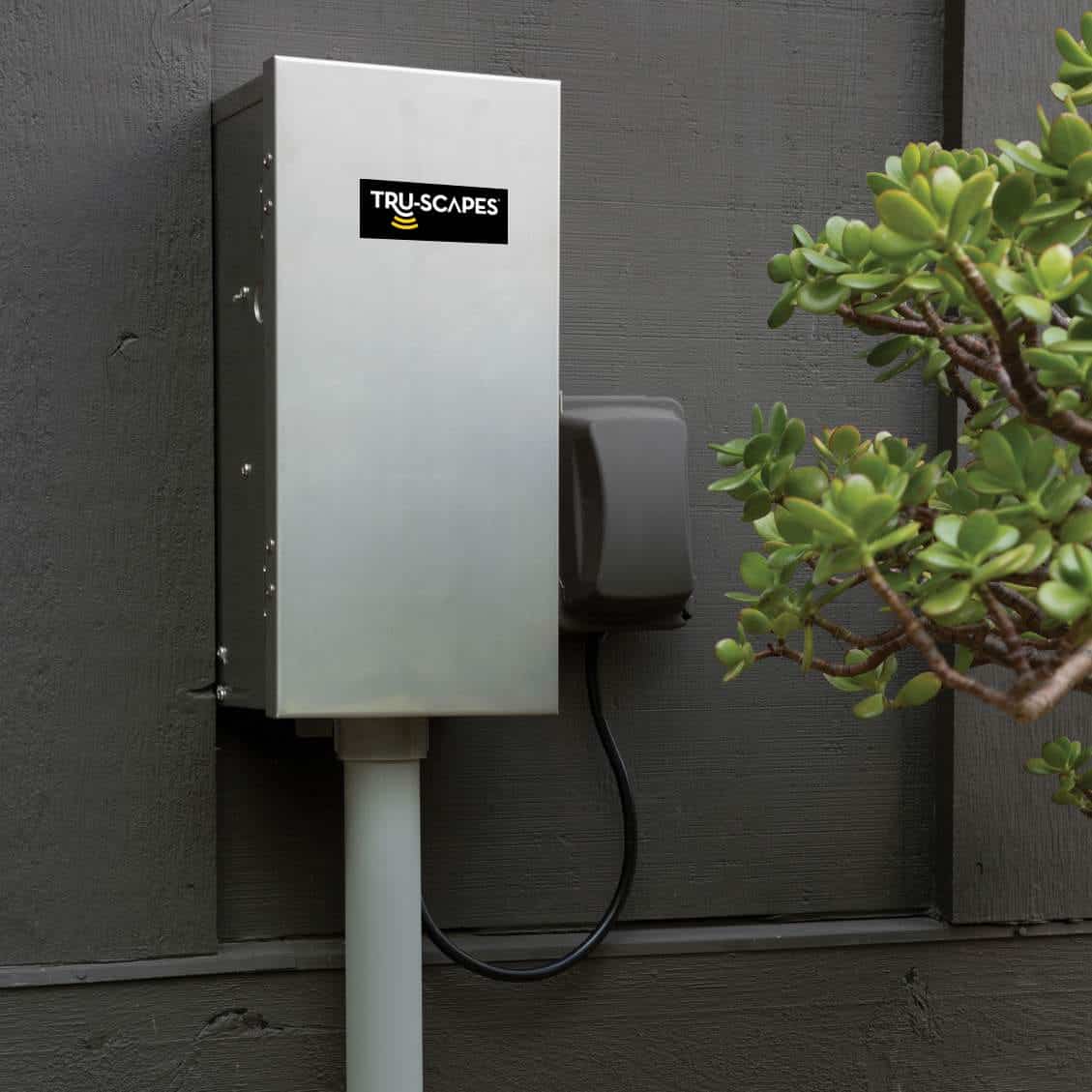
If you’ve ever installed outdoor landscape lighting only to watch bulbs flicker, dim, or burn out prematurely, there’s a good chance the problem started before you ever laid a wire — it started at the transformer. Landscape lighting transformer sizing is the single most important technical decision in any low voltage outdoor lighting project, yet it’s consistently overlooked by both DIYers and first-time installers.
A transformer converts standard 120V household current into the safe 12V power used by most low voltage landscape lighting systems. Choose one that’s too small and your LED landscape lights will underperform and your components will wear out faster. Choose one that’s too large and you’ve paid for capacity you’ll never use. Get it right, and your entire landscape lighting design — from pathway landscape lights to dramatic uplighting for trees — runs reliably for years.
This guide walks you through the complete process: how to calculate wattage loads, read transformer specs, account for future expansion, and match the right unit to your property’s actual needs. For hands-on setup guidance, see our low voltage installation walkthrough.
Step-by-Step: How to Calculate the Right Transformer Size
Step 1 — Inventory every fixture you plan to install.
List each garden lighting fixture, pathway landscape light, uplighting unit, and accent spot. Note the wattage for each. If you’re using LED landscape lights, this is typically 2W–10W per fixture. Older halogen fixtures run 20W–50W each — a significant difference. Use our outdoor lighting wattage reference to verify accurate fixture specifications.
Step 2 — Add up total wattage for each circuit zone.
Most low voltage landscape lighting transformers support multiple output zones or ports. Group fixtures by zone (front yard, back yard, driveway, garden bed) and sum the wattage per zone. Our landscape lighting zone planning guide helps you map these circuits effectively.
Step 3 — Calculate your total system wattage.
Sum all zones to get the total wattage your system will draw at full operation. For example, 12 pathway lights at 4W each + 6 tree uplights at 7W each = 48W + 42W = 90W total.
Step 4 — Apply the 10–20% safety buffer.
Multiply your total wattage by 1.2 to get your minimum recommended transformer rating. In the example above: 90W × 1.2 = 108W minimum. You would select a 150W transformer, which is the next standard size up.
Step 5 — Factor in future expansion.
If you plan to add fixtures within the next few years, size up by one tier now. Adding a 300W transformer instead of a 150W costs less than replacing the unit later. Browse available options in our landscape lighting transformer catalog.
Step 6 — Check wire run length and voltage drop.
Longer wire runs lose voltage over distance. For runs exceeding 100 feet, consult the National Electrical Code low-voltage requirements or use our voltage drop troubleshooting guide to ensure adequate delivery at each fixture endpoint.
Step 7 — Verify your transformer’s zone capacity matches your design.
A transformer with a single 300W output differs from one with four 150W zone ports. Multi-zone units let you control uplighting for trees, pathway lights, and garden fixtures on independent timers.
Transformer Size Comparison: What to Choose for Your Property
| Property Size | Typical Fixture Count | Recommended Transformer Size | Best For | Notes |
|---|---|---|---|---|
| Small (under 1/4 acre) | 6–12 fixtures | 150W | Starter kits, patios | LED recommended |
| Medium (1/4 to 1/2 acre) | 12–24 fixtures | 300W | Pathway + accent zones | Most common residential choice |
| Large (1/2 to 1 acre) | 24–48 fixtures | 600W | Multi-zone designs | Dual outlet |
| Estate / Commercial | 48+ fixtures | 900W–1,200W+ | Professional landscape lighting | Multi-zone required |
| Low voltage lighting kits | Varies (kit-specific) | Kit-included (typically 45W–150W) | DIY beginner installs | Often insufficient for expansion |
If your project is a compact garden install with fewer than 10 LED fixtures, choose a 150W transformer. If your project spans a large backyard with uplighting for trees, perimeter garden lighting fixtures, and a driveway run, a 600W multi-zone unit will give you both the capacity and the scheduling flexibility your design requires. For kit-based starting points, review our best low voltage landscape lighting kits.
LED vs. Halogen: How Bulb Type Changes Your Sizing Math
The shift from halogen to LED landscape lights has fundamentally changed how professionals approach transformer sizing. A halogen MR16 bulb draws 20W–50W; the LED equivalent draws 3W–7W. Across a 30-fixture system, that difference can mean needing 1,200W versus just 180W — nearly a seven-fold reduction. According to U.S. Department of Energy LED performance data, modern LEDs dramatically cut power draw while maintaining equivalent or superior light output.
Pros of LED Fixtures
- Drastically lower wattage per fixture
- Allows smaller, less expensive transformers
- Longer bulb lifespan (25,000–50,000 hours)
- Lower long-term energy cost
- Better color rendering options
Cons of LED Fixtures
- Higher upfront fixture cost
- Some transformers have minimum load requirements
- Color temperature can vary between brands
- Some older transformers are incompatible
Industry experts suggest that homeowners upgrading from halogen to LED should audit their transformer’s minimum load rating. Some older units require a minimum wattage draw to function correctly.
If you’re converting a system entirely to LED landscape lights, verify your transformer supports low-load operation or replace it with a modern unit designed for LED compatibility. Our LED versus halogen fixture comparison provides detailed compatibility guidance.
Common Transformer Sizing Mistakes — and How to Avoid Them
| DO | DON’T |
|---|---|
| Calculate actual fixture wattage before purchasing using our outdoor lighting wattage reference | Guess your fixture count or assume wattage |
| Add a 10–20% buffer above your total load | Operate a transformer at or near 100% capacity |
| Account for wire run length and voltage drop with our voltage drop troubleshooting guide | Mix halogen and LED loads without checking compatibility |
| Use a multi-zone transformer for complex designs per our landscape lighting zone planning guide | Install a transformer indoors without proper venting |
| Plan capacity for future fixture additions | Ignore the manufacturer’s wire gauge recommendations — see our outdoor wiring specification and repair guide |
| Choose a weatherproof, outdoor-rated unit — browse options in our landscape lighting transformer catalog | Buy the cheapest unit without reviewing zone count |
Understanding Voltage Drop in Outdoor Landscape Lighting
Voltage drop is one of the most underestimated challenges in landscape lighting design. As current travels along a wire, resistance causes a gradual reduction in voltage. A fixture receiving only 10.5V instead of 12V will appear noticeably dimmer — a common complaint in DIY installs where long wire runs weren’t accounted for. The Illuminating Engineering Society voltage standards recommend keeping voltage at each fixture within 10% of the transformer’s rated output. For a 12V system, that means no fixture should receive less than 10.8V.
If you need to run wiring more than 150 feet from the transformer, consider using heavier gauge wire (10 AWG instead of 12 AWG) — see our outdoor wiring specification and repair guide — daisy-chaining from multiple transformer ports rather than a single run, or installing a secondary remote transformer closer to distant fixtures in the landscape lighting design.
Sizing a Transformer for a Suburban Backyard
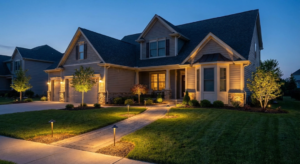
A homeowner in the mid-Atlantic region planned a backyard outdoor landscape lighting system with the following fixtures: 8 pathway landscape lights at 4W each, 4 uplights for trees at 7W each, 2 wall wash garden lighting fixtures at 6W each, and 2 step lights at 3W each. Total load: 32W + 28W + 12W + 6W = 78W With a 20% buffer, the minimum recommended transformer size is 93.6W, rounding up to a standard 150W unit.
The homeowner also wanted to add a water feature light later, so they selected a 300W multi-zone transformer — a decision that cost $40 more upfront but eliminated a future replacement. For placement guidance on these fixture types, see our pathway light placement guidelines and professional tree uplighting techniques.
Quick Answers – FAQ
Q: What size transformer do I need for 10 LED landscape lights?
A; If each LED fixture draws 5W, your total load is 50W. With a 20% safety buffer, you need at least a 60W-rated transformer. Most professionals would recommend a 150W unit to allow for future expansion. Use our landscape transformer sizing guide for precise calculations.
Q: Can I run too many lights on a landscape lighting transformer?
A; Yes. Overloading a transformer causes overheating, tripped breakers, and premature failure. Never operate a transformer above 80% of its rated wattage capacity for sustained periods.
Q: What is the difference between a 150W and 300W landscape transformer?
A; The wattage rating reflects the maximum load the unit can safely handle. A 300W transformer supports roughly twice as many fixtures as a 150W model and may include additional zone ports for independent circuit control. Compare options in our landscape lighting transformer catalog.
Q: Do LED lights require a special landscape lighting transformer?
A; Not always, but compatibility matters. Some older or analog transformers have minimum load requirements that LED systems may not meet. Look for a transformer specifically rated for LED loads or check the manufacturer’s minimum wattage specification. Our LED versus halogen fixture comparison includes compatibility notes.
Q: How far can I run low voltage landscape lighting wire from the transformer?
A; Most manufacturers recommend keeping total wire runs under 100 feet for 12 AWG wire before voltage drop becomes problematic. For longer runs, upgrade to 10 AWG wire or add additional transformer access points in the landscape layout. See our voltage drop troubleshooting guide for detailed solutions.
Q: What is landscape lighting transformer sizing based on?
A; Landscape lighting transformer sizing is based on the total wattage of all connected fixtures, wire run length, number of zones, and a 10–20% safety buffer above calculated load to prevent overloading.
Q: Can I use one transformer for my entire property?
A; For smaller properties, yes. For larger or complex landscape lighting designs, it’s often better to use multiple transformers or a high-wattage multi-zone unit to manage different areas independently and reduce voltage drop issues. Our landscape lighting zone planning guide explains strategic zoning approaches.
Q: What transformer is included in low voltage landscape lighting kits?
A; Most low voltage landscape lighting kits include a basic 45W–150W transformer sufficient for the included fixtures only. These are often inadequate for expanded systems and should be upgraded if you plan to add more fixtures. Review kit limitations in our best low voltage landscape lighting kits guide.
Glossary of Terms
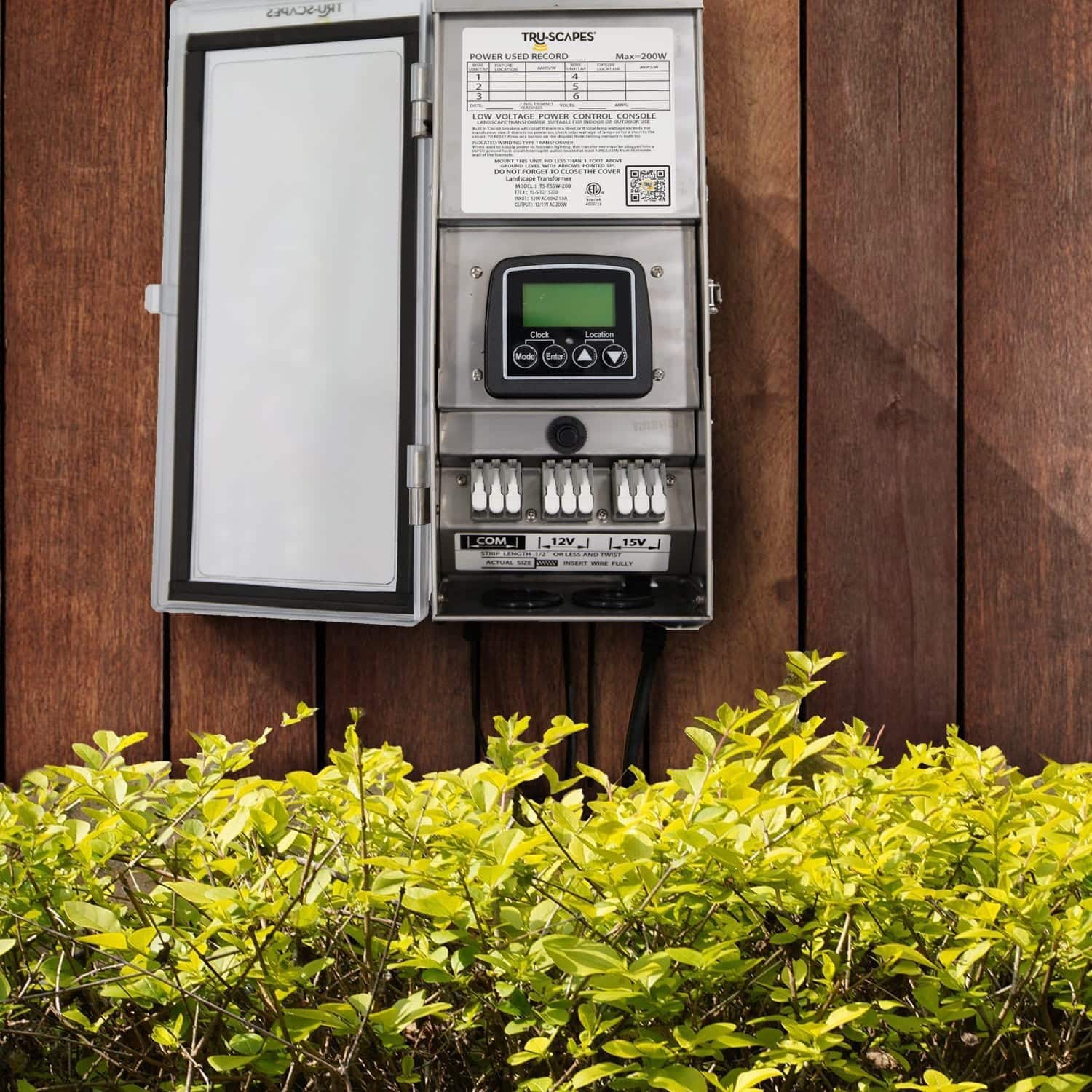
Transformer (Landscape Lighting) A device that steps down standard 120V household AC current to the 12V output used by most low voltage outdoor landscape lighting systems. Rated in watts, it determines how many fixtures a system can power. Browse options in our landscape lighting transformer catalog.
Voltage Drop The loss of electrical voltage as current travels through wire over distance. In landscape lighting, excessive voltage drop causes fixtures to appear dim and can shorten their operational lifespan. Learn prevention strategies in our voltage drop troubleshooting guide.
Wattage Load The total electrical power consumed by all fixtures connected to a circuit, measured in watts. Accurate load calculation is the foundation of proper landscape lighting transformer sizing. Use our outdoor lighting wattage reference for fixture specifications.
Multi-Zone Transformer A transformer with multiple independent output ports or circuits, allowing different groups of fixtures — such as pathway lights, garden fixtures, and uplights — to be controlled and scheduled separately. Learn zoning strategy in our landscape lighting zone planning guide.
Conclusion
Choosing the right transformer is not a secondary consideration — it is the backbone of a well-designed outdoor landscape lighting system. Whether you’re building a simple garden path with a low voltage lighting kit or designing professional landscape lighting for a large estate, the process is the same: count your fixtures, calculate total wattage, add your buffer, and plan for what comes next. Use our landscape transformer sizing guide to walk through each step.
The good news is that modern LED landscape lights have made sizing far more forgiving. Lower wattage draws mean smaller transformers, longer runtimes, and reduced energy costs. And with multi-zone transformers now widely available at accessible price points, independent control of your pathway landscape lights, uplighting for trees, and garden accent zones is easier than ever. Take the time to size your transformer correctly before you buy a single fixture. Your landscape lighting design will thank you — and so will your electricity bill.
Ready to start your outdoor lighting project? Use the step-by-step wattage calculator above to determine your transformer size, then explore our full range of low voltage landscape lighting components to build the perfect system for your property. Browse available transformers in our landscape lighting transformer catalog and reference our low voltage installation walkthrough for confident setup.