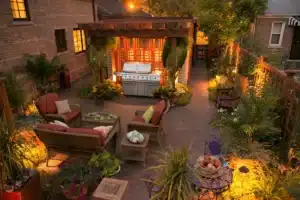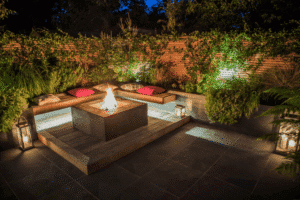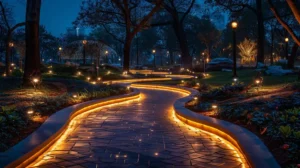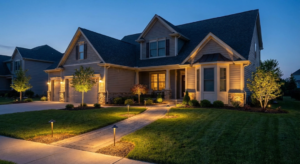
Did you know that 68% of homeowners agree that outdoor lighting significantly improves the daily enjoyment of their property? It’s not just about seeing where you step; it’s about extending your living space well after the sun dips below the horizon. When it comes to your pool area, the stakes are even higher. You need a setup that blends rigorous safety with resort-style elegance.
In this guide, you will learn exactly how to transform your backyard oasis using professional-grade, low-voltage solutions. We will cover everything from essential safety placements to creative design concepts that highlight your hardscaping. By the end, you’ll have a clear roadmap to creating a pool environment that is as functional as it is breathtaking.
Why Poolside Lighting Matters
Lighting a pool isn’t just about making the water glow; it’s about defining the entire space. When you invest in a quality pool, the surrounding area—the deck, the patio, the landscaping—deserves equal attention.
Safety First The primary goal of pool landscape lighting is complying with pool safety standards. Wet surfaces are slip hazards. Shadows can hide toys or uneven pavers. Properly placed fixtures ensure that walkways, steps, and perimeter edges are clearly visible without being harsh or blinding.
Ambiance and Usability Beyond safety, lighting sets the mood. Whether you are hosting a lively summer barbecue or enjoying a quiet evening swim, the ability to control the brightness and color of your lights makes all the difference. With systems like Tru-Scapes® that offer color-changing technology, you can switch from a warm, inviting white to a festive blue or red with a tap on your smartphone.
Design Concepts for Pool Illumination
Creating a cohesive look requires a plan. You don’t want to randomly place lights; you want a layered approach. Here are some proven design concepts for pool illumination that professionals use.
Layering Light Think of your lighting zones in three layers:
- Ambient: General lighting that covers the whole area (e.g., moonlighting from nearby trees).
- Task: Focused light for specific activities (e.g., lighting up the grill or the path to the pool house).
- Accent: Decorative light that highlights features (e.g., uplighting a palm tree or a water feature).
Less is Often More A common mistake is over-lighting. You aren’t trying to recreate a stadium. You want to create pockets of light and shadow that guide the eye. Low-voltage LED fixtures are perfect for this because they offer precise beam spreads that put light exactly where you need it, avoiding light pollution and adhering to responsible outdoor lighting.
Strategies for Lighting Areas Surrounding a Pool
The magic often happens at the water’s edge and beyond. Implementing smart strategies for lighting areas surrounding a pool connects the water feature to the rest of your landscape.
Hardscape Lighting
If your pool is surrounded by a paver patio or retaining walls, hardscape lighting is your best friend.
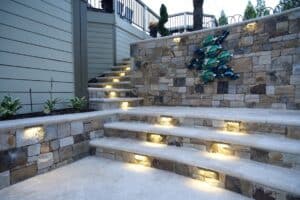
- Under-Cap Lights: These discreet fixtures slide right under the cap of a retaining wall or fire pit. They cast a soft wash of light down the stone, revealing the texture without shining in anyone’s eyes.
- Paver Lights: These durable lights install flush with your pavers, perfect for defining the perimeter of the pool deck without creating a trip hazard.
Deck and Step Lighting
For those with elevated decks or multi-level patios, defining changes in elevation is critical.
- Post Cap Lights: A fixture like the Tru-Scapes® 4.5″ LED Deck Post Cap Light adds a finished look to railings while casting a functional glow downward.
- Riser Lights: Installing small, shielded lights on stair risers ensures every step is visible. This is non-negotiable for preventing trips and falls in wet zones.
Path Lighting
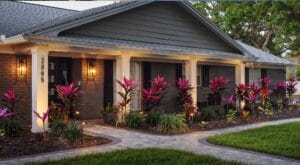
How do your guests get from the house to the pool? Path lights should be staggered along walkways. Avoid the “runway effect” of placing them in straight, even lines. Instead, place them naturally near plants or curves in the path to create a welcoming journey.
Accent Lighting Applications for the Poolside
This is where you can have fun and show off your property’s personality. Accent lighting applications for the poolside add depth and drama.
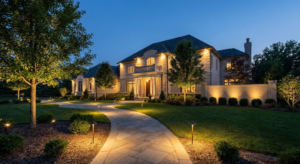
Uplighting Trees and Structures Do you have a pergola or a beautiful specimen tree near the pool? Use uplights to highlight these vertical elements. This not only looks great but also reflects light back into the yard, adding to the overall ambient glow.
Moonlighting If you have mature trees, mounting a downlight high up in the branches creates a natural moonlighting effect that filters through the leaves. It creates soft, dappled shadows on the pool deck that look incredibly organic.
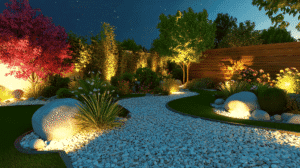
Feature Highlights Use narrow beam spotlights to draw attention to waterfalls, statues, or architectural columns. This creates focal points that look stunning from inside the house or across the yard.
Technical Tips: The Low Voltage Advantage
For residential pool settings in the United States, low voltage (12V) systems are the industry standard for several reasons.
- Safety: 12-volt electricity is much safer to work with and use around water than standard 120-volt line voltage.
- Cost: LED low voltage systems consume a fraction of the energy.
- Flexibility: Cables don’t need to be buried as deep, making installation less disruptive to your existing landscape.
Wiring and Transformers Your system needs a transformer to convert your home’s power down to 12V. Tru-Scapes® transformers are designed to be user-friendly, often featuring Bluetooth or Wi-Fi connectivity. This allows you to set timers, dim lights, and control zones directly from your phone.
Voltage Drop One technical detail to watch is voltage drop. If you run a wire too far with too many lights, the lights at the end may be dimmer. Using the correct wire gauge (thickness) and a quality multi-tap transformer ensures every fixture shines with equal brilliance.
Feature Comparison: LED vs. Halogen
Many homeowners wonder if they should stick with old-school bulbs or upgrade. Here is a quick LED vs. Halogen breakdown.
| Feature | LED Lighting | Halogen Lighting |
| Lifespan | 30,000 – 50,000 hours | 2,000 – 5,000 hours |
| Energy Use | Very Low (consume a fraction of the energy) | High |
| Heat Emission | Cool to the touch | Gets very hot (burn risk) |
| Color Options | Versatile (RGBW available) | Limited (mostly warm white) |
| Durability | High (solid state) | Fragile (glass bulbs) |
As you can see, LED is the clear winner for modern pool landscape lighting, especially when considering the longevity and cool operating temperature, which is safer for kids and pets.
Common Mistakes to Avoid
Even with the best intentions, designs can go wrong. Here are a few pitfalls to steer clear of.
- Glare: Aiming lights directly at the seating area or the water’s surface can cause blinding glare. Always shield your bulbs and aim them away from primary viewpoints.
- Ignoring the View from Indoors: Remember that you will look at your pool from inside the house more often than you will be in it. Ensure the lighting design looks beautiful through your windows during the colder months, too.
- Inconsistent Color Temperature: Mixing warm white (2700K) with cool white (4000K) lights can look messy. Stick to a consistent color temperature—usually 2700K or 3000K is best for a warm, residential feel.
Frequently Asked Questions (FAQs)
Q: Can I install these lights myself? A: While low voltage lighting is safer than line voltage, professional installation ensures optimal placement, proper wire concealment, and correct load balancing on the transformer. However, many handy homeowners do successfully install Tru-Scapes® systems.
Q: How do I control the color of the lights? A: With Tru-Scapes® Bluetooth-enabled transformers and fixtures, you can use a simple app on your phone to change colors, adjust brightness, and set schedules.
Q: Are these lights waterproof? A: Yes, quality landscape lighting fixtures are rated for outdoor use and can withstand rain and sprinklers. However, they are generally not designed to be submerged inside the pool water unless specifically rated as underwater lights.
Q: How often do I need to replace the bulbs? A: Integrated LED fixtures don’t use traditional “bulbs” and can last for over a decade with normal use. If a fixture does fail, Tru-Scapes® offers excellent warranty support.
Q: Will the lights damage my pool liner? A: No. Perimeter landscape lighting is installed on the deck, in the hardscape, or in the garden, so it never touches the pool liner itself.
Conclusion
Illuminating your pool area is one of the best investments you can make for your home. It enhances security, prevents accidents, and turns your backyard into a 24-hour retreat. By using smart design concepts for pool illumination, strategic strategies for lighting areas surrounding a pool, and creative accent lighting applications for the poolside, you can achieve a professional look that dazzles year-round.
Don’t settle for a dark, uninviting backyard. Take the next step in upgrading your outdoor living space.
Ready to light up your night? Browse our full catalog of American-designed lighting solutions at Tru-Scapes.com or use our Find a Pro tool to connect with a certified installer near you today!
Meta Description: Explore expert pool landscape lighting tips for the United States—boost your outdoor safety and ambiance with these professional insights!