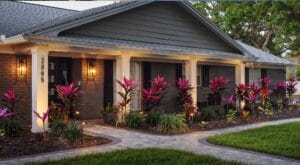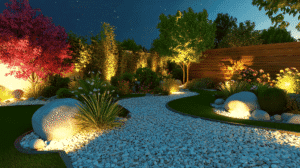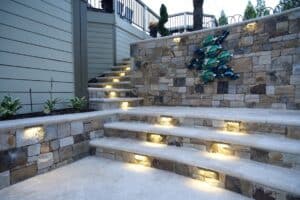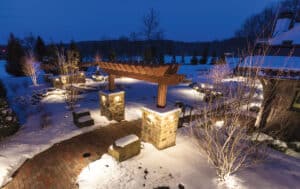
If you’ve ever looked out at your yard after sunset and thought, “This place needs some light,” you’re not alone. Landscape lighting is one of the highest-return outdoor upgrades a homeowner can make—but figuring out the real cost before you commit is easier said than done. Contractor quotes vary widely, product quality differs dramatically, and the gap between a DIY weekend project and a professional landscape lighting design can be measured in thousands of dollars.
This guide lays out exactly what drives lighting installation cost in 2026, what you get at each price tier, and how to make a smart decision whether you’re planning a simple pathway setup or a full architectural lighting transformation.
Key Takeaways
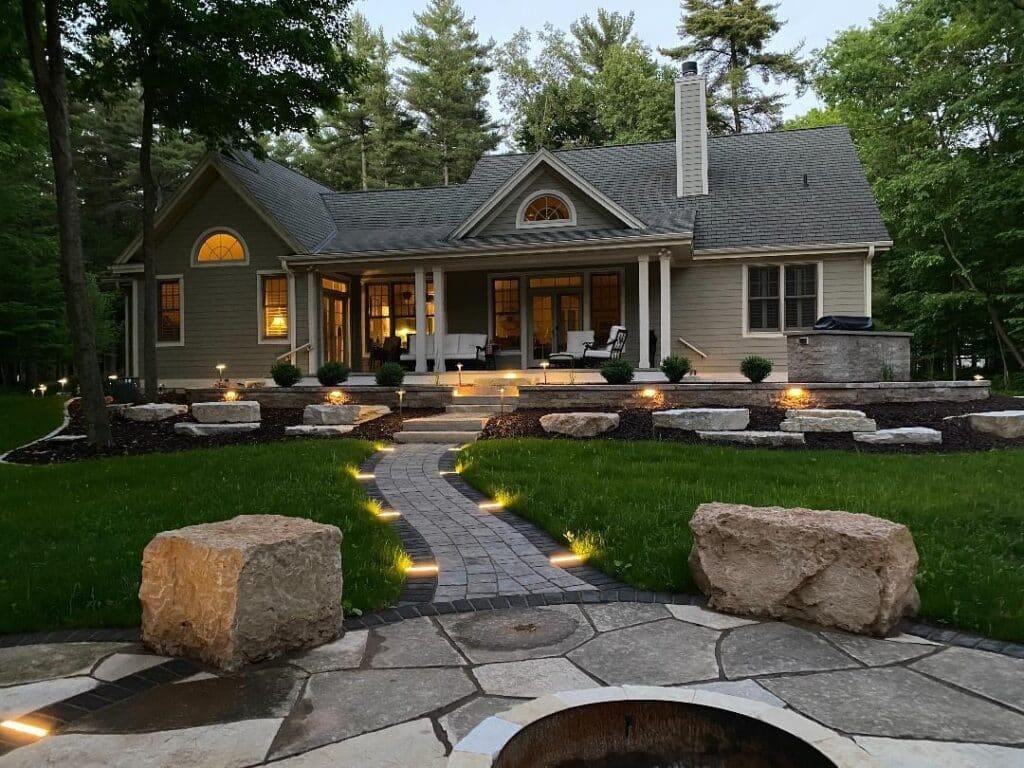
- Lighting installation cost for a professional landscape system ranges from $2,000–$6,000 on average.
- Low voltage landscape lighting kits are the most budget-friendly DIY option, often under $200.
- LED landscape lights last significantly longer than halogen alternatives and lower long-term energy bills.
- A landscape lighting transformer is a critical component—sizing it correctly prevents system failure.
- Professional landscape lighting design adds upfront cost but improves safety, aesthetics, and resale value.
- Uplighting for trees and pathway landscape lights are the two most commonly installed fixture categories.
Understanding the Major Cost Factors
System Type: Low-Voltage vs. Line-Voltage
The single biggest factor shaping your budget is the voltage system you choose.
Low voltage landscape lighting (typically 12V) is the dominant choice for residential properties. It’s safer, easier to install without a licensed electrician in most states, and compatible with the wide range of LED landscape lights now on the market. Most low voltage landscape lighting kits include a transformer, wire, and a handful of fixtures—enough to light a front walkway or a small garden bed.
Line-voltage systems (120V) are used for high-intensity commercial-grade applications, such as large uplighting for trees on expansive estate properties. They must be installed by a licensed electrician and typically cost 30–50% more in labor than a comparable low-voltage installation, often requiring compliance with National Electrical Code requirements.
If you need basic curb appeal lighting for a standard residential lot, low-voltage systems are almost always the right choice. If you own a large property requiring powerful wash lighting or submersible pond fixtures, line-voltage may be warranted.
Fixture Counts and Types
The number and type of garden lighting fixtures you install is the second biggest cost driver. Common fixture categories include:
Price Breakdown by Installation Type
DIY Low Voltage Landscape Lighting Kits
Low voltage landscape lighting kits available at home improvement retailers typically cost:
| Kit Type | Fixture Count | Price Range | Notes |
|---|---|---|---|
| Starter kit (path lights) | 6–8 fixtures | $60–$150 | Includes transformer + wire |
| Mid-range kit (mixed) | 10–15 fixtures | $150–$300 | LED, adjustable heads |
| Expanded system | 16–25 fixtures | $250–$500 | Multi-zone transformer |
| Premium solar kit | 8–12 fixtures | $100–$250 | No wiring required |
A word on transformers: A landscape lighting transformer converts your home’s 120V power to the 12V used by the system. Undersizing it is the most common DIY mistake. Industry guidance from lighting associations consistently recommends that your transformer’s wattage capacity should exceed your total fixture load by at least 25–50%.
Professional Landscape Lighting Installation
When you hire a licensed landscape lighting company or electrician, costs shift significantly. Labor typically accounts for 40–60% of the total project cost.
Typical professional installation price ranges (2026 estimates):
| Project Scope | Fixture Count | Estimated Total Cost |
|---|---|---|
| Small front yard (path + 2 uplights) | 8–12 | $1,200–$2,500 |
| Mid-size landscape package | 15–25 | $2,500–$5,000 |
| Full property design & installation | 30–60+ | $5,000–$15,000+ |
| Luxury estate with custom design | 60+ | $15,000–$40,000+ |
These figures are consistent with ranges reported by the National Association of Landscape Professionals and independent contractor pricing surveys.
Step-by-Step: How a Professional Landscape Lighting Installation Works
- Initial consultation and site walk – A lighting designer or contractor assesses your property, identifies focal points (trees, architecture, water features), and discusses your goals.
- Landscape lighting design proposal – A lighting plan is drafted, mapping fixture placement, wire runs, zone assignments, and transformer location.
- Material selection – Fixtures, wire gauge, transformer capacity, and smart controls (if applicable) are specified. Most professionals use commercial-grade LED landscape lights rated for outdoor use.
- Trenching and wire installation – Low-voltage wire is typically buried 3–6 inches. Some regions require deeper burial per local code.
- Fixture mounting and aiming – Each fixture is placed, connected, and aimed. Uplighting for trees requires careful positioning to avoid harsh glare.
- Transformer programming – Timer, photocell, and zone settings are configured. Smart transformers can be app-controlled via smart lighting control systems.
- Final walkthrough and adjustment – The installer reviews the full system at dusk, making final aim and brightness adjustments.
- Warranty and maintenance documentation – Reputable contractors provide a written warranty on labor (typically 1–2 years) and pass along manufacturer warranties on fixtures.
Pros and Cons of Professional vs. DIY Landscape Lighting
When weighing DIY vs. professional installation, consider the following:
Professional Installation
Pros:
- Proper design ensures balanced, intentional lighting
- Commercial-grade fixtures last 15–25 years
- Permits and code compliance handled for you
- Warranty on labor and system performance
Cons:
- Higher upfront cost ($2,000–$15,000+)
- Lead times can run 2–6 weeks during peak season
- Contractor quality varies widely
DIY Low Voltage Kits
Pros:
- Significantly lower cost ($60–$500)
- No permits required in most jurisdictions for low-voltage
- Flexible—add or move fixtures anytime
- Immediate weekend installation
Cons:
- Consumer fixtures have shorter lifespans (3–7 years)
- Poor transformer sizing causes failures
- Limited design sophistication
- No professional design guidance
Do’s and Don’ts of Landscape Lighting Installation
Do:
- Size your landscape lighting transformer to at least 125% of your total load following proper transformer sizing guidelines
- Use weatherproof wire connectors rated for direct burial
- Choose LED landscape lights rated at a minimum IP65 for outdoor durability
- Plan zones to control different areas of your yard independently
- Test your layout at night before burying wire permanently
Don’t:
- Overload a single transformer circuit
- Use indoor-rated fixtures outside
- Aim uplighting directly into neighbors’ windows or the street
- Skip a ground-fault circuit interrupter (GFCI) outlet for the transformer
- Install line-voltage systems without a licensed electrician
What Affects Cost the Most: A Realistic Case Study
A homeowner in suburban Denver installs professional landscape lighting for a 2,400 sq. ft. lot with a two-car garage, mature oak trees, and a front pathway. The lighting designer specifies 8 pathway landscape lights, 4 uplight spots for the trees, 2 downlights mounted in the oaks, and 2 wall wash fixtures on the garage facade—16 fixtures total.
Material cost: ~$1,400 (commercial LED fixtures, 150W smart transformer, wire, connectors) Labor cost: ~$1,600 (6 hours of installation + design consultation) Total: ~$3,000
If the same homeowner had purchased a consumer-grade landscape lighting kit at a home improvement store and self-installed, the same zone could have been lit for $200–$350—but with shorter-lived fixtures, a basic transformer with no smart controls, and no warranty on the design outcome.
The gap between DIY and professional is real. Whether it’s worth it depends on your priorities.
How LED Landscape Lights Changed the Cost Equation
Ten years ago, landscape lighting meant halogen bulbs that burned hot, faded quickly, and consumed significant electricity. The widespread adoption of energy-efficient LED ideas changed everything.
Industry data compiled by the Illuminating Engineering Society and Department of Energy data indicates that LED fixtures use 75–80% less energy than equivalent halogen sources. For a 20-fixture professional system that runs 6 hours per night, the monthly electricity savings can offset a meaningful portion of the installation cost over time.
LED fixtures in the professional-grade range also carry L70 ratings—the point at which light output drops to 70% of original. Quality LEDs routinely achieve L70 ratings of 50,000 hours or more, translating to 20+ years of reliable operation in a typical outdoor lighting schedule.
If you’re comparing quotes, always verify whether the contractor is specifying LED or legacy halogen fixtures. The upfront cost difference is small; the lifetime cost difference is substantial.
Quick Answers – FAQ
How much does landscape lighting installation cost on average? Most homeowners spend between $2,000 and $6,000 for a professional low-voltage LED landscape lighting system. Smaller DIY projects using kits can cost $100–$500.
Do I need a permit for low-voltage landscape lighting? In most U.S. jurisdictions, low-voltage (12V) landscape lighting does not require a permit. However, line-voltage (120V) systems always require a licensed electrician and typically a permit. Check with your local building department before starting any work.
What size transformer do I need for landscape lighting? Add up the total wattage of all your fixtures, then choose a transformer rated at least 25–50% higher than that load. A 150W transformer comfortably handles 12–15 standard LED pathway lights.
How long does professional landscape lighting installation take? A standard residential installation of 15–25 fixtures typically takes one full day (6–8 hours) for an experienced crew. Larger estate projects can run 2–3 days.
Are solar landscape lights worth it? Solar pathway lights are a cost-effective option for areas with consistent sun exposure and low-priority accent lighting. They don’t perform well in shaded areas, in northern climates, or for uplighting applications where consistent brightness matters.
What is the best placement for uplighting trees? Position uplights 12–24 inches from the base of the tree, angled upward at approximately 30–45 degrees. For trees with wide canopies, two fixtures placed on opposite sides provide more even illumination.
Can I add more fixtures to my existing landscape lighting system later? Yes, as long as your transformer has remaining capacity. Most low-voltage systems are modular by design, allowing you to add fixtures to existing wire runs.
What’s the lifespan of professional-grade LED landscape fixtures? Quality commercial LED landscape fixtures from established manufacturers typically carry L70 ratings of 50,000 hours, with fixture warranties of 5–10 years common at the professional tier.
Does landscape lighting increase home value? Multiple real estate and home improvement research sources—including analyses by the American Society of Landscape Architects—indicate that outdoor lighting improves perceived curb appeal and can positively affect resale valuations, improving the return on investment for outdoor lighting, though the precise ROI depends heavily on local market conditions and industry Cost vs. Value data.
What is a landscape lighting transformer? A landscape lighting transformer is the central control device that steps down your home’s 120V AC power to the 12V used by low-voltage landscape systems. Modern smart transformers also include timers, photocells, and app-based zone controls.
Glossary of Terms
Low Voltage Landscape Lighting: A 12V outdoor lighting system powered through a transformer that steps down standard household current. Safer and easier to DIY than line-voltage systems, and the standard for most residential landscape lighting installations.
Landscape Lighting Transformer: The device that converts 120V AC household power to 12V DC used by low-voltage fixtures. Transformers range from basic timer models to smart units with app-based zone control, and must be properly sized to your total fixture wattage.
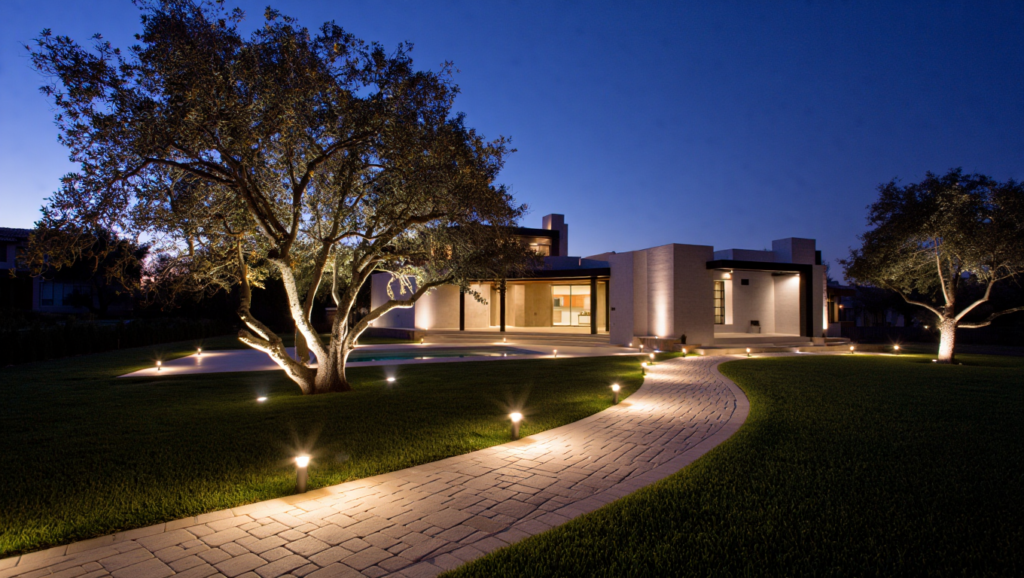
Uplighting: A lighting technique in which fixtures are positioned at or near ground level and aimed upward to illuminate trees, architectural features, or vertical surfaces. Uplighting is one of the most visually impactful landscape lighting applications.
LED (Light Emitting Diode): A solid-state lighting technology that uses far less energy than traditional halogen or incandescent sources. In outdoor landscape applications, LEDs offer longer lifespans, reduced energy costs, and lower heat output than legacy alternatives.
Conclusion
Outdoor landscape lighting is one of the few home improvements that delivers value every single night. It improves safety, extends usable outdoor time, deters intruders, and adds visible curb appeal that neighbors and buyers notice. The lighting installation cost you pay today—whether $200 for a starter kit or $5,000 for a professional design—reflects an investment in how you experience your property after dark.
For most homeowners, the smartest path is a phased approach: start with a professional consultation to create a master lighting plan, then execute it in stages as budget allows. This avoids the common mistake of self-installing piecemeal systems that clash visually or strain underpowered transformers.
Ready to get started? Find a licensed professional in your area for a site walk and design proposal—most offer complimentary consultations. You may be surprised how quickly a well-planned system pays for itself in energy savings, security, and enjoyment.