Key Takeaways
- Modern concrete lighting blends raw texture with refined design for a high-end outdoor aesthetic.
- Concrete light fixtures outdoors are highly weather-resistant and require minimal long-term maintenance.
- Modern concrete garden lights work best when paired with warm LED bulbs for a welcoming ambiance.
- Placement matters: path lights, wall sconces, and pendant lamps each serve different spatial purposes.
- If you want a cohesive look, match your concrete patio lights to other hardscape elements like retaining walls or planters.
- Cement outdoor lighting is available in DIY-cast and professionally manufactured options to suit any budget.
Why Modern Concrete Lighting Is Reshaping Outdoor Design
Outdoor lighting has come a long way from the simple brass lantern or the plastic post lamp. Today, homeowners and landscape designers across the United States are turning to modern concrete lighting as a go-to solution for spaces that demand both function and visual impact.
Concrete brings a tactile honesty to outdoor environments. Its weight and texture communicate permanence and intention — qualities that resonate with the current movement toward organic, material-forward design. Whether you are updating a backyard patio, lining a garden path, or accenting an entryway, concrete light fixtures offer a level of architectural credibility that plastic or resin alternatives simply cannot match.
In this guide, you will learn which concrete lighting styles work best for different outdoor settings, how to choose the right fixtures, and how to install them correctly. You will also find a step-by-step walkthrough, a comparison table of popular styles, and answers to the most common questions homeowners ask.
Understanding the Appeal of Concrete Light Fixtures Outdoor
Concrete as a lighting material is not a passing trend. Architects and interior designers have long used exposed concrete to communicate a kind of restrained sophistication — think of the work associated with brutalist architecture or the clean interiors of Scandinavian design studios. Translating that sensibility outdoors simply makes sense.
Cement outdoor lighting is particularly well-suited to climates with temperature extremes. Properly cured concrete resists cracking through freeze-thaw cycles better than many other materials, and it does not corrode in coastal or humid environments the way metal fixtures can. The American Concrete Institute notes that concrete’s durability is one of its defining advantages across applications.
Modern concrete garden lights also age gracefully. Over time, a light patina can develop that deepens the texture and ties the fixture more naturally into its landscape setting. For homeowners who prefer a curated, lived-in look over a permanently pristine finish, this aging quality is a feature rather than a flaw.
Types of Modern Concrete Lighting for Outdoor Spaces
1. Concrete Path and Ground Lights
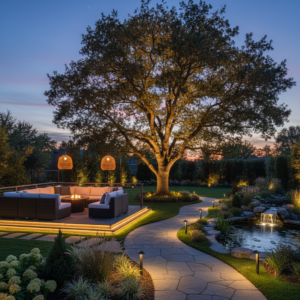
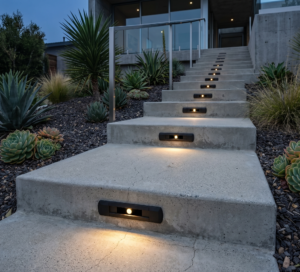
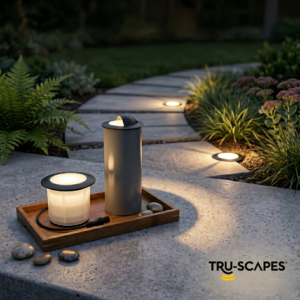
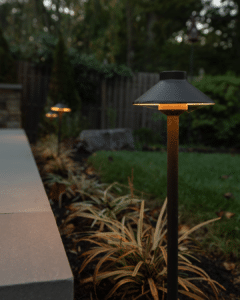
Low-profile path lights are among the most practical applications of modern concrete lighting. Set flush with or just above grade, they guide foot traffic safely while casting a soft, directional glow along walkways and garden borders.
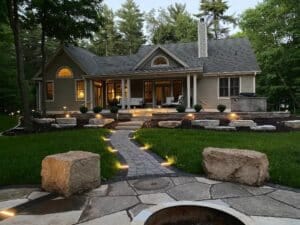
Ground-level concrete fixtures pair especially well with crushed gravel paths, flagstone, and decomposed granite surfaces. Because the fixture and the hardscape share similar tones and textures, the overall result feels intentional rather than added-on.
If you need subtle lighting that blends into the landscape during the day, choose path lights in a raw or brushed concrete finish.
2. Concrete Wall Sconces
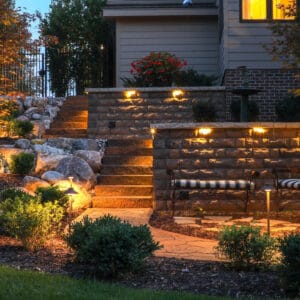
Wall-mounted concrete sconces bring definition to vertical surfaces — fence lines, garden walls, house exteriors, and retaining structures. The weight of the fixture creates a visual anchor, and the material connects to masonry construction in a way that feels native to the outdoors.
Outdoor concrete lamp ideas in the sconce category range from simple cylindrical forms that direct light upward or downward, to more sculptural pieces with angular cuts that project dramatic shadow patterns at night.
If you are working with a contemporary or minimalist home exterior, a clean rectangular concrete sconce offers strong visual alignment with the architecture.
3. Concrete Pendant and Hanging Lights
Covered patios, pergolas, and outdoor dining areas benefit enormously from overhead lighting that establishes an interior-like atmosphere. Concrete pendant lights sized for outdoor use — typically with weatherproofed cord sets and sealed surfaces — deliver that quality without sacrificing the industrial-organic aesthetic.
These fixtures work particularly well when hung at dining height over a table, creating a focused pool of warm light that encourages conversation.
4. Concrete Patio Post Lights
For larger outdoor living spaces, post-mounted concrete patio lights define zones and add vertical interest. Placed at the corners of a deck, along a driveway, or flanking a gate, post lights serve a dual role: safety illumination and spatial delineation.
Concrete patio lights in post form often incorporate metal hardware in matte black or brushed steel, which creates a clean contrast against the gray tones of the concrete body.
5. Concrete Bollard Lights
Bollard-style fixtures are short, sturdy, and purposeful. They are among the most durable formats for cement outdoor lighting and are well-suited to high-traffic zones like driveways, commercial entries, or pool decks. Bollards emit light in a 360-degree pattern or through directional slots, depending on the design.
How to Choose the Right Concrete Lighting for Your Space
Not every concrete fixture suits every setting. The following considerations will help narrow your options.
- Consider scale first. A large post light looks balanced on a wide driveway but overwhelming on a narrow garden path. A petite path light disappears on an expansive patio deck.
- Think about light output and color temperature. Concrete fixtures paired with warm white LEDs (2700K–3000K) feel welcoming and residential. Cooler whites (4000K+) lean more commercial and clinical — effective for security lighting but less inviting for entertaining spaces.
- Match finish to context. Raw, unpolished concrete suits rustic, naturalistic gardens. Smooth, sealed, or pigmented concrete fits contemporary, minimalist, or architectural landscapes.
- If you need both ambiance and security, choose a fixture that allows for dimming or a dual-bulb configuration — one warm bulb for entertaining, one brighter for safety.
Comparison Table: Modern Concrete Lighting Styles
| Fixture Type | Best Use | Light Direction | Relative Durability | Maintenance Level |
|---|---|---|---|---|
| Path / Ground Lights | Walkways, garden borders | Downward / directional | High | Low |
| Wall Sconces | Exterior walls, fences | Up, down, or wide | Very High | Low |
| Pendant Lights | Covered patios, pergolas | Downward / ambient | Moderate (needs sealing) | Moderate |
| Post Lights | Driveways, deck corners | Omnidirectional | Very High | Low |
| Bollard Lights | Driveways, pool decks | 360° or slotted | Highest | Very Low |
Step-by-Step: Installing Outdoor Concrete Path Lights
Before beginning any electrical work outdoors, consult a licensed electrician and review the National Electrical Code (NEC) safety standards. The following is a general guidance framework.
- Plan your layout. Map out fixture placement using stakes and string. Space path lights 6–8 feet apart for even illumination without overexposure.
- Trench the cable run. Dig a trench 6–12 inches deep along your planned route. Use direct-burial-rated low-voltage cable or conduit for line-voltage systems.
- Set the fixtures. For in-ground fixtures, excavate each installation point to the required depth. For stake-mounted lights, press the stake into the soil and level the fixture.
- Connect the wiring. Follow the manufacturer’s instructions for splicing or connecting. For low-voltage systems, use the provided wire connectors. For line-voltage, a licensed electrician should handle all connections.
- Install the transformer or connect to circuit. Low-voltage systems require a transformer rated for the total wattage of your fixtures. Place it near an outdoor GFCI outlet.
- Test and adjust. Turn the system on after dark to evaluate coverage. Rotate or tilt fixtures as needed before final backfill.
- Backfill and finish. Cover the trench, compact lightly, and restore any disturbed turf or gravel.
Pros and Cons of Concrete Outdoor Lighting
Pros:
- Extremely durable — resists UV fading, moisture, and temperature changes
- Aesthetically versatile — suits contemporary, industrial, rustic, and minimalist styles
- Ages well, developing natural character over time
- Heavier weight means greater stability in wind
- Compatible with LED, solar, and low-voltage systems
Cons:
- Heavier than resin or metal alternatives, making installation more labor-intensive
- Can crack under sharp impact or severe freeze-thaw cycles if improperly sealed
- Limited color options compared to powder-coated metal or painted fixtures
- Porous concrete surfaces may require periodic sealing to prevent water infiltration
- Higher upfront cost compared to basic plastic or resin path lights
Do’s and Don’ts for Concrete Patio Lights
Do:
- Seal all unsealed concrete fixtures before installation to prevent water absorption
- Use GFCI-protected circuits for all outdoor electrical connections
- Choose fixtures rated for wet or damp locations (UL or ETL listed)
- Pair warm-toned bulbs with concrete for a more inviting atmosphere
- Allow newly poured or cast concrete fixtures to cure fully before wiring
Don’t:
- Install concrete fixtures directly on soil without a stable base or mounting hardware
- Use line-voltage wiring without conduit in buried applications
- Assume all concrete fixtures are weatherproof — check the IP rating
- Overlook scale; an oversized fixture in a small garden bed overwhelms the planting
- Neglect to re-seal fixtures every two to three years in wet climates
A Patio Redesign in Austin, Texas
Consider a homeowner in Austin with a 600-square-foot concrete patio attached to a mid-century modern home. The space had functional but dated brass lantern-style post lights that clashed with the architecture.
The redesign replaced those fixtures with four low-profile concrete bollard lights along the perimeter and three wall-mounted concrete sconces on the back exterior wall. The sconces were finished in a smooth, pigmented concrete tinted to match the home’s existing board-formed concrete accent wall.
The result was a patio that read as architecturally unified — the lighting was no longer an afterthought but a material element consistent with the home’s design language. Warm 2700K LED bulbs in all fixtures kept the evening ambiance residential and welcoming.
Industry professionals from organizations such as the Illuminating Engineering Society recommend this kind of fixture-to-architecture coordination as a best practice in residential outdoor lighting design.
Quick Answers: FAQ on Modern Concrete Lighting
What is modern concrete lighting?
Modern concrete lighting refers to outdoor or indoor light fixtures made from cast, molded, or formed concrete, designed with clean lines and contemporary aesthetics that complement architectural and landscape design.
Are concrete light fixtures weather-resistant?
Yes, when properly sealed, concrete fixtures are highly resistant to UV exposure, moisture, and temperature fluctuation. Look for fixtures with a protective sealant coat and an IP65 or higher rating for outdoor use.
How do concrete outdoor lamps compare to metal fixtures?
Concrete fixtures offer superior rust resistance and a more tactile, organic appearance. Metal fixtures may be lighter and easier to install but are more susceptible to corrosion in coastal or high-humidity environments.
Can I make my own concrete garden lights?
DIY concrete casting is achievable with basic materials — cement mix, molds, and electrical hardware. Several online communities and instructional resources provide detailed tutorials. However, electrical components must meet local code requirements regardless of how the fixture was made.
What bulb type works best in concrete patio lights?
According to U.S. Department of Energy LED performance data, LED bulbs are the preferred choice for concrete outdoor lighting. They produce minimal heat, which reduces stress on sealed surfaces, and they consume significantly less energy than halogen or incandescent alternatives. Warm white LEDs (2700K–3000K) are the most popular choice for residential settings.
How do I clean concrete light fixtures?
Use a soft brush or cloth with mild soapy water. Avoid pressure washing or abrasive cleaners, which can erode sealant coatings. Re-seal as needed every two to three years.
Do concrete fixtures work with solar lighting systems?
Yes. Many modern concrete garden lights are designed to accommodate solar-powered LED components, eliminating the need for wiring altogether. Solar versions work best in locations with consistent direct sunlight exposure.
Are concrete outdoor lights heavy to install?
Larger concrete post lights and bollards can be quite heavy, sometimes requiring two people or mechanical assistance. Path and ground fixtures are typically manageable solo.
What is the average lifespan of cement outdoor lighting?
With proper sealing and maintenance, quality concrete fixtures can last 20 years or more. The concrete body itself is essentially permanent; LED components may need replacement every 10–15 years depending on usage.
Do I need a permit to install outdoor concrete lights?
Low-voltage landscape lighting generally does not require a permit. Line-voltage installations (120V) typically do. Always check with your local building authority before beginning any electrical work.
Glossary of Terms
- Concrete (as a lighting material): A composite of cement, aggregate (sand and gravel), and water that, when cured, forms a hard, dense, and durable solid. Used in light fixtures for its weather resistance and architectural character.
- IP Rating (Ingress Protection): A standardized international classification that indicates how well an electrical enclosure resists solid particles and moisture. IP65 means dust-tight and protected against water jets — the minimum recommended for outdoor light fixtures.
- Low-Voltage Lighting: An outdoor lighting system operating at 12V DC, typically powered by a transformer plugged into a standard outlet. Safer and easier to install than line-voltage systems and widely used for landscape path lighting.
- Color Temperature (Kelvin): A measure of the warmth or coolness of a light source. Lower values (2700K–3000K) produce warm, amber-toned light suitable for residential spaces; higher values (4000K+) produce a cooler, bluish-white light more common in commercial settings.
Conclusion: Build an Outdoor Space That Lasts
Modern concrete lighting is one of the most impactful and enduring investments a homeowner can make in an outdoor space. It is functional, architectural, and low-maintenance — a rare combination in any category of home improvement.
Whether you are drawn to the understated texture of raw cement outdoor lighting or the precision of a smooth, pigmented concrete wall sconce, there is a format suited to your landscape, your home’s architecture, and your lifestyle. The key is thoughtful selection: matching scale to space, finish to context, and color temperature to atmosphere.
The comparison table, step-by-step installation guide, and video resources above give you everything you need to move from inspiration to completed project. Review the installation videos linked in this article before purchasing fixtures, and consult a licensed electrician for any line-voltage work.
When outdoor lighting is done right — with materials that mean something, placed with intention — it does not just illuminate a space. It defines it.
Ready to start your project? Browse our full collection of modern concrete garden lights, patio fixtures, and cement outdoor lighting to find the right fit for your space.