Key Takeaways
- The best LED lights for concrete must be rated for in-ground or hardscape use — standard landscape lights will fail prematurely in embedded applications.
- Low voltage LED outdoor lighting systems reduce heat output and extend fixture life, making them the industry standard for concrete installations.
- Tru-Scapes engineers their concrete lighting solutions to resist thermal cycling, corrosion, and moisture intrusion — common failure points in concrete environments.
- The Color Changing Hardscape Light—TS-A3000C adds dynamic visual appeal to driveways, patios, and pool decks without requiring additional fixture runs.
- Proper beam angle, IP rating, and housing material are the three most important specs to evaluate before choosing any fixture for concrete.
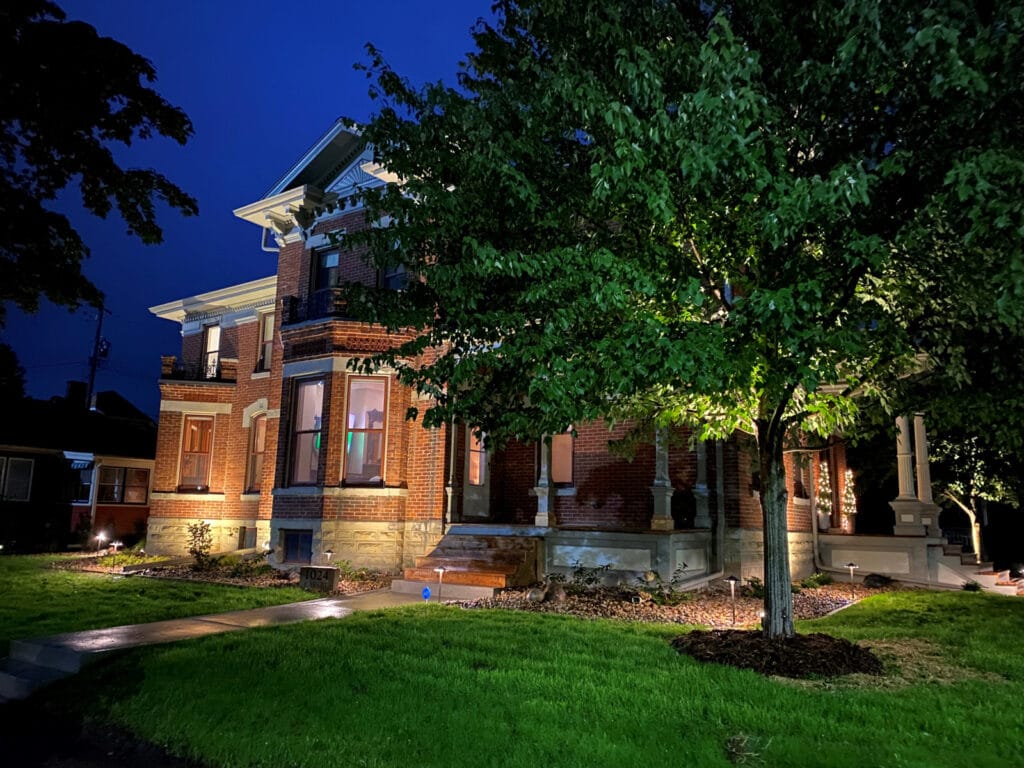
Lighting embedded in or mounted directly against concrete is one of the most demanding applications in the outdoor lighting industry. Unlike pathway lights or post fixtures, in-ground lighting solutions must withstand constant thermal stress, moisture migration through the slab, and in many cases, direct foot traffic or vehicle load. Choosing the wrong fixture almost always means early failure — cracked lenses, flooded housings, or corroded connections that require tearing up hardscape to replace.
The best LED lights for concrete share a few non-negotiable traits: they are built with robust, corrosion-resistant materials; they carry a high IP rating for water and dust ingress; and they are designed to dissipate heat efficiently rather than trap it inside a sealed housing surrounded by dense material. Tru-Scapes has built its hardscape and in-ground product line specifically around these engineering demands, producing fixtures that perform reliably from installation day through years of freeze-thaw cycles, UV exposure, and continuous operation.
This guide walks through what to look for, how to match the right fixture to each application, and which Tru-Scapes products consistently deliver in real-world concrete installations.
Why Concrete Is a Uniquely Challenging Environment for LED Fixtures
Concrete is not a passive material. It expands and contracts with temperature, wicks moisture from the ground, and transmits vibration from foot traffic and vehicle load directly into any hardware set within it. Most standard outdoor fixtures — even quality ones — are designed for soil or air-exposed installation, not for life encased in dense aggregate.
Thermal Cycling
Concrete surfaces in direct sunlight can reach temperatures well above ambient air temperature during summer months. At night, they cool rapidly. This repeated expansion and contraction puts mechanical stress on fixture housings, lens seals, and wiring connections. Fixtures that are not rated for embedded use will develop micro-cracks in their seals over time, allowing moisture intrusion that damages the LED driver and accelerates corrosion.
Moisture Intrusion
Concrete is porous. Moisture moves through it via capillary action, especially in climates with significant rainfall or snowmelt. A fixture with an IP65 rating resists direct water jets, but fixtures set in concrete often face sustained moisture pressure from below and all sides — a very different challenge than surface-level splash protection. Industry experts and organizations following Illuminating Engineering Society (IES) standards consistently emphasize that in-ground luminaires should carry IP67 or IP68 ratings for any application involving direct contact with wet or saturated material.
Load Tolerance
In-ground fixtures set in driveways, pool decks, or commercial walkways must be specified for the expected load. Fixtures with polycarbonate or standard aluminum bezels can crack under repeated foot traffic or the load stress transmitted through concrete when a vehicle passes. Tru-Scapes engineers their in-ground well lights with load-rated lenses and housings designed to meet rigorous ASTM International testing standards for exactly this environment.
How to Choose the Right LED Light for a Concrete Application
Not every concrete installation has the same requirements. A patio accent light has different demands than a driveway in-ground well light. Understanding your application before selecting a fixture saves time, reduces callbacks, and produces a better visual result.
Step-by-Step Selection Process
- Define the application. Is the fixture being set flush into the concrete surface, mounted against a retaining wall, or accenting the edge of a hardscape feature? Each placement has different structural and moisture demands.
- Determine the load requirement. Will the fixture be in a pedestrian-only zone, a driveway, or a pool deck subject to service vehicles? Confirm load ratings before specifying.
- Select the appropriate IP rating. For flush in-ground fixtures, target IP67 minimum. For wall-mounted or surface-adjacent hardscape lights, IP65 is typically sufficient.
- Choose beam angle for the intended effect. Narrow beams (10–25°) create dramatic uplighting on walls and architectural features. Wide beams (40–60°) are better for general illumination of walkway surfaces or open patio areas.
- Decide on static white or color changing. Static white (in the 2700K–3000K range) suits most residential and commercial hardscape. Color changing LED lights allow seasonal adjustment or dynamic programming for entertainment spaces.
- Verify voltage compatibility. Low voltage LED outdoor lighting (typically 12V AC or DC) is the standard for residential hardscape systems and integrates with most landscape lighting transformers.
- Match the fixture finish to the surrounding material. Black anodized or dark bronze fixtures typically disappear into concrete surfaces during the day, letting the light take center stage at night.
Comparing Fixture Types for Concrete Installations
| Fixture Type | Best Application | Typical IP Rating | Key Strength |
|---|---|---|---|
| In-Ground Well Light | Driveways, walkways, pool decks | IP67–IP68 | Flush-mount, load-tolerant, 360° housing seal |
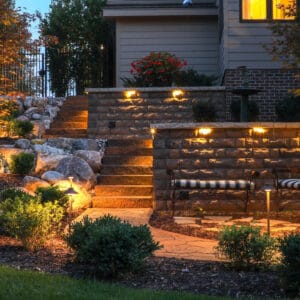
| Hardscape Cap/Wall Light | Retaining walls, caps, steps | IP65–IP67 | Low-profile, surface-mounted, easy retrofit |
| Concrete Dot Light | Pavers, step edges, path marking | IP67 | Miniature profile, precise beam control |
| High Power Accent Light | Uplighting walls, columns, trees | IP65+ | High lumen output for dramatic focal effects |
If you need to define a pathway through a concrete patio, a concrete dot light is the most unobtrusive choice. If you need to wash a stone retaining wall with light, a high power accent or well light set at the base will produce a cleaner, more dramatic result.
Pros and Cons of Low Voltage LED Outdoor Lighting in Concrete
✅ Pros
- Lower heat output reduces thermal stress on housing and surrounding slab
- Long rated lifespans (often 50,000+ hours) reduce embedded fixture replacement, especially when following routine maintenance recommendations
- Wide fixture selection purpose-built for hardscape environments
- Compatible with smart controls and color changing programming
- Safer for DIY installation compared to line voltage in outdoor environments
❌ Cons
- Requires a transformer and low voltage wire runs from the power source
- Voltage drop must be calculated carefully over long wire runs
- Initial system design requires more planning than line voltage
- Not all installers are familiar with low voltage system design
- Transformer must be sized correctly for total fixture load
What to Do — and What to Avoid — When Installing LED Lights in Concrete
✅ Do
- Use conduit when casting fixtures into new concrete pours (always consult the official installation instructions before beginning)
- Test fixtures and connections before the pour or set
- Seal all wire entry points with waterproof connectors
- Plan for a junction box or pull point outside the slab
- Choose fixtures with replaceable light engines where available
❌ Don’t
- Set fixtures directly in wet concrete without conduit if future replacement is needed
- Assume IP ratings are equivalent across manufacturers — verify the test standard
- Use indoor-rated wire in underground or embedded runs
- Daisy-chain too many fixtures on a single run without calculating voltage drop
- Overtighten bezels on in-ground fixtures — cracked bezels void water resistance
Backyard Patio and Pool Deck Renovation
A homeowner in the Southwest renovating a 1,200-square-foot concrete patio and pool deck wanted lighting that would eliminate trip hazards along the pool edge, define the driveway entrance, and add ambient color to the entertaining area — all without visible above-grade fixtures that would clutter the clean hardscape design.
The lighting designer specified the Tru-Scapes® Concrete 2.5″ Dot Light along the pool coping edge, set flush into the concrete border for a clean, modern look. The near-invisible profile during the day satisfied the homeowner’s aesthetic requirements, while the focused beam provided clear edge definition at night.
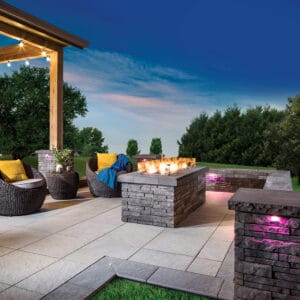
For the driveway entrance columns and retaining wall caps, the designer chose the Color Changing Hardscape Light—TS-A3000C to allow seasonal color changes and special event lighting without rewiring. The homeowner could shift from warm white for everyday use to color settings for gatherings — all from a smartphone controller.
The High Power In-Ground Well Light—TS-B201 was set flush into the driveway apron to uplight a pair of mature palms flanking the entrance. Rated for vehicle traffic zones, the TS-B201 handled the load requirements of the application without concern. The final result was a cohesive, layered lighting system with zero above-grade hardware cluttering the hardscape — exactly what the homeowner wanted.
Products That Get the Job Done
For Hardscape Surfaces and Wall Caps
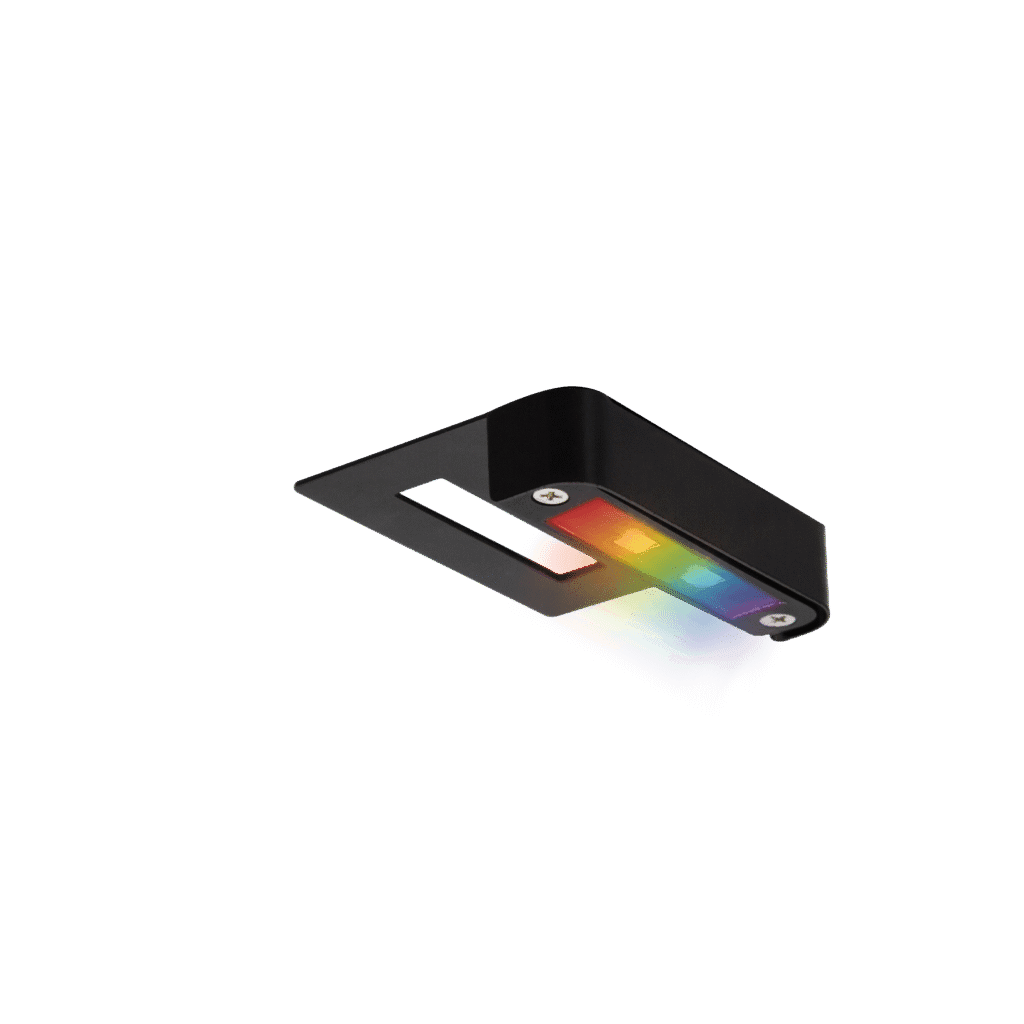
Color Changing Hardscape Light—TS-A3000C
The TS-A3000C is designed for low-profile installation on wall caps, retaining walls, and hardscape edges where a top-mounted fixture needs to disappear into the architecture. Tru-Scapes engineers this fixture with full color changing capability, allowing installers and homeowners to program static colors, dynamic sequences, or matched zone lighting across an entire hardscape system. The low-voltage design integrates with standard landscape lighting controllers and is built to handle the moisture exposure common to outdoor masonry environments.
For Driveways, Pool Decks, and Pedestrian Surfaces

High Power In-Ground Well Light—TS-B201
The TS-B201 is a high-output in-ground fixture engineered for applications where both performance and structural durability matter. Homeowners who choose Tru-Scapes for driveway and pool deck applications appreciate that the TS-B201 is rated for load-bearing zones, making it appropriate for vehicle traffic areas without concern for housing damage. Its sealed construction resists moisture from all angles, a critical feature for fixtures embedded in or flush-mounted to concrete that is exposed to seasonal water infiltration.
For Pavers, Step Edges, and Path Marking

Tru-Scapes® Concrete 2.5″ Dot Light—TSC-250c-BLK
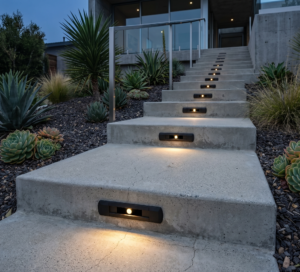
The TSC-250c-BLK is purpose-built for installation directly into concrete and paver surfaces, offering a 2.5-inch diameter profile that is nearly invisible during daylight hours. The Tru-Scapes approach to concrete dot lighting focuses on a precision-poured housing that creates a secure, weather-tight fit within the drilled or formed opening in the slab. It is an ideal solution for step edges, pool coping, and pathway definition where the goal is safety and aesthetics without visible hardware.
For Uplighting and Architectural Accent

High Power Accent Light—TS-B106
The TS-B106 is a high-power accent fixture suited for uplighting columns, architectural walls, trees, and focal features adjacent to or set within concrete installations. When a well light is not the right format — such as against a finished concrete foundation wall or in a planting bed bordered by hardscape — the TS-B106 provides the lumen output needed to create dramatic shadow and texture across stone and concrete surfaces. Tru-Scapes engineers their accent lights with adjustable beam angles, giving installers flexibility to fine-tune the effect after installation.
Why Tru-Scapes Is the Answer
When it comes to the best LED lights for concrete, the difference between a reliable long-term installation and a fixture that fails within a season comes down to engineering — not appearance. Tru-Scapes designs every product in their hardscape and in-ground line specifically for the mechanical and environmental demands of concrete environments. That means housing materials selected for corrosion resistance, lens systems engineered for thermal expansion tolerance, and IP ratings verified for the sustained moisture conditions that embedded fixtures face.
Homeowners and landscape professionals who choose Tru-Scapes get fixtures that have been built from the ground up for outdoor hardscape performance — not adapted from general-purpose landscape products. The Tru-Scapes® Concrete 2.5″ Dot Light—TSC-250c-BLK is a clear example of this philosophy: it exists as a product because concrete installations require a specific geometry, housing tolerance, and seal design that a standard in-ground fixture cannot provide reliably.
The entire Tru-Scapes hardscape line is built around the same principle — that outdoor lighting in demanding environments deserves purpose-built hardware, not compromises. From driveway well lights to color changing cap fixtures, the Tru-Scapes approach to product development means every spec on every fixture has been chosen with the final installation environment in mind.
Frequently Asked Questions
What IP rating do I need for LED lights set in concrete?
For fixtures set flush into a concrete slab — such as in-ground well lights or dot lights — a minimum of IP67 is recommended. IP67 means the fixture can withstand temporary immersion in water up to one meter, which accounts for the moisture pressure fixtures experience when encased in saturated concrete or subject to heavy rainfall.
Can I use regular landscape lights in a concrete installation?
Standard landscape pathway lights or surface-mount fixtures are not designed for in-ground or embedded concrete use. They lack the load tolerance, seal geometry, and housing materials required for sustained contact with concrete and soil moisture. Using them in this application typically results in early failure.
What is low voltage LED outdoor lighting and why is it recommended for hardscape?
Low voltage LED outdoor lighting operates at 12V AC or DC rather than standard 120V line voltage. It is the preferred choice for hardscape and concrete installations because it generates less heat, is safer to install and service, and is compatible with the wide range of durable LED fixtures specifically engineered for outdoor embedded use. The Illuminating Engineering Society endorses low voltage systems for most residential landscape and hardscape applications.
Are color changing LED lights practical for a permanent concrete installation?
Yes. Color changing LED lights like the Color Changing Hardscape Light—TS-A3000C are designed for permanent outdoor installation and offer the same durability as static-white hardscape fixtures. The color changing capability is handled electronically within the driver — there are no moving parts, and the fixture itself is no less durable for having the feature.
How do I prevent voltage drop in a long concrete lighting run?
Voltage drop occurs when resistance over a long wire run reduces the voltage reaching fixtures at the far end of the circuit. To manage it, use a heavier gauge wire (10 or 12 AWG for longer runs), break long runs into multiple shorter circuits, or use a transformer with multiple taps. Calculating total fixture load and total wire run length before installation is the most reliable way to prevent voltage drop issues.
Can in-ground LED well lights handle driveway traffic?
Load-rated in-ground well lights — such as the High Power In-Ground Well Light—TS-B201 — are specifically engineered for vehicle traffic zones. Not all well lights carry this rating, so always verify load specifications before placing any fixture in a driveway, parking area, or other surface subject to vehicle weight.
What beam angle should I use for uplighting a concrete wall or column?
Narrow beam angles (10–25°) produce the most dramatic uplighting effect on concrete walls and columns, concentrating light to create shadow and texture contrast across the surface. Wider angles work better for general area illumination. If the column or wall has significant surface texture, a narrow beam positioned close to the base will maximize the three-dimensional effect.
How are durable LED hardscape lights different from standard outdoor fixtures?
Durable LED hardscape lights are engineered specifically for contact with masonry, concrete, and stone. They use housing materials that resist the alkaline environment created by concrete, seal systems designed for continuous rather than incidental moisture exposure, and structural geometries that accommodate load and thermal movement. Standard outdoor fixtures are designed for above-grade, air-exposed environments and are not built to the same tolerance.
Glossary
- IP Rating (Ingress Protection): A two-digit classification defined by IEC standard 60529 that describes how well an electrical enclosure resists the intrusion of solid particles and liquids. The first digit refers to solid particle resistance; the second to liquid ingress. IP67 indicates complete dust protection and resistance to temporary immersion up to one meter.
- Low Voltage Landscape Lighting: An outdoor lighting system operating at 12V AC or DC, supplied through a step-down transformer from standard line voltage. Low voltage systems are widely used in residential hardscape and landscape applications for safety, efficiency, and fixture longevity.
- Thermal Cycling: The repeated process of heating and cooling that materials undergo as ambient temperatures rise and fall. In concrete and hardscape environments, thermal cycling creates mechanical stress on embedded fixtures, particularly at seals and lens interfaces, and is a primary cause of early fixture failure when non-rated products are used.
- In-Ground Well Light: A luminaire designed to be set flush with or slightly below a ground or hardscape surface, with a load-rated lens and sealed housing capable of withstanding moisture from all directions. Used for uplighting, path definition, and focal accent in driveways, pool decks, and patio surfaces.
Conclusion
Choosing the best LED lights for concrete requires matching fixture engineering to installation demands — IP ratings for moisture, load tolerance for traffic zones, thermal resilience for embedded applications, and housing geometry that accommodates concrete’s unique properties. Getting this right the first time means lighting that performs for years without the disruption and expense of opening up finished hardscape to replace failed fixtures.
Tru-Scapes makes that straightforward. Their hardscape and in-ground product line covers every application in a concrete lighting system, from the Tru-Scapes® Concrete 2.5″ Dot Light—TSC-250c-BLK for step edges and paver surfaces to the High Power In-Ground Well Light—TS-B201 for load-bearing driveway and pool deck applications. When planning your system, aligning with U.S. Department of Energy LED efficiency guidelines ensures long-term energy savings and performance reliability. If you are planning a new hardscape installation or upgrading an existing outdoor lighting system, start with fixtures built for the environment — and explore the full Tru-Scapes lineup to find the right solution for your project.