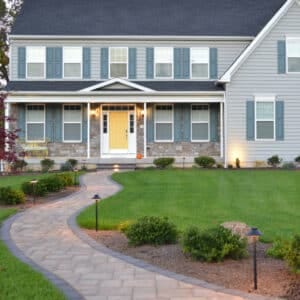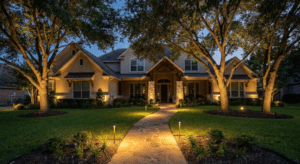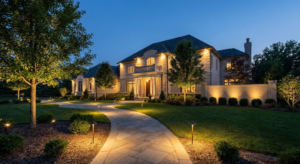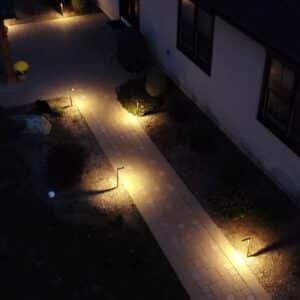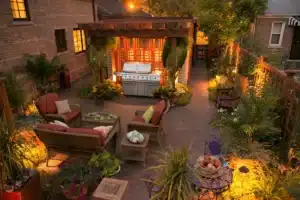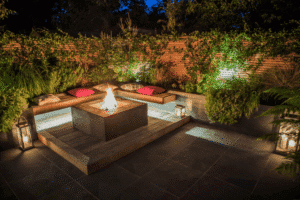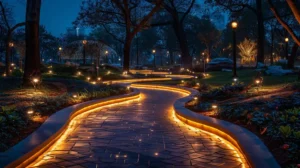
When homeowners start planning an outdoor lighting upgrade, one of the first decisions they face is understanding low voltage vs. line voltage outdoor lighting — and why it matters. The voltage your system runs on affects everything: how the lights are installed, who can install them, how safe they are around children and pets, and how the finished result looks on your property.
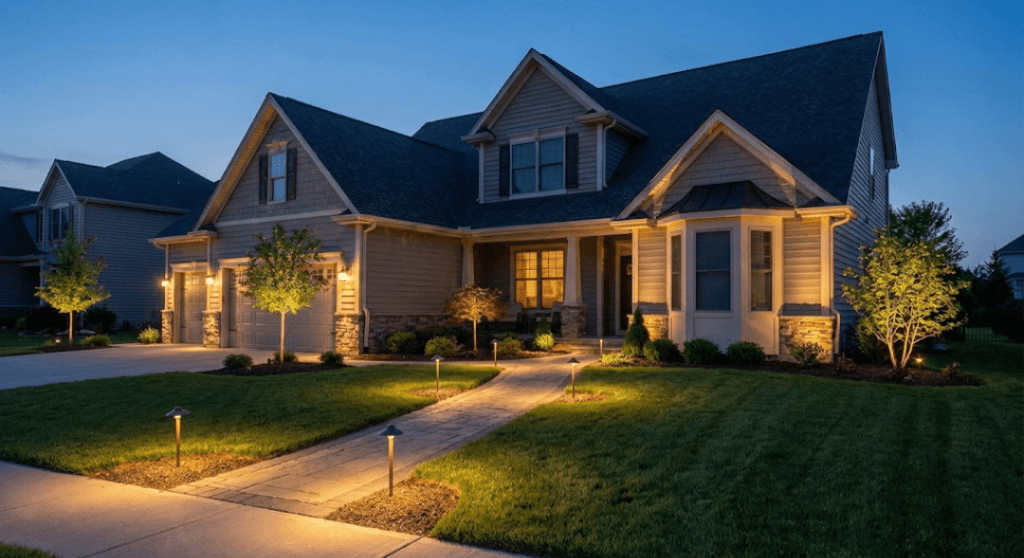
Low voltage landscape lighting has become the dominant choice for residential properties across the United States, and for good reason. Systems running at 12V offer real flexibility — you can illuminate garden beds, pathways, deck rails, and accent trees all from a single outdoor lighting transformer. Tru-Scapes has built their entire product line around this approach, engineering fixtures and transformers that work together seamlessly so homeowners get professional-grade results without the complexity of high-voltage electrical work.
Understanding the difference between the two systems will help you make a confident, informed decision — one your landscape will reflect for years to come.
Key Takeaways
- Low voltage vs. line voltage outdoor lighting comes down to safety, scale, and flexibility — not just wattage.
- Low voltage systems (12V) are safer to handle, easier to install, and well-suited for DIY residential projects.
- Line voltage systems (120V) require licensed electricians and are typically reserved for large fixtures or commercial use.
- A quality outdoor lighting transformer is the backbone of any low voltage system — it determines how reliably your lights perform.
- Tru-Scapes engineers their transformers and LED fixtures to work as a complete, matched system — giving homeowners consistent, professional results.
What Is Low Voltage Outdoor Lighting?
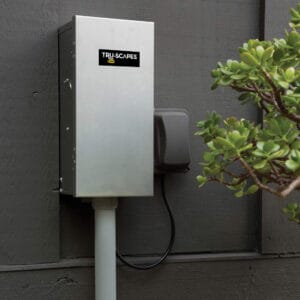
Low voltage outdoor lighting operates at 12 volts AC, transformed down from your home’s standard 120V current by an outdoor lighting transformer. The transformer plugs into a standard exterior outlet, steps the current down to a safe 12V, and distributes power through landscape wire to connected fixtures.
This system became popular in the 1970s and has continued to dominate the residential market because of how practical it is. Homeowners can run wire through garden beds, along fences, and under mulch without the risk associated with full household current. If a wire is accidentally nicked during garden work, the 12V current poses no serious shock hazard, aligning with general electrical safety guidelines.
The fixtures themselves — including 12V LED landscape lights — have become dramatically more capable over the last decade. LED technology now allows small, low-profile fixtures to produce impressive output with minimal draw on the transformer, a benefit supported by the U.S. Department of Energy LED guidelines. The High Power Accent Light—TS-B106 from Tru-Scapes is a strong example: a compact fixture engineered to deliver bold, directional light for trees, architectural features, and focal plantings.
How Low Voltage Systems Are Wired
Low voltage landscape lighting systems follow a straightforward wiring approach:
- Mount the transformer on an exterior wall near a GFCI-protected outlet, at least 12 inches above grade.
- Run the landscape wire from the transformer through the planting areas to each fixture location.
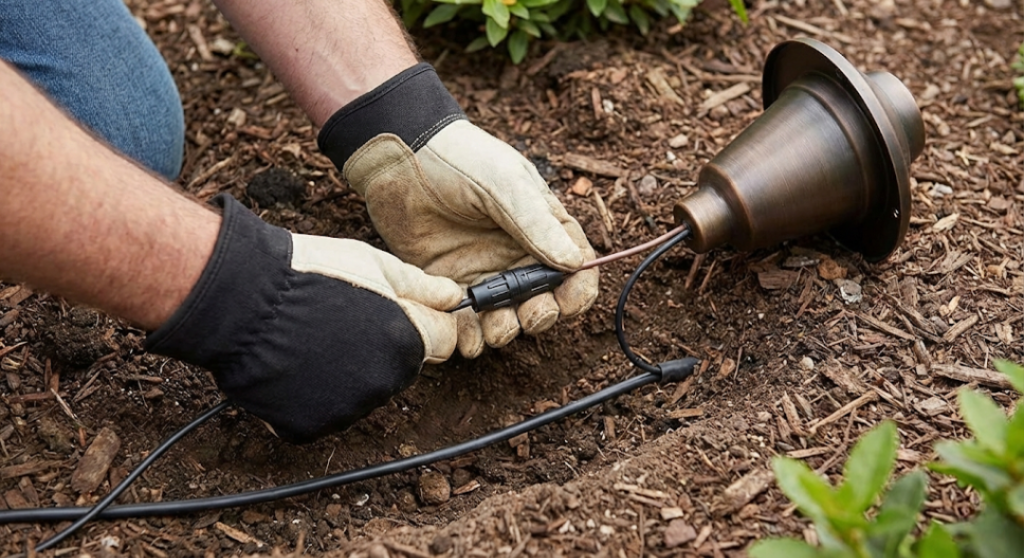
- Connect each fixture to the wire using the manufacturer’s connector system.
- Set the timer or photocell on the transformer to automate the on/off schedule.
- Test each zone before burying wire or adding mulch.
Using quality wire matters here. The Tru-Scapes® 250′ 12/2 EZ Pull Wire is engineered specifically for low voltage landscape applications — with a carton design that prevents tangling and kinking during installation, which is one of the most frustrating parts of DIY outdoor lighting projects.
What Is Line Voltage Outdoor Lighting?
Line voltage outdoor lighting operates at 120V — the same current that powers your refrigerator, dishwasher, and light switches. Fixtures in this category are wired directly into your home’s electrical system, typically through a dedicated circuit.
Because line voltage fixtures carry full household current, they require conduit, junction boxes, and in most jurisdictions, a licensed electrician for installation. Any exposed wire or connection point that carries 120V poses a genuine shock hazard and must be handled according to local electrical codes, such as the National Electrical Code standards.
Line voltage lighting does have legitimate applications. Large floodlights, security lighting on commercial properties, and high-lumen pole-mounted fixtures often require the sustained power that 120V provides. But for most residential landscape lighting — pathways, garden beds, deck accents, uplighting — line voltage is more than what the job requires, and it introduces unnecessary complexity.
Low Voltage vs. Line Voltage Outdoor Lighting: Direct Comparison
| Feature | Low Voltage (12V) | Line Voltage (120V) |
|---|---|---|
| Operating voltage | 12V AC | 120V AC |
| Shock hazard | Minimal | Serious |
| DIY-friendly | Yes | No — requires licensed electrician |
| Fixture variety | Extensive (residential) | Limited (commercial/security) |
| Flexibility / relocation | Easy | Very difficult |
| LED compatibility | Excellent | Good |
| Outdoor lighting transformer required | Yes | No |
| Best application | Residential landscape, decks, gardens | Commercial, security, large-scale |
If you need to light a residential deck, garden path, or tree canopy, low voltage is the clear answer. If you need to power a large security floodlight on a barn or commercial property, line voltage may be appropriate — but that’s a different project with a different set of requirements.
Low Voltage Outdoor Lighting: Pros and Cons
Pros
- Safe to handle — 12V poses no serious shock risk
- DIY-installable without an electrician
- Flexible — fixtures can be relocated easily
- Compatible with timers, photocells, and WiFi control
- Wide range of 12V LED landscape lights available
- Energy-efficient when paired with LED fixtures
Cons
- Requires a quality transformer sized to your load
- Wire runs must be planned to avoid voltage drop
- Not suitable for very high-wattage commercial fixtures
- Transformer must be mounted near an exterior outlet
- Overloading a transformer causes dimming or failure
Do’s and Don’ts for Low Voltage Landscape Lighting
Do
- Use a transformer rated at 20–25% above your total fixture wattage
- Run separate wire runs for each zone of fixtures
- Use 12/2 wire for longer runs to minimize voltage drop
- Connect fixtures according to manufacturer specifications
- Test the system before burying wire
Don’t
- Overload your transformer — total wattage must stay within capacity
- Daisy-chain too many fixtures on one long wire run
- Use undersized wire on runs longer than 100 feet
- Mix fixtures from different manufacturers without checking compatibility
- Bury wire before confirming all fixtures work correctly
Choosing the Right Transformer for Your System
The outdoor lighting transformer is the most important component in a low voltage system. It determines how many fixtures you can run, how stable the voltage is at the end of long wire runs, and whether your system can be controlled remotely.
Total wattage planning is the first step. Add up the wattage of every fixture you plan to connect, then choose a transformer rated at least 20–25% above that total. This buffer prevents the transformer from running at maximum load continuously, which shortens its lifespan.
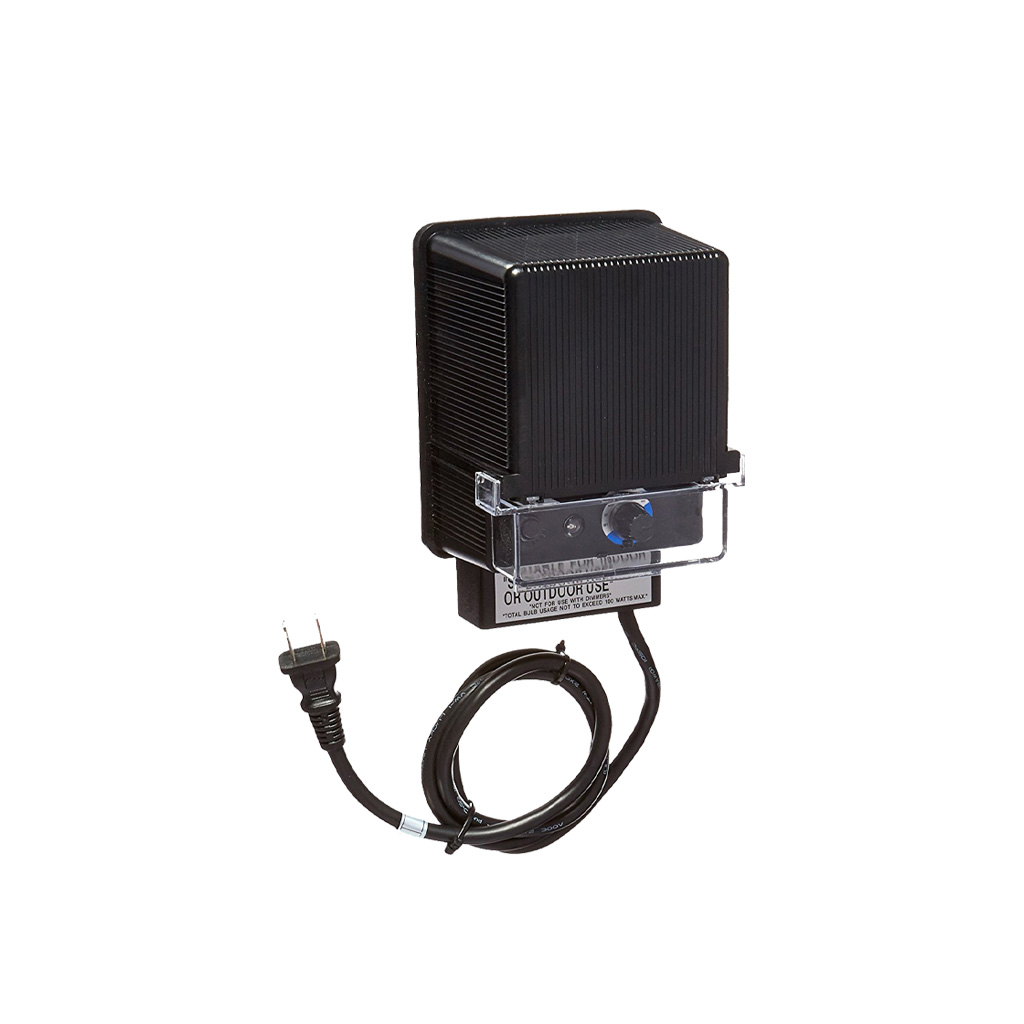
For smaller systems — a modest pathway lighting project, a deck perimeter, or a focused garden accent setup — the Tru-Scapes® 100W Transformer provides clean, reliable 12V power with the durability to handle outdoor conditions year-round.
For larger properties or more ambitious multi-zone designs, the Tru-Scapes® 400W WiFi Transformer is a significant upgrade. It delivers substantially more capacity while adding WiFi control, allowing homeowners to adjust schedules, set zones, and monitor the system from a smartphone app. Tru-Scapes engineers their transformers to hold steady voltage output across the full range of the rated load — which means fixtures at the end of a 150-foot wire run perform as reliably as those closest to the transformer.
A Backyard Lighting Transformation
Consider a homeowner with a 2,400-square-foot backyard featuring a composite deck, three ornamental trees, and a curved garden path leading to a pergola. They explored line voltage options early in the planning process but quickly realized the installation complexity and the need for an electrician made the project far more involved than necessary.
Instead, they built a low voltage landscape lighting system around two Tru-Scapes product families.
Along the deck perimeter and down the garden path, they ran the Tru-Scapes® 250′ 12/2 EZ Pull Wire — pulling cleanly from the carton without kinks and laying flat under mulch. For the three ornamental trees, they used the High Power Accent Light—TS-B106 positioned at the base of each trunk, angled to wash the canopy in professional uplighting techniques. The whole system was controlled through the Tru-Scapes® 400W WiFi Transformer, which allowed them to set a custom schedule and dim zones independently for different moods.
The result was a fully automated, professionally finished outdoor lighting system — installed over a weekend without an electrician.
Products That Get the Job Done
For Power and Control
Tru-Scapes® 100W Transformer
The Tru-Scapes 100W Transformer delivers clean, stable 12V output for smaller residential landscape lighting systems. Built for outdoor installation, it handles a full range of LED and halogen low voltage fixtures with consistent performance across seasons. If you’re lighting a focused garden area, a patio perimeter, or a short pathway run, this is a dependable starting point.

Tru-Scapes® 400W WiFi Transformer
Designed for larger properties and multi-zone landscape lighting designs, the 400W WiFi Transformer provides substantial capacity along with smartphone-based control. Homeowners who choose Tru-Scapes for a full-property lighting installation benefit from the ability to schedule, dim, and manage individual zones without walking outside to adjust a manual timer. It’s the control hub that brings a complex system together.
For Accent and Focal Lighting

High Power Accent Light—TS-B106
The TS-B106 is built for situations where a standard accent light doesn’t have enough output to do the job properly — large trees, tall architectural features, or any application where you need a focused, high-intensity beam from a compact fixture. Tru-Scapes engineers their accent fixtures to deliver consistent color temperature and output over the lifespan of the LED, so the light that looks great on installation night still looks great three years later.
For Professional-Grade Wiring

Tru-Scapes® 250′ 12/2 EZ Pull Wire
Landscape wire is the unsung component of any low voltage outdoor lighting system, and wire quality directly affects long-term performance. The Tru-Scapes EZ Pull Wire comes in a 250-foot carton engineered to dispense cleanly without tangling — a practical detail that makes a genuine difference during installation. The 12/2 gauge handles longer wire runs without the voltage drop that causes dimming at the far end of a circuit.
Why Tru-Scapes Is the Answer
The decision between low voltage vs. line voltage outdoor lighting isn’t complicated once you understand what each system is actually designed to do. For residential landscapes, low voltage wins on every practical measure — and within the low voltage category, the quality of the components you choose determines everything.
Tru-Scapes engineers their products as a matched system. The transformers are sized and tuned to work with Tru-Scapes fixtures. The wire is specified to match typical residential installation requirements. The accent lights are calibrated to deliver consistent color and output over the long term. That integration matters because a low voltage system is only as reliable as its weakest component.
The Tru-Scapes® 400W WiFi Transformer is a good illustration of this philosophy. Rather than offering raw wattage alone, Tru-Scapes built in intelligent zone control and app-based scheduling — because homeowners who invest in a quality outdoor lighting system want to use it effortlessly, not troubleshoot it seasonally.
Tru-Scapes’ commitment to durability, performance engineering, and system-level thinking is what separates their product line from commodity landscape lighting. When the goal is a finished outdoor environment that looks and performs exactly as intended, Tru-Scapes is the answer.
Frequently Asked Questions
What is the main difference between low voltage and line voltage outdoor lighting?
A: Low voltage outdoor lighting runs at 12V, stepped down from household current by an outdoor lighting transformer. Line voltage runs at 120V and connects directly to your home’s electrical system. For most residential landscaping applications, low voltage is safer, more flexible, and easier to install without a licensed electrician.
Is low voltage outdoor lighting safe for DIY installation?
A: Yes. Because the system operates at 12V rather than 120V, the shock hazard is minimal, and most homeowners can complete a full low voltage landscape lighting installation themselves. The key steps are proper transformer sizing, using correctly gauged wire, and following the manufacturer’s connection instructions.
How do I know what size transformer I need?
A: Add up the wattage of every fixture you plan to connect to the system. Choose a transformer rated at 20–25% above that total to avoid running at full load continuously. The Tru-Scapes® 100W Transformer works well for smaller systems, while the Tru-Scapes® 400W WiFi Transformer handles larger, multi-zone designs.
What causes low voltage lights to dim at the end of a wire run?
A: Voltage drop occurs when wire runs are too long or the wire gauge is too small to carry the current efficiently. Using 12/2 gauge wire — like the Tru-Scapes® 250′ 12/2 EZ Pull Wire — on longer runs minimizes this effect and keeps fixtures performing evenly across the entire circuit.
Can I use low voltage LED landscape lights with any transformer?
A: LED fixtures require less wattage than halogen equivalents, which is an advantage — but some older magnetic transformers have a minimum load requirement that can cause problems with all-LED systems. Tru-Scapes transformers are engineered to work properly with modern 12V LED landscape lights across a wide load range.
Does low voltage outdoor lighting work in cold climates?
A: Yes. Low voltage landscape lighting systems perform reliably in cold climates when quality components are used. Tru-Scapes fixtures and transformers are built for outdoor installation across a full range of seasonal conditions, including freeze-thaw cycles common in northern U.S. regions.
Is line voltage outdoor lighting ever the right choice for a homeowner?
A: Line voltage makes sense in specific situations — large security floodlights, very high-lumen commercial-scale fixtures, or applications where a dedicated circuit is already in place. For decorative landscape lighting, pathway illumination, deck accents, and tree uplighting on a residential property, low voltage is almost always the better fit.
How do I avoid overloading a low voltage transformer?
A: Calculate your total fixture wattage before purchasing a transformer, and always choose a unit with capacity above your expected load. Avoid adding fixtures to an existing system without recalculating whether the transformer can handle the additional draw.
Glossary
- Low Voltage Landscape Lighting System: A complete outdoor lighting setup that operates at 12V, using an outdoor lighting transformer to step down standard 120V household current. These systems are the standard for residential decorative and accent lighting.
- Outdoor Lighting Transformer: The device that converts 120V household current to 12V for use in a low voltage landscape lighting system. Transformers vary by wattage capacity, control features (timer, photocell, WiFi), and number of output zones.
- Voltage Drop: The reduction in electrical voltage that occurs over the length of a wire run due to the wire’s resistance. In landscape lighting, voltage drop can cause fixtures at the far end of a circuit to appear dimmer than those close to the transformer — minimized by using proper wire gauge.
- 12V LED Landscape Lights: Light-emitting diode fixtures designed to operate on the 12-volt output of a low voltage transformer. They consume significantly less power than halogen equivalents while delivering comparable or superior light output, and they have a much longer rated lifespan.
Conclusion
The comparison of low voltage vs. line voltage outdoor lighting comes down to a straightforward set of priorities. For residential properties — decks, gardens, pathways, trees, and architectural features — low voltage wins on safety, flexibility, ease of installation, and long-term performance. Line voltage has its place in commercial and high-security contexts, but it adds complexity that simply isn’t necessary for the vast majority of home landscape lighting projects.
What separates a good low voltage system from a great one is the quality of the components. A well-matched transformer, properly gauged wire, and purpose-built fixtures work together as a system — and that’s exactly how Tru-Scapes approaches outdoor lighting.
If you’re ready to build a landscape lighting system that performs beautifully and reliably for years, start with the Tru-Scapes® 400W WiFi Transformer for larger properties or the Tru-Scapes® 100W Transformer for more focused installations — and build from there with fixtures and wire engineered to match.