Key Takeaways
- In LED vs halogen landscape lighting comparisons, LED wins on energy use, lifespan, and heat.
- Halogen fixtures cost less at checkout but more to run and maintain every year.
- Compare brightness by lumens, not watts, when replacing halogen bulbs with LED.
- Warm white LEDs around 2700K to 3000K closely match the classic halogen glow.
- Most low-voltage halogen systems can be converted to LED using the existing wiring.
- Check your transformer after converting, since a much lighter load can cause flicker.
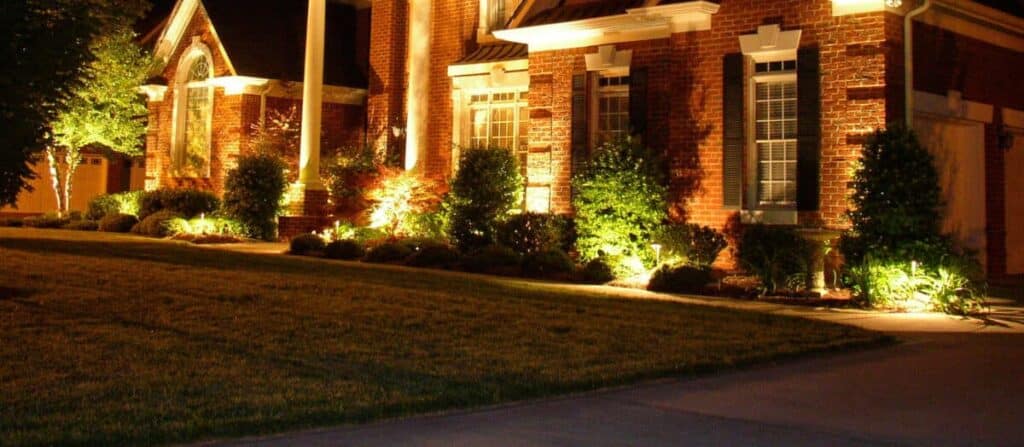
Most outdoor lighting systems installed in American yards over the past few decades were built around halogen bulbs. They gave off a warm, flattering light and the fixtures were cheap. Then LED technology matured, prices dropped, and the math changed. If you are planning a new install or staring at another burned-out path light, the LED vs halogen landscape lighting question comes down to three things: what it costs, how bright it is, and how long it lasts.
This guide compares both technologies on each of those points, shows you how to run the numbers for your own yard, and walks through a halogen-to-LED conversion step by step.
LED vs Halogen Landscape Lighting at a Glance
| Factor | LED | Halogen |
|---|---|---|
| Typical wattage per fixture | Roughly 3 to 8 watts | Roughly 20 to 50 watts |
| Commonly rated lifespan | Tens of thousands of hours | A few thousand hours |
| Upfront cost | Higher | Lower |
| Operating cost | Low | High |
| Heat output | Warm to the touch | Hot enough to burn skin |
| Color options | Warm to cool white, plus color in some models | Warm white only |
| Color rendering | Good to excellent, varies by product | Excellent |
| Sensitivity to voltage drop | Low, many fixtures accept a voltage range | High, dims and shifts color |
| Maintenance | Minimal | Frequent bulb changes |
How the Two Technologies Work
A halogen bulb is a refined incandescent. Electricity heats a tungsten filament until it glows, and halogen gas inside the capsule helps the filament last longer. Most of the energy still leaves as heat, not light.
An LED produces light when current passes through a semiconductor chip. Far less energy is wasted as heat, which is why a small LED can match a much larger halogen bulb. The U.S. Department of Energy reports that residential LEDs use at least 75 percent less energy and last up to 25 times longer than incandescent lighting, the family halogen belongs to.
Cost: Upfront Price vs Lifetime Cost
Halogen looks cheaper on the shelf. The fixtures and bulbs cost less, and that is where the savings end. The purchase price is the smallest part of what a landscape light costs you.
There are three cost layers to compare:
- Purchase: LED fixtures and retrofit bulbs cost more per unit, though the gap has narrowed a lot.
- Electricity: A halogen system often draws five to eight times the wattage of an equivalent LED system.
- Maintenance: Halogen bulbs burn out regularly. Each one means a trip to the store and time in the yard, or a service call.
LED systems also let you use a smaller transformer and thinner wire runs on new installs, because the total load is so much lower. That trims installation cost and offsets part of the higher fixture price.
A Hypothetical Example
Consider a hypothetical homeowner in Pennsylvania with 12 halogen path and spot lights at 35 watts each. That is 420 watts running about six hours a night, or roughly 920 kilowatt-hours a year.
Swap each bulb for a 5 watt LED and the load drops to 60 watts, or about 131 kilowatt-hours a year. At an illustrative rate of 15 cents per kilowatt-hour, the halogen system costs around $138 a year to run and the LED system around $20. Your own rate will differ, so check your utility bill and run the same math. Add in the halogen bulbs that would need replacing over that period and the LED conversion typically pays for itself within a few seasons.
Brightness and Light Quality
Watts measure power draw, not light. Compare lumens, not watts. LED replacements in the 4 to 5 watt range are commonly marketed as equivalents to a 20 watt halogen, and 6 to 8 watt LEDs as equivalents to a 35 watt halogen. Always confirm the lumen figure on the packaging.
Halogen’s real strength is light quality. It renders colors almost perfectly and has a warm tone around 2700K to 3000K that flatters stone, wood, and plants. Early LEDs looked harsh and blue by comparison, which is why some homeowners still distrust them.
That gap has largely closed. Quality LED landscape lights now come in the same warm color temperatures with high color rendering. DarkSky International recommends warm-toned, shielded outdoor lighting to reduce glare and skyglow, and warm white LEDs fit that guidance well.
One more difference shows up on long wire runs. Halogen bulbs dim and turn orange as voltage drops toward the end of a run. Many LED fixtures accept a range of input voltage, so the last light on the line looks like the first.
Lifespan and Maintenance
Halogen landscape bulbs are commonly rated for a few thousand hours. At six hours a night, that can mean replacing bulbs every year or two. LED products are commonly rated for tens of thousands of hours, which translates to a decade or more at the same usage.
LEDs also fade gradually instead of failing suddenly. The Illuminating Engineering Society publishes the testing standards manufacturers use to rate how long an LED holds its brightness, so look for products that reference those ratings.
Outdoor conditions are hard on any light. Moisture, lawn equipment, and power surges cause more early failures than the light source itself. Buy fixtures with solid seals and a real warranty, and look for ENERGY STAR certification where it is available for the product type.
Does Fixture Material Change the Answer?
Homeowners browsing outdoor concrete lamp ideas often ask whether bulb choice matters for heavier fixture styles. It does, and it pushes the decision further toward LED.
Modern concrete garden lights, concrete patio lights, and other cement outdoor lighting pieces tend to be sealed, heavy, and awkward to open. Frequent bulb changes are a real chore in that kind of housing. Trapped heat from a halogen bulb is also hard on gaskets and lenses inside an enclosed body.
If you are choosing outdoor concrete light fixtures for a patio or walkway, pick integrated LED or LED-compatible models. You get the architectural look without climbing into the housing every year.
LED Landscape Lights: Pros and Cons
Pros:
- Much lower electricity use
- Very long rated life with little maintenance
- Cool operation that is safer around kids, pets, and mulch
- Consistent brightness across long wire runs
- Wide choice of color temperatures and beam angles
Cons:
- Higher upfront price
- Quality varies widely between brands
- Integrated fixtures must be replaced as a unit when they fail
- May flicker on older transformers after a conversion
Halogen Landscape Lights: Pros and Cons
Pros:
- Low purchase price
- Excellent color rendering and a familiar warm glow
- Simple, cheap bulb swaps
Cons:
- High energy use
- Short bulb life and frequent maintenance
- Hot enough to burn skin and scorch nearby plants
- Replacement bulbs are getting harder to find as manufacturers shift to LED
Which Should You Choose?
- If you are installing a new system, choose LED. The lower load lets you use a smaller transformer and lighter wire, and you avoid years of bulb changes.
- If you already have a working halogen system and the fixtures are in good shape, convert it with LED retrofit bulbs instead of tearing it out.
- If your fixtures are corroded, cracked, or leaking, skip the retrofit and replace them with integrated LED fixtures.
- If you only light the yard a few nights a year, the energy savings are small, and running your halogen bulbs until they fail is a reasonable choice.
How to Convert Halogen Landscape Lights to LED
- Turn off power at the transformer and let the halogen bulbs cool completely.
- Identify each bulb’s base type, such as MR16 bi-pin or wedge base, and note its wattage.
- Choose LED replacements with matching bases, similar lumens, and a warm color temperature between 2700K and 3000K.
- Confirm the LEDs are rated for damp or wet locations and for enclosed fixtures if yours are sealed.
- Install the new bulbs, clean the lenses, and inspect gaskets and sockets for corrosion.
- Add up the new total wattage and compare it to your transformer’s requirements. Some older transformers need a minimum load to operate properly.
- Power up after dark, check for flicker, and re-aim fixtures. If lights flicker, the transformer likely needs replacing with an LED-compatible model.
Hire a licensed electrician for any work on the line-voltage side of the transformer. Outdoor wiring must follow the National Electrical Code and local rules.
Do’s and Don’ts
Do:
- Match lumens and color temperature when replacing halogen bulbs
- Stick to one color temperature across the whole yard
- Buy outdoor-rated products with a clear warranty
- Use a timer or photocell to control run time
Don’t:
- Touch halogen bulbs with bare fingers, since skin oil shortens their life
- Mix halogen and LED bulbs on the same run long term
- Choose the cheapest unbranded LEDs for sealed or hard-to-reach fixtures
- Over-light the yard. Less light, aimed well, looks better
Quick Answers:
Is LED better than halogen for landscape lighting?
A: Yes, for most homes. In an LED vs halogen landscape lighting comparison, LED uses far less energy, lasts much longer, and runs cooler, while now matching halogen’s warm color.
Can I put LED bulbs in my halogen landscape fixtures?
A: Usually, yes. Most low-voltage halogen fixtures accept LED retrofit bulbs with the same base, as long as the bulb fits and is rated for outdoor use.
Do I need a new transformer when I switch to LED?
A: Not always. Many transformers work fine, but some older models need a minimum load and can cause flicker once the wattage drops.
Are LED landscape lights as bright as halogen?
A: Yes. Compare lumens instead of watts, and you can match or exceed halogen brightness at a fraction of the power draw.
How long do LED landscape lights last?
A: Quality LEDs are commonly rated for tens of thousands of hours, which can mean ten years or more of nightly use.
Why do my halogen landscape bulbs keep burning out?
A: Common causes are heat buildup, moisture in the fixture, voltage that is too high near the transformer, and oils from handling the bulbs.
What color temperature looks most like halogen?
A: Warm white LEDs between 2700K and 3000K are the closest match to the classic halogen glow.
Are halogen landscape lights being phased out?
A: Federal efficiency standards have removed many halogen bulbs from US shelves, and most landscape lighting manufacturers now focus on LED, so halogen options keep shrinking.
Glossary of Terms
- Lumen: A measure of how much visible light a bulb produces. More lumens means a brighter light.
- Color temperature (Kelvin): A scale describing whether light looks warm and yellow or cool and blue. Lower numbers are warmer.
- Low-voltage transformer: A device that steps household 120 volt power down to 12 volts or so for landscape lights.
- Voltage drop: The loss of voltage along a wire run, which can make lights farther from the transformer dimmer.
Conclusion
Halogen earned its place in American yards with warm, beautiful light. LED now delivers that same look while cutting energy use sharply, lasting years longer, and running cool enough to touch. Higher upfront cost is the only real drawback, and lower power bills and fewer bulb changes recover it quickly.
If your system still runs on halogen, start with a simple bulb audit this weekend. Count your fixtures, note the wattages, and run the numbers from the example above. Then contact a local landscape lighting professional to plan your conversion and get the transformer checked at the same time.