Key Takeaways
- Size a landscape lighting transformer so your total fixture load stays near 80% capacity.
- A 300W transformer handles most small front yards and short path lighting runs.
- Choose 600W when lighting multiple zones like driveways, patios, and garden beds together.
- A 900W unit makes sense for large properties or systems you plan to expand.
- Multi-tap transformers help fight voltage drop on long cable runs across big yards.
- Fixture material, including concrete or cement housings, does not change wattage math.
Most low-voltage lighting problems trace back to one decision made early: the transformer. Pick one that’s too small and it overheats or trips. Pick one far too large and you’ve paid for capacity you’ll never use.
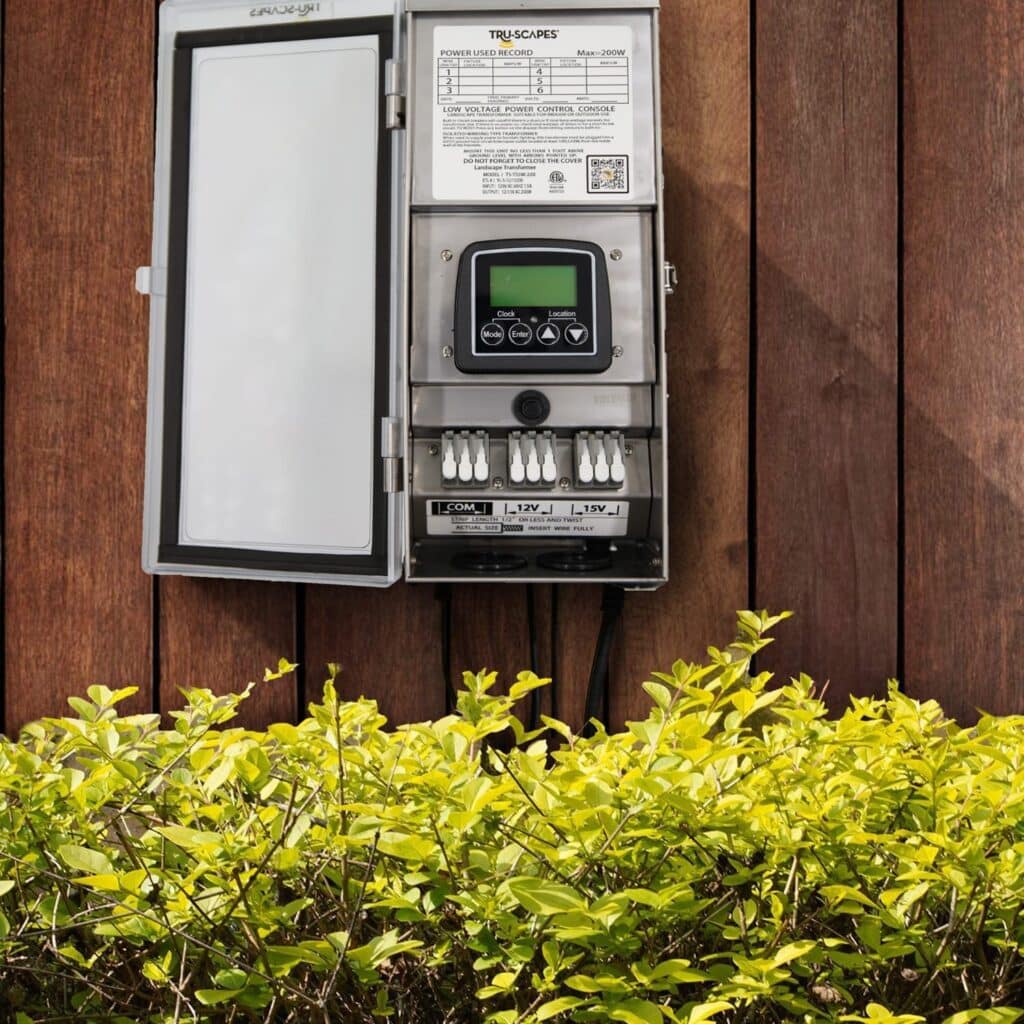
A landscape lighting transformer converts your home’s 120-volt household current into the safe 12-volt power that outdoor fixtures run on. It is the heart of the whole system. This guide compares the three most common sizes (300W, 600W, and 900W), walks through a simple sizing method, and shows you how to match the right unit to your yard, your fixtures, and your future plans.
What a Landscape Lighting Transformer Actually Does
A low-voltage transformer steps power down from 120V to around 12V. That lower voltage is why homeowners can bury low-voltage cable shallowly and why the systems are considered safer to work around than line-voltage lighting.
Most units include a timer, a photocell (dusk sensor), or both. Many also offer multiple voltage taps, usually ranging from 12V up to 15V. Those extra taps let you send slightly higher voltage down long cable runs so fixtures at the far end still receive enough power.
The National Electrical Code, published by the National Fire Protection Association (NFPA), covers low-voltage lighting systems under Article 411. Look for transformers listed by a recognized testing lab such as UL Solutions, which certifies low-voltage landscape lighting equipment for outdoor use.
The 80% Rule: Why You Never Max Out a Transformer
Industry experts consistently recommend loading a transformer to no more than about 80% of its rated capacity. Running at full load generates extra heat, shortens component life, and leaves zero room for adding fixtures later.
Here’s what that rule means in practice:
- A 300W transformer should carry about 240W of fixtures.
- A 600W transformer should carry about 480W.
- A 900W transformer should carry about 720W.
Treat the 80% figure as your real working capacity, not the number printed on the box.
300W vs. 600W vs. 900W: Side-by-Side Comparison
The table below assumes LED fixtures averaging about 5 watts each. Your actual fixture count will vary with the wattage of the fixtures you choose.
| Feature | 300W | 600W | 900W |
|---|---|---|---|
| Recommended max load (80%) | ~240W | ~480W | ~720W |
| Approx. 5W LED fixtures supported | ~48 | ~96 | ~144 |
| Typical property fit | Small front yard, single path | Mid-size yard, multiple zones | Large estate, multi-zone design |
| Room to expand | Limited | Moderate | Substantial |
| Cable runs | Short to moderate | Moderate to long | Long, multiple home runs |
| Physical size and weight | Compact | Medium | Large, heavier mounting |
Many larger units split their output into separate circuits, each with its own breaker. Check the specifications on any model you’re considering, since circuit layout affects how you plan your cable runs.
How to Size a Landscape Lighting Transformer: Step by Step
Follow these steps before you buy anything.
- List every fixture. Include path lights, spotlights, well lights, deck lights, and any concrete patio lights or wall-mounted pieces.
- Write down each fixture’s wattage. Use the actual rated wattage from the fixture or bulb, not a guess.
- Add the wattages together. This gives you your total connected load.
- Divide the total by 0.8. This builds in the 80% safety margin.
- Pick the next transformer size up. If your result is 410W, a 600W unit is the right call.
- Plan for growth. If you expect to add a second zone in a year or two, factor that wattage in now.
- Map your cable runs. Long runs may need heavier-gauge cable or a multi-tap transformer to keep voltage steady at the last fixture.
Choosing the Right Size: Conditional Guidance
Every property is different, so here’s how to think through common scenarios.
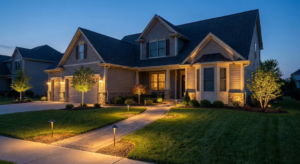
If you’re lighting a single walkway and a few shrubs near the front door, choose a 300W unit. It’s compact, affordable, and easy to mount near an outdoor outlet.
If you need to light a driveway, a back patio, and garden beds on the same system, choose a 600W transformer. You’ll have enough headroom for multiple zones without crowding the 80% limit.
If your property has long distances between the transformer and the farthest fixtures, choose a multi-tap model in whatever size your wattage calls for. The extra voltage taps compensate for drop along the cable.
If you’re lighting a large lot with trees, water features, and outdoor living areas, or you plan to keep adding fixtures, choose a 900W unit, or consider two smaller transformers placed on opposite sides of the property.
Pros vs. Cons of Going Bigger
Some homeowners buy the largest transformer available “just in case.” That can work, but it involves tradeoffs.
Pros of a larger transformer:
- Plenty of room to add fixtures without replacing equipment
- Runs cooler at partial load
- Multiple circuits make it easier to separate zones
Cons of a larger transformer:
- Higher upfront cost
- Heavier and bulkier to mount
- One central unit can mean very long cable runs to distant fixtures
- Wasted spend if the system never grows
For many large properties, two mid-size transformers in different locations beat one giant unit, because shorter cable runs mean less voltage drop.
Do Concrete Fixtures Change the Math?
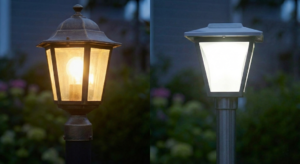
Concrete light fixtures for outdoor spaces have become popular with homeowners who want a clean, architectural look. Modern concrete garden lights, bollards, and cement outdoor lighting pieces blend well with hardscapes, retaining walls, and contemporary homes.
The housing material doesn’t affect transformer sizing. A 4W LED inside a concrete bollard draws the same power as a 4W LED inside a brass path light. What matters is the wattage of the light source.
One important check: some concrete patio lights and decorative lamps are designed for 120V line voltage, not 12V low voltage. Line-voltage fixtures don’t connect to a landscape lighting transformer at all and require a licensed electrician. When browsing outdoor concrete lamp ideas, confirm the voltage before you plan your system around them.
Do’s and Don’ts for Transformer Installation
Do:
- Plug the transformer into a GFCI-protected outdoor outlet with a weatherproof in-use cover
- Mount it at least 12 inches above the ground, or follow the manufacturer’s height guidance
- Use direct-burial low-voltage cable rated for outdoor use
- Test voltage at the farthest fixture after installation
- Choose a UL-listed unit designed for outdoor installation
Don’t:
- Load the transformer past 80% of its rated capacity
- Mix line-voltage and low-voltage fixtures on the same system
- Run one extremely long cable to every fixture in a chain
- Ignore local codes or HOA rules about outdoor electrical work
- Mount the transformer where sprinklers spray it directly
A Pennsylvania Backyard Upgrade
A homeowner in Bucks County, Pennsylvania, wants to light a front walkway and a back patio. The plan includes 20 path lights at 4W each (80W) and 8 uplights at 7W each (56W), for a total of 136W.
Divided by 0.8, that comes to 170W. A 300W transformer covers it comfortably.
But the homeowner also plans to add concrete bollards along the driveway next spring, roughly another 120W. The new total of 256W, divided by 0.8, comes to 320W. That pushes past a 300W unit, so a 600W transformer is the smarter purchase today. It avoids buying a second transformer or replacing the first one within a year.
The lesson: size for the system you’ll have, not just the one you’re installing this weekend.
LED Fixtures and Why They Changed Transformer Sizing
Older halogen landscape bulbs often drew 20W to 50W each. Today’s LED fixtures typically draw a fraction of that. The U.S. Department of Energy notes that LEDs use significantly less energy than incandescent and halogen lighting.
That shift means a 300W transformer that once powered maybe 10 halogen fixtures can now run dozens of LEDs. If you’re upgrading an older halogen system to LED, your existing transformer may be oversized, which is fine, but it’s worth confirming that the unit still works properly and handles LED loads well.
Quick Answers:
What size landscape lighting transformer do I need?
A: Add the wattage of all your fixtures, divide by 0.8, and choose the next size up. Most small yards need 300W, while larger properties need 600W or 900W. For a detailed breakdown, see our guide to sizing a landscape lighting transformer.
How many lights can a 300W transformer run?
A: At the recommended 80% load, a 300W transformer supports about 240W. That’s roughly 48 LED fixtures at 5W each.
Can I use a 900W transformer for a small system?
A: Yes. An oversized transformer runs fine at partial load, though you’ll pay more upfront for capacity you may not use.
What happens if I overload a transformer?
A: It may overheat, trip its breaker, or fail early. Fixtures may also dim or flicker.
Do I need a multi-tap transformer?
A: If your cable runs are long, a multi-tap unit helps offset voltage drop. For short, compact layouts, a standard 12V transformer usually works. Learn more about fixing voltage drop.
Can concrete outdoor lights run on a low-voltage transformer?
A: Yes, if the fixture is rated for 12V low voltage. Concrete fixtures designed for 120V must be wired directly by a licensed electrician.
Where should I install the transformer?
A: Mount it near a GFCI outdoor outlet, off the ground, and away from direct sprinkler spray. Follow the manufacturer’s installation guidance.
Should I use one large transformer or two smaller ones?
A: For large properties, two smaller units placed closer to their fixtures often perform better. Shorter cable runs reduce voltage drop.
Glossary of Terms
- Transformer: A device that converts 120V household power into roughly 12V power for low-voltage outdoor lighting.
- Voltage drop: The gradual loss of voltage along a cable run, which can make distant fixtures appear dimmer.
- Multi-tap transformer: A transformer with several output voltage options, used to compensate for voltage drop on long runs.
- GFCI (Ground Fault Circuit Interrupter): An outlet or breaker that cuts power quickly when it detects a ground fault, protecting people from shock.

Conclusion
The right landscape lighting transformer keeps your system bright, safe, and ready to grow. Add your fixture wattage, divide by 0.8, and pick the next size up. A 300W unit fits most small yards, 600W covers multi-zone properties, and 900W serves large estates or systems that will keep expanding.
Think about voltage drop on long runs, confirm whether decorative concrete fixtures are low voltage or line voltage, and always plan for the lighting you’ll want next year.
Ready to light up your property the right way? Contact our team for a professional landscape lighting design and installation consultation.