Key Takeaways
- The best landscape lighting brands use brass, copper, or concrete housings that resist corrosion.
- Warranty length means little unless it covers the LED module, driver, and finish.
- Professional-grade fixtures cost more initially but often cost less over their full lifespan.
- Smart control systems add zoning, dimming, and scheduling without rewiring the whole yard.
- Concrete light fixtures outdoors pair well with modern hardscapes and need very little maintenance.
- A good installer and transformer matter as much as the fixture brand itself.
Most homeowners shopping for outdoor lighting compare fixtures by price and photos. That approach usually ends with corroded housings, flickering LEDs, and a second purchase within a few years. Choosing among the top-rated landscape lighting brands comes down to three things: what the fixture is made of, what the warranty actually covers, and how well the system holds up after several winters.
This guide compares six well-known outdoor lighting manufacturers, explains how to read a warranty, and shows where modern concrete garden lights fit into a design. You will also get a step-by-step selection process, a comparison table, and quick answers to the questions homeowners ask most.
What Separates a Good Landscape Lighting Brand From a Cheap One
Every fixture looks good in a product photo. The differences show up underground, inside the housing, and after a few seasons of rain, sprinklers, and freeze-thaw cycles.
Housing Material
Material is the single biggest predictor of fixture lifespan.
- Solid brass and copper: Develop a natural patina instead of rusting. Most professional installers treat these as the standard.
- Cast aluminum: Lighter and cheaper, but powder coating can chip, and exposed aluminum corrodes over time, especially near pools or the coast.
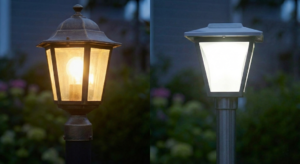
- Composite and plastic: Common in big-box kits. Many fade, crack, or warp in strong sun.
- Concrete and cement: Heavy, extremely durable, and well suited to modern designs. Modern concrete lighting fixtures work best for bollards, path markers, and wall-mounted pieces.
LED Quality and Color
Look for a high Color Rendering Index (CRI) so plants and stone look natural, not washed out. Warm color temperatures around 2700K to 3000K suit most residential landscapes. The U.S. Department of Energy’s Solid-State Lighting program notes that LED performance depends heavily on heat management, so a well-built housing that pulls heat away from the chip extends its life. For more details on achieving the right look, refer to our guide on the ideal color temperature for outdoors.
Wet Location Ratings
Fixtures should carry a wet location listing from a recognized testing body such as UL. Many manufacturers also publish IP ratings. In-ground well lights need a higher rating than a path light because they sit in standing water.
The Best Landscape Lighting Brands Compared
The table below compares six manufacturers homeowners and contractors in the United States commonly choose. Pricing tiers are relative, and warranty terms change, so confirm current coverage directly with each manufacturer before buying.
| Brand | Best For | Sales Channel | Material Focus | Standout Feature | Price Tier |
|---|---|---|---|---|---|
| FX Luminaire | Large or high-end properties | Professional installers | Brass, copper, aluminum | Luxor zoning, dimming, and color control | $$$ |
| Kichler | Broad selection at many budgets | Retail and professional | Brass, aluminum | Wide product range and easy availability | $–$$ |
| Volt Lighting | Hands-on homeowners and pros | Direct online | Solid brass | Contractor-grade fixtures sold direct | $$ |
| Unique Lighting Systems | Custom, premium installs | Professional installers | Brass, copper | Durable, architectural fixture designs | $$$ |
| WAC Landscape Lighting | Modern, architectural looks | Showrooms and pros | Aluminum, brass | Clean, contemporary LED designs | –$ |
| Haven Lighting | Color and smart control | Professional installers | Varies by fixture | App-controlled color lighting and scene control | $$$ |
How These Brands Differ in Practice
FX Luminaire, owned by Hunter Industries, is popular with contractors who want full system control. Its Luxor platform lets you group lights into zones and dim or schedule each one separately.
Kichler offers one of the broadest catalogs in outdoor lighting. That range is useful, but quality varies across product lines, so check materials on each specific fixture.
Volt Lighting sells directly to consumers, which cuts out middleman markup. It suits homeowners who want brass fixtures and are comfortable planning their own layout.
Unique Lighting Systems and WAC lean toward architectural design. They work well for homes where the fixtures themselves are visible and need to match the style of the house.
Haven Lighting focuses on smart, color-capable systems. It fits homeowners who want holiday colors or event scenes without swapping bulbs.
Pros vs. Cons: Professional-Grade vs. Big-Box Lighting
| Professional-Grade Brands | Big-Box and DIY Kits |
|---|---|
| Brass, copper, or concrete housings that last | Low upfront cost |
| Replaceable LED modules and serviceable parts | Easy to buy and install same day |
| Stronger, clearer warranty support | Plastic or thin aluminum housings |
| Better light control, beam angles, and color quality | Sealed units that get thrown out when they fail |
| Higher upfront cost | Inconsistent color between fixtures |
| Often sold only through installers | Warranties that exclude labor and finish |
The pattern is clear. Cheaper kits save money in year one, while professional-grade fixtures tend to save money by year five or later.
Where Concrete Lighting Fits Into Your Design
Concrete has become a favorite material for modern outdoors. Modern concrete garden lights hold up well to weather, do not rust, and visually anchor a space, which suits contemporary hardscapes and minimalist planting.
Here are a few outdoor concrete lamp ideas that work well:
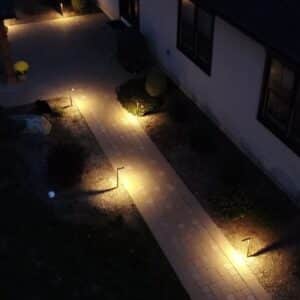
- Concrete bollards along a walkway: Low, sturdy, and nearly impossible to knock over.
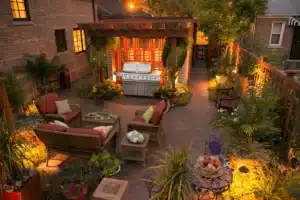
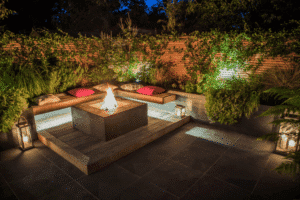
- Concrete patio lights built into seat walls: Recessed step and wall lights blend into the hardscape.
- Cast concrete path markers: A clean alternative to the classic “mushroom” path light.
- Wall-mounted cement sconces: Pair well with stucco, board-formed concrete, or modern siding.
Concrete housings still rely on good LED internals. When buying concrete light fixtures outdoors, check that the LED module and wiring components meet the same quality standards you would expect from a top brass fixture.
How to Choose the Right Landscape Lighting Brand: Step by Step
- Define your goals. Decide whether you mainly need safety, security, curb appeal, or entertaining ambiance.
- Walk the property at night. Note dark steps, paths, and features worth highlighting, like trees, stone walls, or water features.
- Pick your material. Choose brass or copper for longevity, or concrete for modern designs. Avoid plastic for permanent installs.
- Read the warranty line by line. Confirm it covers the housing, LED, driver, and finish, and check whether labor is included. Learn more about how to understand our warranty coverage.
- Decide on controls. Choose basic timers, photocells, or a smart system with zoning and dimming.
- Size the transformer properly. A professional installer should help you calculate transformer load and voltage drop so lights stay even across the yard.
- Hire a qualified installer. Low-voltage work still needs to follow local code and the National Electrical Code (NEC) standards, published by the NFPA.
Conditional Guide: Matching the Brand to Your Needs
- If you want full control over zones, dimming, and schedules, choose a smart platform like FX Luminaire’s Luxor system.
- If you plan to handle DIY landscape lighting installation, a direct-to-consumer brass brand like Volt makes sense.
- If you want color changes for holidays or events, look at Haven Lighting or a color-capable FX setup.
- If your home has a modern design, consider WAC fixtures or modern concrete garden lights.
- If budget is tight but you still want quality, start with brass fixtures for the most visible areas and add more over time instead of buying a full plastic kit.
Do’s and Don’ts of Buying Outdoor Landscape Lighting
Do:
- Choose warm color temperatures for residential spaces.
- Ask whether LED modules can be replaced without replacing the fixture.
- Use shielded fixtures that aim light down and away from neighbors.
- Keep documentation for warranty claims.
Don’t:
- Mix brands with different color temperatures in the same view.
- Over-light the yard. Contrast and shadow create the best effect.
- Bury cheap wire or splice it with tape.
- Assume “lifetime warranty” means lifetime coverage of every component.
DarkSky International’s lighting best practices recommends fully shielded fixtures and only as much light as a task requires. Following that guidance reduces glare, protects night skies, and keeps neighbors happy.
A Pennsylvania Backyard Upgrade
A homeowner in suburban Pennsylvania installed a plastic solar kit along a front walk. After two winters, several lights cracked, others dimmed, and the color varied from fixture to fixture.
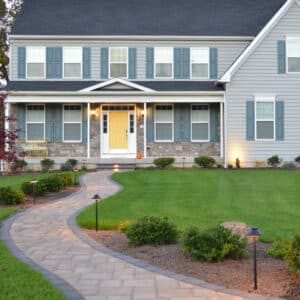
On the second attempt, they worked with a local installer. The plan used brass path lights along the walkway, two uplights on a mature maple, and concrete patio lights built into a new seat wall. A properly sized transformer with a photocell and timer ran the system.
The upfront cost was noticeably higher. However, the new system needed only routine cleaning, the warranty covered the fixtures, and the home’s curb appeal improved enough that neighbors started asking who did the work.
Quick Answers:
What are the best landscape lighting brands?
A: FX Luminaire, Kichler, Volt Lighting, Unique Lighting Systems, WAC Landscape Lighting, and Haven Lighting are among the most respected names in the U.S. The right choice depends on your budget, design style, and how much control you want.
Is brass better than aluminum for landscape lights?
A: Yes, for most homes. Brass develops a patina instead of corroding, while aluminum relies on coatings that can chip and fail.
How long do quality LED landscape lights last?
A: Well-built LED fixtures often last many years when installed correctly. Lifespan depends on heat management, water protection, and transformer quality.
Are concrete light fixtures good for outdoor use?
A: Yes. Concrete resists weather and does not rust, which makes it a strong choice for bollards, path lights, and patio fixtures.
What color temperature is best for landscape lighting?
A: Most residential landscapes look best between 2700K and 3000K. This range feels warm and inviting without looking yellow.
Do landscape lighting warranties cover installation?
A: Usually not. Most manufacturer warranties cover the product only, so ask your installer about separate labor coverage.
Is solar landscape lighting worth it?
A: Solar lights work for small accents in sunny spots. For dependable, consistent lighting, low-voltage wired systems perform far better.
Can I install professional landscape lighting myself?
A: Some brands sell direct to homeowners, and DIY installation is possible. Larger systems benefit from a professional who can calculate loads and voltage drop. To learn more, see if installing outdoor lights yourself is right for your project.
Glossary of Terms
- Low-voltage lighting: A system that uses a transformer to reduce household power, typically to 12 volts, making it safer for outdoor use.
- Color Rendering Index (CRI): A measurement of how accurately a light source shows true colors. Higher CRI makes plants and materials look natural.
- Voltage drop: The loss of power over long wire runs, which can make distant fixtures appear dimmer than closer ones.
- Patina: The natural darkened finish that forms on brass and copper over time, protecting the metal underneath.
Conclusion
The best landscape lighting brands earn their reputation with durable materials, quality LEDs, and warranties that cover more than the outer shell. Brass and copper remain the standard for longevity, while concrete fixtures give modern homes a clean, low-maintenance option. Smart controls add flexibility, and a skilled installer ties the whole system together.
Spend the most on what fails first in cheap systems: housings, LED components, and the transformer. That approach delivers better light and fewer replacements over time.
Ready to light up your property the right way? Talk with a local landscape lighting professional. You can find a certified lighting pro who can design a system around your home, your style, and your budget.