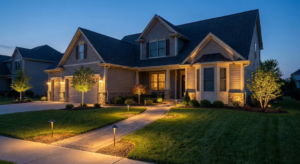
Key Takeaways
- Pathway lights vs spotlights comes down to one question: guide movement or highlight features?
- Path lights cast wide, downward light that keeps walkways and steps safe after dark.
- Spotlights use narrow, adjustable beams to make trees, stonework, and facades stand out.
- Warm color temperatures around 2700K to 3000K look natural and reduce glare.
- Concrete light fixtures outdoor add durability and a modern look to both fixture types.
- A layered plan using both fixture types almost always beats relying on one alone.
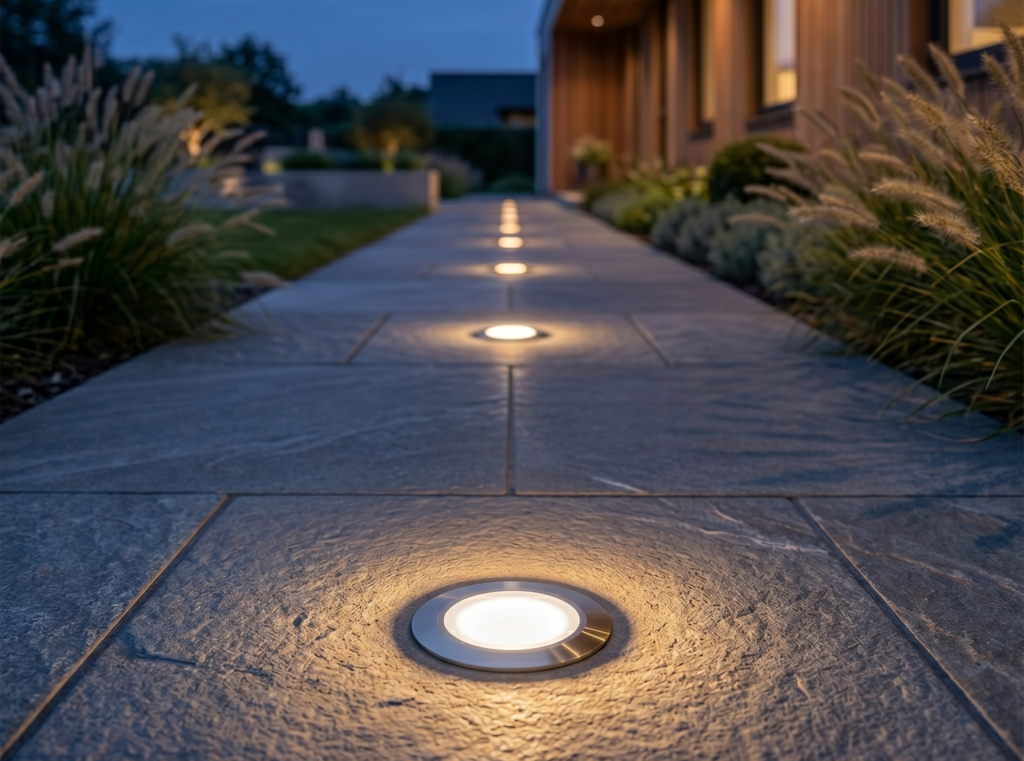
A yard that looks great at 4 p.m. can feel like a different property at 9 p.m. Steps disappear, the oak tree you love turns into a dark shape, and guests squint their way to the front door. Good landscape lighting fixes all of that, but only if you pick the right fixture for each job.
That is where the pathway lights vs spotlights decision matters. These two fixtures look similar in a catalog, yet they do very different work. In this guide, you’ll learn how each one lights a space, where each belongs, how to plan a layout step by step, and how modern concrete garden lights can fit into the design.
What Pathway Lights Actually Do
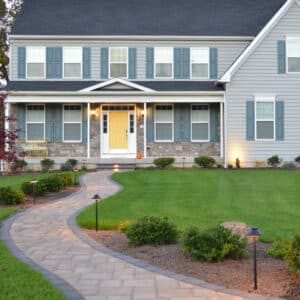
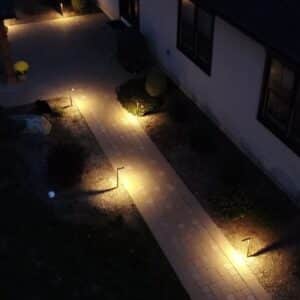
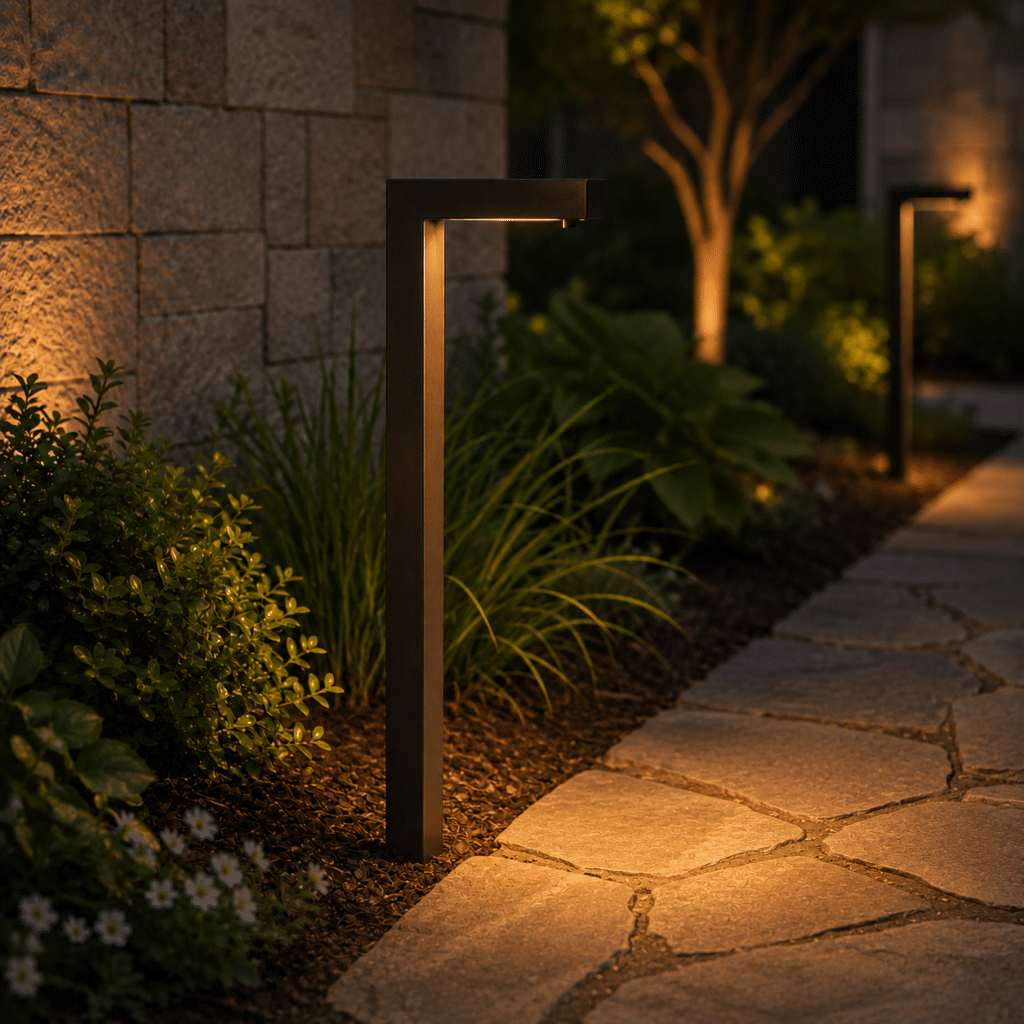
Pathway lights (often called path lights) are short post-style fixtures, usually with a cap or shade on top. The shade pushes light down and outward, creating a soft pool of light on the ground.
Their job is guiding movement safely. You’ll typically see them along:
- Front walkways and garden paths
- Driveway edges
- Planting beds that border walkways
- Patio perimeters
Because the light faces down, a good path light shows you where to step without shining in your eyes. That downward design also aligns with guidance from DarkSky International’s lighting guidelines, which encourages shielded fixtures that send light where it’s needed instead of into the sky or a neighbor’s window. For more details on spacing and positioning, check out our guide on proper path light placement.
What Spotlights Actually Do
Spotlights are compact, aimable fixtures that sit low in the ground or on a stake. They push a focused beam in one direction, usually upward or across a surface.
Their job is creating visual interest. Spotlights work best for:
- Uplighting trees and tall shrubs using professional uplighting techniques
- Washing a stone wall or chimney with light
- Highlighting a sculpture, fountain, or flagpole
- Grazing textured surfaces like brick or stacked stone
Most landscape spotlights let you choose or swap beam angles. A narrow beam reaches up a tall, slim tree trunk. A wider beam spreads across a broad canopy or the face of a house.
Pathway Lights vs. Spotlights: Side-by-Side Comparison
| Feature | Pathway Lights | Spotlights |
|---|---|---|
| Primary purpose | Safety and navigation | Accent and drama |
| Light direction | Downward and outward | Focused, aimable beam |
| Typical placement | Along walks, drives, bed edges | At the base of trees, walls, features |
| Beam spread | Wide, soft pools of light | Narrow to medium, adjustable |
| Typical brightness | Lower output for close viewing | Higher output to reach height or distance |
| Glare risk | Low when shaded properly | Higher if aimed poorly |
| Visual effect | Subtle, functional | Bold, sculptural |
| Best paired with | Spotlights for depth | Path lights for safe movement |
Pros vs. Cons of Each Fixture Type
Pathway Lights
Pros
- Make steps, edges, and grade changes easy to see
- Low glare because light points down
- Visible during the day, so the fixture itself adds style
- Easy to space evenly for a clean, organized look
Cons
- Too many in a row can create a “runway” effect
- Not powerful enough to light tall features
- Can get bumped by mowers or foot traffic if placed too close to edges
Spotlights
Pros
- Turn trees and architecture into nighttime focal points
- Small and easy to hide in plantings
- Adjustable aim lets you fine-tune the effect
- A few well-placed units can transform the look of a whole property
Cons
- Poor aiming causes glare for people walking by
- Don’t light walking surfaces well on their own
- May need re-aiming as plants grow
When to Choose Which: Conditional Reasoning
Use these rules of thumb to match the fixture to the goal:
- If you need safe footing on a walkway, steps, or a sloped path, choose pathway lights.
- If you want a mature tree or stone facade to stand out, choose spotlights aimed upward.
- If your front walk is short and lined with low plantings, two or three path lights may be all you need there, with spotlights placed elsewhere.
- If neighbors’ windows face your yard, choose shielded path lights and keep spotlight beams pointed away from their sightlines.
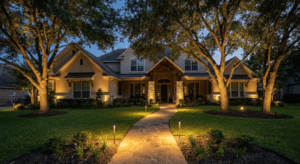
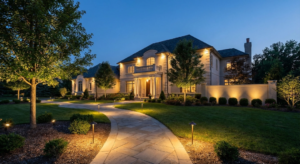
- If your property has both a long path and a statement tree, plan for both. That is the most common answer to the pathway lights vs spotlights question.
How to Plan a Layered Lighting Layout in 7 Steps
- Walk the property at night. Note where you feel unsure of your footing and which features disappear in the dark.
- Mark safety zones first. Flag walkways, steps, driveway edges, and patio borders. These are your path light locations.
- Pick two to four focal points. Choose the strongest features, like a specimen tree, chimney, or water feature. These get spotlights.
- Choose a consistent color temperature. Warm white in the 2700K to 3000K range looks natural on plants and stone. Learn more about understanding color temperature to get the perfect ambiance. This also matches DarkSky International’s recommendations for limiting harsh blue-rich light.
- Stagger path lights instead of lining them up. Alternating sides of a walkway feels natural and avoids the runway effect.
- Aim spotlights away from viewing angles. Check the beam from the street, the patio, and the front door so no one looks straight into a lamp.
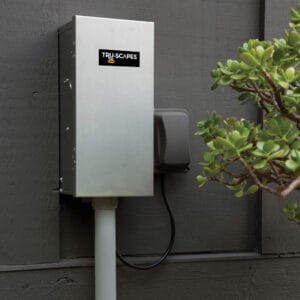
- Plan the power and controls. Most residential systems use low-voltage wiring with a transformer and a timer or photocell. Use our transformer sizing guide to ensure your system is powered correctly. The NFPA National Electrical Code standards covers low-voltage lighting systems, so a qualified installer should handle wiring and transformer sizing.
Do / Don’t List for Landscape Lighting
Do
- Use shielded path lights to keep light on the ground
- Mix fixture types to create depth
- Choose LED lamps; the U.S. Department of Energy data on LED efficiency notes LEDs use far less energy and last much longer than incandescent bulbs. See the benefits of LED over halogen for more details.
- Test placement at night before finalizing
Don’t
- Line every path with fixtures spaced like airport lights
- Point spotlights toward windows, roads, or seating areas
- Mix warm and cool color temperatures in the same view
- Over-light the yard; contrast is what makes it look good
Where Concrete Fixtures Fit In
Material matters as much as fixture type. Concrete light fixtures outdoor have become a popular choice for homeowners who want something that feels solid and architectural.
Concrete patio lights and path bollards suit modern and minimalist landscapes. Their clean shapes pair well with poured concrete pavers, gravel, and ornamental grasses. Because concrete is heavy, these fixtures stay put and resist tipping from wind or the occasional bump. Explore these concrete patio lighting integration ideas for inspiration.
Modern concrete garden lights also weather in a way many people like. Over time, the surface can develop a soft patina that blends into stone and planting beds.
A few outdoor concrete lamp ideas that work well:
- Low cement outdoor lighting bollards along a contemporary front walk
- Concrete-housed spotlights tucked beside a stone retaining wall
- Cube-style concrete lights at patio corners to frame the seating area
One thing to watch: quality varies. In cold climates, look for sealed, well-cured concrete housings, since freeze-thaw cycles can stress poorly made pieces.
Real-World Scenario
A homeowner in suburban Pennsylvania has a 40-foot curved front walk, three steps up to the porch, and a large maple in the front lawn. Their first instinct is to buy a dozen path lights for the walk.
A better plan uses five staggered path lights along the curve, one fixture positioned to light the steps, and two spotlights at the maple’s base, one narrow beam up the trunk and one wider beam across the canopy. The result is safer footing, a dramatic tree at night, and fewer fixtures overall than the original plan.
Quick Answers:
What is the main difference between pathway lights and spotlights?
A: Pathway lights cast soft, downward light to help people walk safely. Spotlights throw a focused beam to highlight trees, walls, or architectural features.
Can I use spotlights to light a walkway?
A: You can, but it rarely works well. Spotlights create uneven light and glare on walking surfaces, so path lights are the better choice.
How far apart should pathway lights be?
A: Spacing depends on fixture output and path width, but staggering them so light pools barely meet usually looks best. Avoid tight, evenly spaced rows.
What color temperature is best for landscape lighting?
A: Warm white around 2700K to 3000K looks natural on plants and stone. It also reduces glare and blue-rich light.
Are concrete light fixtures good for outdoor use?
A: Yes, well-made and sealed concrete fixtures are durable and stable. In cold regions, choose quality housings that hold up to freeze-thaw cycles.
Do I need both pathway lights and spotlights?
A: Most yards benefit from both. Path lights handle safety, while spotlights add depth and curb appeal.
Is low-voltage landscape lighting safe to install?
A: Low-voltage systems are safer than line-voltage, but transformer sizing and connections still matter. Read more about professional installation vs. DIY to understand the risks. A qualified installer helps ensure the system meets code.
How many spotlights does one tree need?
A: Small trees often need one. Larger or wider trees usually look better with two or more fixtures lighting from different angles.
Glossary of Terms
- Beam angle: The width of the light cone a fixture produces. Narrow angles reach farther; wide angles cover more area.
- Color temperature: A measure of how warm or cool light looks, shown in Kelvin (K). Lower numbers look warmer and more golden.
- Uplighting: Placing a fixture at ground level and aiming it upward to light a tree, wall, or structure.
- Transformer: A device that steps household power down to low voltage for landscape lighting systems.
Conclusion
The pathway lights vs spotlights choice isn’t really either/or. Path lights keep people safe and give your walkways a clean, welcoming look. Spotlights bring your best trees and architecture to life after dark. Used together with warm color temperatures and careful aiming, they make a property feel safer, larger, and more inviting at night.
If you’re ready to light up your yard the right way, talk with a professional landscape lighting installer who can walk your property at night, plan a layered layout, and help you choose fixtures, including concrete options, that fit your style. Find a certified pro near you to request your lighting consultation today.