Key Takeaways
- The best outdoor landscape lighting starts with a plan, not a shopping cart.
- Warm white LEDs (around 2700K to 3000K) look natural and use less energy.
- Concrete light fixtures outdoor resist rust and hold up well in harsh weather.
- Low-voltage 12V systems are safer and easier to expand than line-voltage setups.
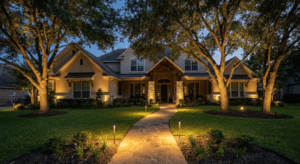
- Layer path, accent, and ambient lighting instead of using a few bright floodlights.
- Shielded fixtures reduce glare and keep light on your yard, not your neighbors.
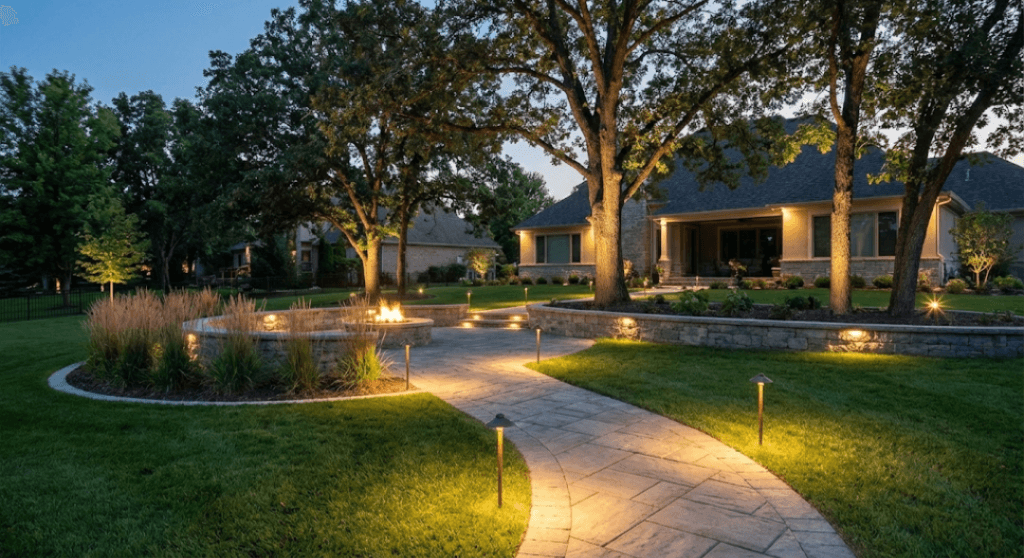
Most yards go dark the moment the sun sets, which wastes the space you paid to build and maintain. Choosing the best outdoor landscape lighting fixes that, but only if the fixtures, bulbs, and layout work together.
This guide walks you through how to pick yard lighting that looks good, lasts for years, and stays safe. You will learn the main fixture types, why concrete and cement outdoor lighting has become a popular choice, how to plan a layout step by step, and which common mistakes to avoid.
Whether you are lighting a short front walkway or a full backyard with a patio and garden beds, the same principles apply.
What Makes the Best Outdoor Landscape Lighting?
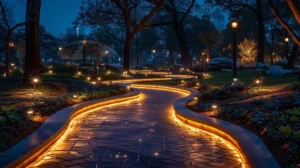
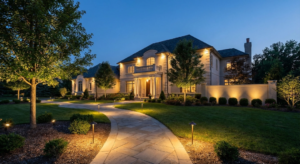
Great landscape lighting does three jobs at once. It makes the yard safer to walk at night, it highlights the features you care about, and it creates a comfortable mood for outdoor living.
To do all three, a system needs four things:
- Durable fixtures that handle rain, sun, freezing, and sprinklers
- Efficient light sources, which today almost always means LED
- The right color and brightness for each area
- A smart layout that places light where people actually need it
The U.S. Department of Energy notes that LED lighting uses far less energy and lasts much longer than incandescent bulbs, which is why nearly every modern outdoor system is built around LEDs. Learn more about the energy-saving benefits of LEDs.
Low-Voltage vs. Line-Voltage Systems
Most residential yard lighting runs on low-voltage systems (12V). A transformer plugs into an outdoor outlet and steps household power down to a safer level. Line-voltage (120V) systems run at full household power and usually require buried conduit and a licensed electrician.
If you want a DIY-friendly setup you can expand later, choose low-voltage. If you need very bright, long-distance lighting for a large commercial-style property, a line-voltage system installed by an electrician may make more sense. For a deeper dive into the differences, check out our guide on low-voltage vs. line-voltage landscape lighting.
Types of Outdoor Lighting Fixtures for Yards
Each fixture type has a specific job. Mixing a few types is what separates a professional-looking yard from one that feels randomly lit.
| Fixture Type | Best Use | Light Direction | Typical Placement |
|---|---|---|---|
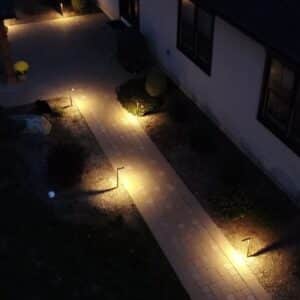
| Path lights | Walkways, garden borders | Downward, wide spread | Along edges of paths and beds |
| Spotlights / uplights | Trees, walls, architectural features | Upward, focused beam | At the base of the feature |
| Well lights | Clean, hidden uplighting | Upward | Buried flush with ground |
| Deck and step lights | Stairs, deck edges, retaining walls | Down or outward | Mounted on risers or posts |
| Bollards and lamp posts | Driveways, entries, patios | 360° or downward | Freestanding along routes |
| Concrete patio lights | Patios, seating areas, modern gardens | Soft ambient glow | Placed on or near hardscape |
Why Concrete Light Fixtures Outdoor Are Gaining Popularity
Concrete lighting fixtures have moved from niche design pieces to a practical choice for many homeowners. They pair naturally with stone, pavers, and modern architecture, and they feel solid in a way thin plastic or aluminum fixtures do not.
Modern concrete garden lights come in many forms: low bollards, cube-shaped path markers, sphere lamps that glow from within, and wall-mounted sconces. Cement outdoor lighting also works well as a design accent because it reads as part of the landscape rather than as hardware sitting on top of it. Explore our full range of concrete lighting fixtures to see the options available.
Pros vs. Cons of Concrete and Cement Outdoor Lighting
Pros
- Will not rust, unlike some metal fixtures
- Heavy weight resists tipping from wind, pets, or kids
- Blends naturally with pavers, stone walls, and modern hardscape
- Weathers gracefully and develops character over time
- Less likely to look cheap or dated after a few seasons
Cons
- Heavier and harder to move or reposition
- Can crack in freeze-thaw cycles if left unsealed
- Fewer color options than painted metal fixtures
- Usually costs more than basic plastic path lights
- Installation may take more effort on uneven ground
If you live in a cold climate, choose concrete fixtures that are sealed or rated for freeze-thaw conditions, and reseal them periodically as the manufacturer recommends.
Outdoor Concrete Lamp Ideas for Different Spaces
A few outdoor concrete lamp ideas that work well in real yards:
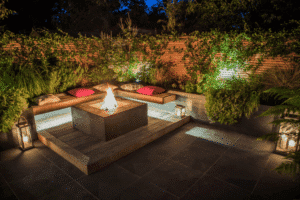
- Patio corners: Low concrete cubes or spheres create a soft perimeter glow without overhead glare. See our concrete patio lighting ideas for inspiration.
- Modern entryways: Slim concrete bollards on each side of the front walk frame the door.
- Garden beds: Small concrete path markers tucked among grasses add structure after dark.
- Pool decks: Concrete patio lights with warm LEDs echo the pool coping and pavers.
How to Choose the Best Outdoor Landscape Lighting: 7 Steps
Follow these steps in order. Skipping the planning stage is the most common reason lighting projects disappoint.
- Walk the yard at night. Note dark walkways, trip hazards, steps, and features worth showing off, such as trees, stone walls, or water features.
- Decide what to light and why. Separate safety lighting (paths, stairs, entries) from accent lighting (trees, architecture) and ambient lighting (patios, seating areas).
- Choose your system voltage. Low-voltage 12V works for most homes. Size the transformer so your total fixture wattage stays comfortably below its rated capacity. Use our transformer sizing guide to get the numbers right.
- Pick fixture materials for your climate. Concrete, brass, and copper hold up well long term. Check for an IP rating (IP65 or higher is a good baseline for outdoor exposure).
- Select color temperature. Warm white around 2700K to 3000K looks natural on plants and stone. Cooler light can make a yard feel harsh. Read more about choosing the right color temperature.
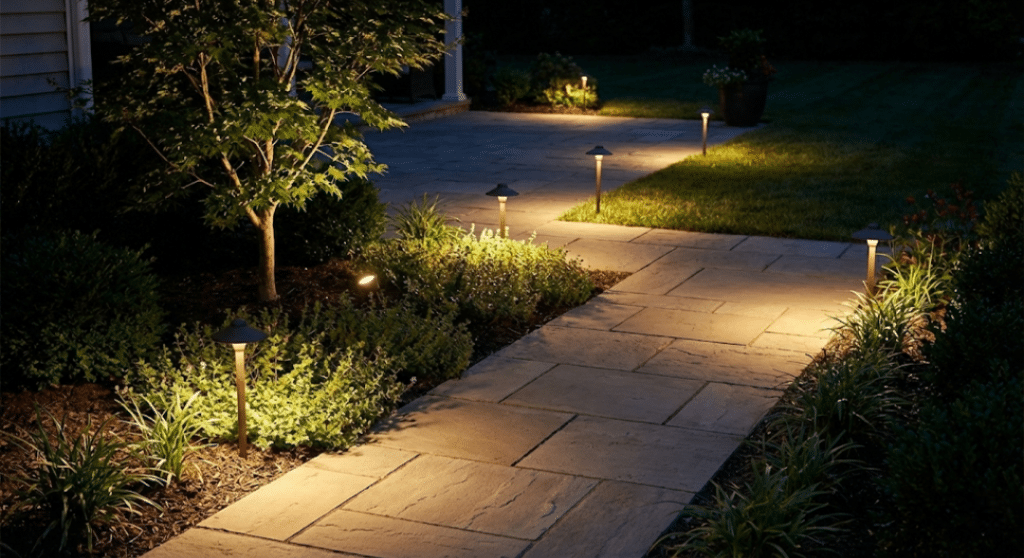
- Plan spacing and placement. Stagger path lights rather than lining them up like a runway. Aim uplights so the beam hits the feature, not people’s eyes. For specific advice on spacing, check out these expert spacing tips.
- Add controls. Use a photocell, timer, or smart transformer so lights turn on at dusk and off late at night automatically.
Do / Don’t Checklist for Yard Lighting
Do
- Use warm LEDs for a natural, inviting look
- Choose shielded fixtures that point light downward or at a target
- Plug transformers into a GFCI-protected outdoor outlet
- Leave a little slack in cable runs for future adjustments
- Test fixture positions at night before final installation
Don’t
- Flood the whole yard with a few bright floodlights
- Mix many different color temperatures in one area
- Overload the transformer with too many fixtures
- Bury cable where you plan to dig or aerate
- Point uplights toward windows or neighboring homes
DarkSky International recommends fully shielded, warm-colored outdoor lights to reduce glare and light pollution, which also tends to make a yard look more refined. You can read more about DarkSky’s lighting best practices.
Matching Lighting to Your Yard Style
Your home’s style should guide fixture choice.
- Modern or Contemporary: Choose clean-lined fixtures like modern concrete garden lights, slim bollards, or recessed well lights. These blend with flat surfaces and minimal plantings.
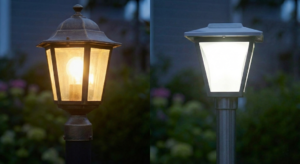
- Traditional or Cottage Style: Choose lantern-style path lights in brass or bronze, which age naturally and suit lush gardens.
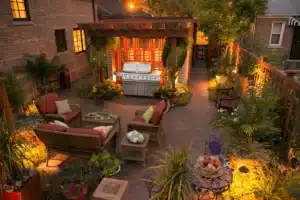
- Large Patio or Outdoor Kitchen: Add concrete patio lights or low ambient fixtures around the seating area, then use separate task lighting near cooking zones.
Real-World Scenario
A homeowner in a suburban Ohio neighborhood has a paver patio, a curved front walkway, and two mature maple trees. The original setup was a single motion-activated floodlight above the garage.
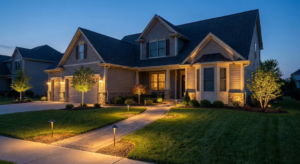
The upgraded plan used six staggered path lights along the walkway, two uplights at the base of each maple, and four concrete cube lights placed at the patio corners. Everything ran on a 12V transformer with a photocell and timer.
The result: the walkway became safe to use at night, the trees became a focal point from the street, and the patio turned into a usable evening space. The concrete fixtures matched the gray pavers and held up through winter after being sealed in the fall. To achieve similar results, consider learning more about tree uplighting techniques.
Safety and Installation Considerations
Even low-voltage systems involve electricity outdoors. The National Electrical Code (NFPA 70) requires GFCI protection for outdoor receptacles, and many local codes have rules about burial depth for cables. For more information on safety standards, review these outdoor electrical safety standards.
If you are adding new outlets, running line-voltage power, or unsure about local requirements, hire a licensed electrician. A professional landscape lighting installer can also help design layouts that avoid glare and dark spots.
Many homeowners install low-voltage systems themselves since they run at 12V. If you are ready to start, follow our step-by-step DIY installation steps. The transformer should plug into a GFCI-protected outdoor outlet.
Quick Answers:
What is the best outdoor landscape lighting for most yards?
A: For most yards, the best option is a low-voltage LED system with warm white bulbs and durable fixtures such as concrete, brass, or copper. It balances safety, efficiency, and appearance.
What color temperature is best for landscape lighting?
A: Warm white around 2700K to 3000K is the most popular choice. It flatters plants, stone, and wood without looking harsh.
Are concrete light fixtures good for outdoor use?
A: Yes. Concrete fixtures resist rust and wind, but they should be sealed in climates with freezing temperatures to prevent cracking.
Is low-voltage landscape lighting safe to install yourself?
A: Many homeowners install low-voltage systems themselves since they run at 12V. The transformer should plug into a GFCI-protected outdoor outlet.
How far apart should path lights be?
A: Spacing depends on the fixture’s light spread, but most path lights are placed several feet apart and staggered. Aim for pools of light that slightly overlap, not a solid lit strip. Check out our expert spacing tips for more details.
Do LED landscape lights save energy?
A: Yes. The U.S. Department of Energy reports that LEDs use significantly less energy and last much longer than incandescent bulbs.
What are concrete patio lights?
A: They are low ambient fixtures made from concrete or cement, often shaped as cubes, spheres, or bollards. They provide a soft glow around patios and seating areas.
Should landscape lights stay on all night?
A: Not usually. A timer or smart controller that turns lights off late at night saves energy and reduces light pollution.
Glossary of Terms
- Transformer: A device that converts standard household power into low voltage (usually 12V) to run landscape lights safely.
- Color temperature (Kelvin): A measure of how warm or cool light looks. Lower numbers like 2700K appear warm and yellowish, while higher numbers look bluer.
- Uplighting: Placing a fixture at ground level and aiming it upward to highlight trees, walls, or architectural features.
- IP rating: A code showing how well a fixture resists dust and water. Higher numbers mean better protection for outdoor conditions.
Conclusion
The best outdoor landscape lighting is not about buying the brightest or most expensive fixtures. It comes from a clear plan, warm LED light, durable materials, and placement that serves both safety and style.
Concrete light fixtures outdoor and other cement outdoor lighting options give modern yards a solid, long-lasting look, especially around patios and hardscape. Pair them with path lights and uplights, control everything with a timer, and your yard will look intentional every night.
Ready to light up your yard the right way? Start with a nighttime walk-through this week, map out your key areas, and choose fixtures built to last.